Category Archives: accessibility

I can’t count on anybody to understand. (Blogging Against Disablism Day 2010)

(Cross-posted at three rivers fog. See more BADD 2010 at Goldfish’s blog.)

I’m pretty open about my health issues. To be honest, I don’t know any other way to be. I know how to strategically hide my disabilities from strangers in passing interactions, but from the people with whom I interact on a daily basis? Given my appearance — tall, slim, young white girl, pretty enough, clean and conventionally dressed, perfectly middle-class — you’d think it would be easy to keep from communicating variant health, while in reality it is highly tasking. It takes energy to mask my medication-taking, body-resting, trigger-avoiding, activity-budgeting ways from the people around me, and I’m already running an energy deficit just to be around them in the first place.

So fuck it. I don’t hide it when I have to down a pill. If pain, fatigue, or cognitive issues are preventing me from doing something — a task requiring me to stand up or walk somewhere when my back pain is flaring up; speaking with anyone by telephone when my head is throbbing and my brain is not processing full sentences — I say so. I’ve stopped bothering to tuck in my TENS wires to make them completely invisible. When people ask me about the Penguins game last night, the response they hear begins with a mention of my 8:30 bedtime.

There are drawbacks to this. Sharing or not sharing information about one’s health is an extremely fraught decision; some people consider this information rude and gross (even when the actual content is totally innocuous), it can invite unwanted questions and speculation, and there are people who will use your undisguised behavior or the information you have volunteered against you in the future. It amounts to a choice between a life of concealment, which can quickly drain a person’s spirit and often aggravate their actual condition — and a life of vulnerability, never knowing what will be held against you, or by whom. Continue reading I can’t count on anybody to understand. (Blogging Against Disablism Day 2010)

Recommended Reading for whatever day it is now

Reminder: Blogging Against Disablism Day is coming up on May 1. Diary of a Goldfish has hosted BADD since 2006. It’s an awesome blogswarm, and it’s this Saturday. You can participate by spreading the word, making your own post, commenting on people’s posts, and/or linking posts for others. </ stolen from anna>

It has been a rough week and I’ve lost several days to medication haze, so I’m not really sure of the date. Sorry!

A map of the continental United States, filled in entirely with pills in different shapes and sizes.

Herz Und Seele – Rant: Ableism

Only 5 years ago did I switch from analog to digital hearing aids.  I made the switch mostly because the big clunky thing was so clearly visible.  Once people saw them, they treated me differently- speaking more slowly, yelling and even making up sign language.  I have to be honest, it angered me, and it still angers me.  They talk slowly as if my hearing impairment is a cognitive impairment- when in fact, it is congenital neurological damage [in my case].  They yell as if that makes it easier for me to hear, when the problem is not volume, but frequency, tone and pitch.  Sound has ranges, and those ranges are narrower for me than most people.  Oh, and making up sign language?  That’s just stupid.  What am I, a chimp? These hearing aids don’t make me any “lesser” than you.  If you think otherwise, you have another think coming.  I’m so TIRED of be talked down to like a child, yelled at like an unattentive child, and generally treated “differently.”

with you – questions about the braille “porn for the blind”

If news outlets are going to call this porn, even softcore porn, why are transliterations (images, roman letters & sentences) of this magazine making it into their articles? At first I was intrigued and a little bit in support of Tactile Mind (NSFW?) as porn. Or at least in support of the idea of accessibility. This magazine is certainly flawed (“perfect breasts”? masks?) and I’m not sure where I stand on the politics of porn anyhow, but accessibility is good, and noting the sexuality of people with differing abilities seems rudimentary but is unfortunately an ongoing battle. Still, many news stories have covered this magazine in a way that proves that ableism reigns and that, in practice, most people don’t really think of blind people as fully sexual people. Why doesn’t Lisa Murphy’s site have a warning banner? Why can news media print/post transliterations of explicit raised images/braille porn without censoring the transliterations? I’m not arguing for censorship, just wondering why the standards are different. If this is porn, why is it showing up in Google Image Search?

Essin Em – Avenue Q and Discrimination (post is SFW but blog is NSFW)

Thinking I had misheard (I mean, this was a national tour of Avenue Q, not some local rep putting in on in a warehouse turned brilliant theatre), I asked him politely “so, if one is disabled, how might they avoid the three sets of steep stairs to get to their seat?”
“You should have bought the disabled tickets.” I was stunned. Ok, fine. Maybe I should have called Q to remind her to ask for something accessible. However, I can walk down one or two stairs, and every large theatre I have ever been in (a lot) has had elevators to the balcony level.
“Ok, well, we bought the tickets we could afford, on the balcony. Would the disabled tickets at the orchestra level have been the same price as the cheaper tickets?”
“No, you would have had to pay orchestra prices. Now, can you just get inside?”

Politico – Disabled get job training on Capitol Hill (good program, problematic framing!)

During the past month, Gutkowski and two other students with intellectual disabilities have worked in the offices of Harper, Reps. Bill Cassidy, John Fleming, Cynthia Lummis and Cathy McMorris Rodgers, as well as the Republican office of the House Administration Committee. The students do everything from answering constituent mail and shredding paper to learning how to give tours of the Capitol. Harper’s 20-year-old son, Livingston, has a genetic condition called Fragile X syndrome, which is the most common cause of inherited intellectual disabilities. Since graduating from high school, Livingston has worked several days a week in a Mississippi restaurant and takes a few community college courses but still dreams of attending Mississippi State University in Harper’s district, just like his sister. Harper told POLITICO, “A lot of times, when you get out of high school and you’re dealing with intellectual disabilities, you fall off the educational face of the Earth. Sometimes you’re looking to give hope to some of these families who want their child to continue on.”

One of Australia’s leading mental health experts says he is “dumbfounded” at the “token” amount of money handed out to the sector in the Commonwealth’s national health overhaul. Professor Ian Hickie of the Brain and Mind Research Institute at Sydney University has demanded Prime Minister Kevin Rudd explain why more has not been delivered to mental health services. Mr Rudd has promised over $5 billion in sweeteners to the states in return for their support of his hospitals takeover plan. The mental health sector had expected a significant package for reform. But out of the $5 billion to be rolled out to the states, only $115 million of new money has been allocated to mental health.

New York Times – New Rules Aim to Make Travel Easier for the Disabled (very US-centric for an article ostensibly about international travel!)

People with disabilities never have an easy time traveling, but a rash of recent improvements, including more wheelchair-accessible taxis and rental vehicles — and even Web sites for people with dexterity or vision problems — have made it easier.

[I don’t know what to do when I get these so I’m posting it] KTLA – Mentally Disabled Man Dumped on Skid Row – Do You Know Him?

White man in his thirties, brownish hair, prominent nose, pulls up a sleeve to show a tattoo on his right bicep. He is smiling.

“Jason” was left in front of the Urban Connection group home for the homeless about eight months ago by a woman he calls “Mary.” He had no identification and no social security number. The shelter has been trying to determine his identity ever since, but they’ve been having trouble because he has no identification card. The man, who is mentally handicapped, has “Jason” tattooed on his arm. He does not remember his birthday and has no idea where his family might be.

When Accommodations Conflict (Continued)

Reflecting on the extremely thought provoking post by abbyjean earlier, I was walking to breakfast with The Guy (caution, try not to walk while lost in thought, OYD) on a day when I was low on sleep, high on pain, and therefore using my cane. (edit: I just saw my typo! I had a funny visual of me trying to balance on a can! HA!)

Conflicting accommodations do not always mean that the conflict will occur between separate PWDs. For example, on a high pain day, I am in desperate need on my cane due to the intense pain in my hip and legs in general (though, which leg I want to use if for is debatable, even though I favor one hip). When I am that fatigued, however, using the cane is an intense use of my spoons, to the point where if I have too much to do I can’t even bother because it just winds up with me on a chair or bench in tears. Or the cane causes additional pain in my back or shoulders.

There are others that come to mind. My medication provides me with more pain free days, which is a good thing. This is an active choice I made with the advice of my doctor whom I was lucky enough to find at this duty station. The flip of that coin is that I have side effects which means that I can not always drive places, or have the energy (HA!) that I want to do things with my family, to name a few. This might not sound like a huge accommodation, but it makes a great impact on my family life, people who play a huge role in my care.

I know that some people use caffeine to both relieve some pain and migraine effects (I sometimes do) but that this has the crash effect at the end of the day (for me it means my spoons run out faster).

So, gentle readers, what accommodations do you have/use that conflict…uhh…internally? What individual needs to you have that you have to weigh daily?

When Accommodations Conflict

Accommodations can be difficult. Not only for an individual with a disability to identify what accommodation would be relevant or helpful for them, not only convincing whoever to implement the desired accommodation, and not only ensuring that the accommodation continues over time and doesn’t lead to resentment or punishment for the person with a disability. Here is an additional wrinkle – sometimes desired or needed accommodations conflict. What one PWD needs to accommodate her disability could not only not help another PWD, but might actually exacerbate their disability.

Let’s take an example: smoking. For some PWDs, especially those with mental illness, smoking can help ameliorate their symptoms, calm their anxiety, even help some with restoring neurochemical imbalances. The rates of smoking among people with mental illness tend to be much higher than the general population, in which about 20% of people smoke. Here is a chart of smoking rates among PWDs with mental illness:

MENTAL ILLNESS: PERCENTAGE WHO ARE SMOKERS
Bipolar Disorder 70%
Major Depression 60%
Schizophrenia 90%
Panic Disorder 56%
Post Traumatic Stress Disorder 60%

There are lots of theories why people with mental illness smoke. At a recent meditation seminar, the instructor was modeling deep breathing techniques for relaxation and stress reduction. He pointed out that the deep breaths, with an exhale longer than the inhale, breathing from the abdomen, exactly mimicked the breathing of a smoker while inhaling from a cigarette and exhaling smoke. I know people who took up smoking intentionally and specifically in order to help regulate breathing during panic attacks – they report that the 5-7 minutes of regulated breathing during one cigarette is enough to get them through a panic or anxiety attack.

Nicotine, the active ingredient in cigarettes, also acts as a stimulant on the brain. Some report enhanced attention, focus, and concentration, which can be helpful for people with attention or focus problems caused either by their disorders or the medications that treat them. As one study reports: “Certain thinking patterns are affected in schizophrenia including sustained attention, focused attention, working memory, short-term memory, recognition memory and even processes that are preattentive (eg reflexes). Some studies have suggested that there may be improvements in these areas after treatment with nicotine.” Those authors theorize, as have many others, that “it may be that patients “self medicate” to remediate the chemical imbalance in the brain (dopamine hypofunction in the pre-frontal cortex) which may help with certain difficulties with thinking tasks involving this PFC area and might explain why there is smoking persistence in schizophrenia.”

On the flip side, of course, there are many PWD for whom being around smokers or smoke will exacerbate their disabilities and a necessary accommodation is an atmosphere free from smoke. People with asthma and other respiratory problems or people with allergies and chemical sensitivities could be seriously harmed by being around smoke or people who are smoking, and could require an accommodation to be free from smoke exposure.

This sets up the possibility that there could be two PWDs – let’s say one with schizophrenia and one with severe smoke allergies – who require accommodations that are directly conflicting with each other. These situations are much trickier for me than when a PWD is requesting an accommodation that an employer, business, government, or other entity is saying is too difficult or expensive to implement. In those situations, I believe the accommodation rights of the PWD should trump that concern in the vast majority of cases. But handling issues of conflicting accommodations can be much more complicated, because the rule of “you must accommodate PWDs” doesn’t give us any guidance on how to proceed.

This is just one example of desired or needed accommodations that can directly conflict, but there are many others. How do you think these situations should be handled? Have you run into conflicts like this in your own life?

Note: discussions of conflicting accommodations – including the example discussed above – can become very charged and very personal, as readers and commenters may have personal preferences or needs on which accommodation to implement. Please be respectful of the needs of other PWDs in this comment thread. Specifically, comments that imply or state that smokers are inherently evil or people who don’t smoke are inherently intolerant (or similarly bright line rules) will be deleted.

This Terrifies Me

Here in the U.S., there’s been a lot of buzz about a new immigration law passed in Arizona (including on meloukhia’s tumblr, where I first saw it). Their state legislature just passed a bill that “makes it a crime to lack proper immigration paperwork and requires police, if they suspect someone is in the country illegally, to determine his or her immigration status. It also bars people from soliciting work as day laborers.”

This is a big change from the current situation. Because immigration is a nationwide issue, the federal government makes the immigration laws. There is a federal Department of Citizenship and Immigration Services that administers applications for immigration status. There is a whole department of Immigration and Customs Enforcement with quasi-police enforcement agents that put people in quasi-jail immigration detention facilities. It’s a whole federal system that runs parallel to the police and sheriffs who work for individual cities and counties.

For a long time, not only were local police not solely responsible for enforcing federal immigration laws, it was a longstanding rule that state and local police did not have the authority to enforce those laws. State and local police actively tried to distinguish themselves from immigration enforcement so that community residents who were immigrants would continue reporting crimes and helping the police with investigations. The split between responsibilities serves an important purpose in protecting overall public safety.

This is why it’s a big deal that this new law would require local police to determine the immigration status of anyone they suspect to be in the country illegally. Given the vague description of what would be an acceptable reason to suspect someone to be undocumented, it’s extremely likely this is going to translate to “check the papers of anyone who is Latina/o.” “A lot of U.S. citizens are going to be swept up in the application of this law for something as simple as having an accent and leaving their wallet at home,” said Alessandra Soler Meetze, president of the American Civil Liberties Union of Arizona.

Certainly a police officer fulfilling their requirements under this new law might in fact discover that someone is undocumented. But this law also gives every police officer carte blanche to insist on immigration paperwork from anyone they want – another tool for harassment and intimidation that will surely be deployed selectively. It warns not only undocumented people, but all immigrants and anyone who might appear to be or resemble an immigrant in any way – stay inside. Disappear. Vanish. We do not want you here and if we see you we will hassle and interrogate and judge you.

This law just used the official voice of the state to tell this whole group of people – most of them people of color, most of them legally present in the U.S. – that they are not wanted.

That message of not being wanted, that directive to become invisible and disappear, that clear desire that a whole group would just go away and stop being a bother. That’s the same feeling I get when reading articles like this one in the Fresno Bee bemoaning an effort to get local businesses to provide accommodations for people with disabilities. Just think of the economic effect on local retailers! They’ve been open for 20 years! How dare the PWDs file lawsuits instead of just asking the proprietor who I’m sure is very nice and would just love to help out voluntarily! The message is the same – having PWDs here is too expensive. Too much work. Something to be given only out of the generosity of those in charge, not demanded. If only the PWDs would just go away our local businesses would be fantastic!

In one instance, popular opinion and the business community are telling PWDs to go away or be invisible. In the other instance, the state government is telling immigrants to go away or be invisible. Both are premised on the acceptance of the idea that it’s ok to look at a minority group of people and reject them, as a group. That’s why I reacted negatively to both those news articles – it is not ok to oppress people as a group. If it’s ok to treat immigrants that way in Arizona, that legitimizes treating PWD that way in Fresno. And this law is such a big step in the wrong direction that it makes me worried about similar erosions for other groups – including PWDs.

An OYD Airline Rant

I won’t apologize for her actions and I’m not sorry for what happened to you. It’s not in our contract to assist passengers with their luggage and we reserve the right to refuse assistance to anyone. If that’s what you need, then perhaps in the future, you should make other travel arrangements.

Well, to say the least, that is not the kind of response I expect to get from a customer service representative; not the Entry Level Line Memorizing Oh Dammit Did You Really Ask For A Supervisor people, and I certainly don’t expect it from a supervisor. Were I to get such a resonse I would certainly suspect that something slightly sinister was going on here at said establishment where I was complaining. After all, if I am speaking to a Customer Service Supervisor, things have reached a fairly epic proportion of shit deep inconvenience, because I pretty much go out of my anxiety issue way to avoid having conversations with people I don’t know in person (let alone on the phone). Because I have to weigh the cost of spoons spent on holding myself together long enough to get out the details of what happened, as I did recently with my complaint to Patient Admin about Nurse Midwife V, versus the benefit of getting shit cleared up so it doesn’t happen again to other people who may follow after me and patronize a company, needing services, like in this case, travel.

But here, this is exactly the case. Here, evilpuppy from Incoherent Ramblings From a Coffee Addict, who, expending great energy, spoons, and emotional well being tried to file a complaint on the completely despicable treatment doled out by the staff at United Airlines, and received this condescending and otherwise completely, well, jack-assed and ignorant response from someone who should have a working knowledge of how an employee on an airplane should treat a person with a disability. Not in an email response or even in a letter form; this response was delivered face to face. All of this after she already went to the trouble of pre-arranging accommodations for a wheelchair and made sure to note with the ticket agents — multiple times — that she would need assistance on the plane.

Just a small dose of what evilpuppy endured:

The wheelchair left me off at the door and after making sure I had all of my belongings, he turned around and left. I boarded the plane and made my way back to my aisle seat where I set down my special seat cushion and lumbar brace before looking around for a flight attendant to help me put my luggage in the overhead compartment. The attendant standing in the front section of economy was a blonde woman probably in her late 40s-50s and I called her over to explain that I needed her assistance because I wasn’t capable of lifting my luggage due to my disability. To my surprise, the attendant rejected my request while excusing it by saying: “If I helped everyone do that all day then MY back would be killing me by the end of the day!” I asked her how I was supposed to get my luggage stowed and her answer was: “You’ll just have to wait for someone from your row to come back here and ask them to give you a hand.” When I asked what would happen if no one would, her response to me was: “Well, normally a passenger is around to overhear something like this and they’ll offer to help with it on their own. You’ll just have to ask someone when they get back here.” Then she turned back around and went up to the front seats where she waited to “assist” other passengers.

I was completely flabbergasted, but with no other option, I sat down to wait and pulled my carry-on suitcase as close as I could to try to get it out of the way of the aisle. As I’m sure you’re aware, however, your aisles are considerably narrow and even my best efforts left half of even my small carry-on suitcase in the aisle. What’s more, rather than help me, most of the passengers simply knocked into my suitcase and shoved past me on the way to their own seats. Every time they hit the suitcase, it in turn hit me and jarred my back more and more with each strike. The plane wasn’t even half boarded and it already felt like the pain medication I’d taken less than a half hour prior to entering the airport had worn off as though I hadn’t taken it at all.

Now, I have endured some pretty meh-hessed treatment at the hands of customer service personnel. I have seen other people treated pretty horribly. I have had my disability status questioned, rejected, laughed off. I have had it compared to the fatigue of being a stay at home mother of two children (I am not downplaying the work of SAHMs, having once been one myself, but these are apples and well NOT APPLES!), and of course DIET AND EXERCISE! but never have I had someone so flatly refuse to acknowledge that 1) their co-worker/staff/employee so royally screwed up and 2) that their co-worker/staff/employee’s royal screw up really fucked my world up and over in a way that might just have rendered my next few days useless, since that might mean that I will then be spending the next two or three or more days in bed or on a couch with my feet up trying to recover from the aforementioned loss of spoons and emotional well being.

To put it concisely: Wow. That is messed up.

Not to mention, I am not sure I have ever patronized any business where it was standard procedure for other paying customers to assist a person in lieu of the paid employees who are standing around. It just seems lately that airlines are giving me more and more reasons to not give them more money than I can afford to basically be treated like crap.

I have never been told that it wasn’t the job of the person whose actual job it was to help me.

OOPS! UNITED STEWARDESSES! ITS LIKE TOTES YOUR JOB!

Once passengers are onboard the aircraft, our flight attendants can help with stowing and retrieving carry-on items, as well as providing wheelchair assistance to move passengers to and from the aircraft lavatory (although they cannot provide assistance inside the lavatory). Flight attendants may also provide assistance with taking oral medication, identifying food items on meal trays and opening packages.

Is there a single airline that isn’t treating humans like chattel these days? That isn’t outright pissing me off for one reason or another (well, Korean Air hasn’t yet, but I haven’t flown International since the Christmas debacle). I am beginning to think I will need to take a boat to get home the next time. And Space A military flights are a privilege I am willing flex more and more if I have the time and pain medication available. It might be worth it to not be herded on and off a plane like cattle, denied bathroom and water privileges for hours on end (which can be living hell to a PWD).

Oh, and also:

Then the flight is delayed. We sit on the runway for some time, and because of the new federal law requiring that airlines not keep people on the tarmac for more than 3 hours, they let us off for about 5 minutes before insisting we all get back on because we are leaving right now. We do not leave right now, or for several more hours. They let us off the plane again. Shortly thereafter, they insist that we all get back on the plane because we are leaving right now. We do not leave right now.

At some point after the second or third round of boarding and being told to sit down because we are leaving right now, a man towards the back of the plane stands up to get himself a cup of water. For context, this flight is (or was supposed to be) a 7:40 a.m. flight from Atlanta to New York, landing around 9 a.m. It is full of (mostly white) business people in suits. This man is brown, and appears to be South Asian. A flight attendant at the front of the plane, near where I’m sitting, sees him stand up and panics. She throws open the airplane door and starts yelling at him that he isn’t allowed to stand up, and that he needs to exit the plane immediately. The man is confused, and says, “What? I was only standing up to get a cup of water.” She yells out, “I don’t care, you’re off the flight! Get your things, you’re off the flight!” Water Man starts arguing with her about how he just wanted a glass of water, and he is happy to sit down now, but he’s not getting off the flight. The flight attendant says that she feels threatened and gets a supervisor, who in turn gets airport security, who in turn tell the man that he is going to be arrested and charged with a felony if he does not exit the aircraft. The man, probably smartly, exits the aircraft.

Like Jill passes over in her rant here, with all the hype of racial profiling being trendy, if you assert your right to a simple thing like a drink of fucking water while daring to be brown you can be thrown off of a flight.

Thankfully The Consumerist has picked up on this (although “who says she’s disabled”? Could we pour more salt on this?). I am not entirely sure how much good this does things like this, except that I give them all kinds of link love on Facebook when I find something relevant, so maybe this went viral? I would however, like to point out that the comments at The Consumerist are some of the worst disability blaming shite I have seen in a while (and it shows how safe my social justice bubble is). It seems that we, the PWDs, should not dare to carry on a bag if we a) need a wheelchair to get on a plane b) can’t lift it ourselves and c) have the audacity to want to be treated JUST LIKE EVERYONE ELSE ON A PLANE. Also, don’t forget, if you take pain medication, and/or dare to have a drink on the plane to settle your anxiety you are not to be believed when you make claims as to the crappy ass treatment you received. Nope.

Because there is no way in the entirety of the multiverse that you would ever remember something as abusive or as hurtful or as downright dehumanizing as what Dina the Customer Service Supervisor at SFO said to you, for the rest of your life, or how it made you feel at that moment in dog damned time. Evah.

PWDs are not human. We are not people who should be existing in the same world with those good, hard working, abled-bodied people who can do everything themselves. To hell with us, for not being able to lift our bags! Forget that we just maybe had to scrape together all the money we had to afford the damned flight in the first place so that extra twenty five dollars is NO BIG DEAL JUST CHECK YOUR DAMNED BAG YOU LAZY STONED JERKS!

Silly me for expecting human treatment for all humans.

Via commenter Livre at The Consumerist, United is apparently attempting to contact (or has, I am looking into it) in true “Oh Snap Kevin Smith Has One Million Twitter Followers DOOOOOO SOOOOOMETHING” fashion to try and do damage control sort this out.

Sort this out? That would be something, now, wouldn’t it?

h/t to my friend Kate on Facebook
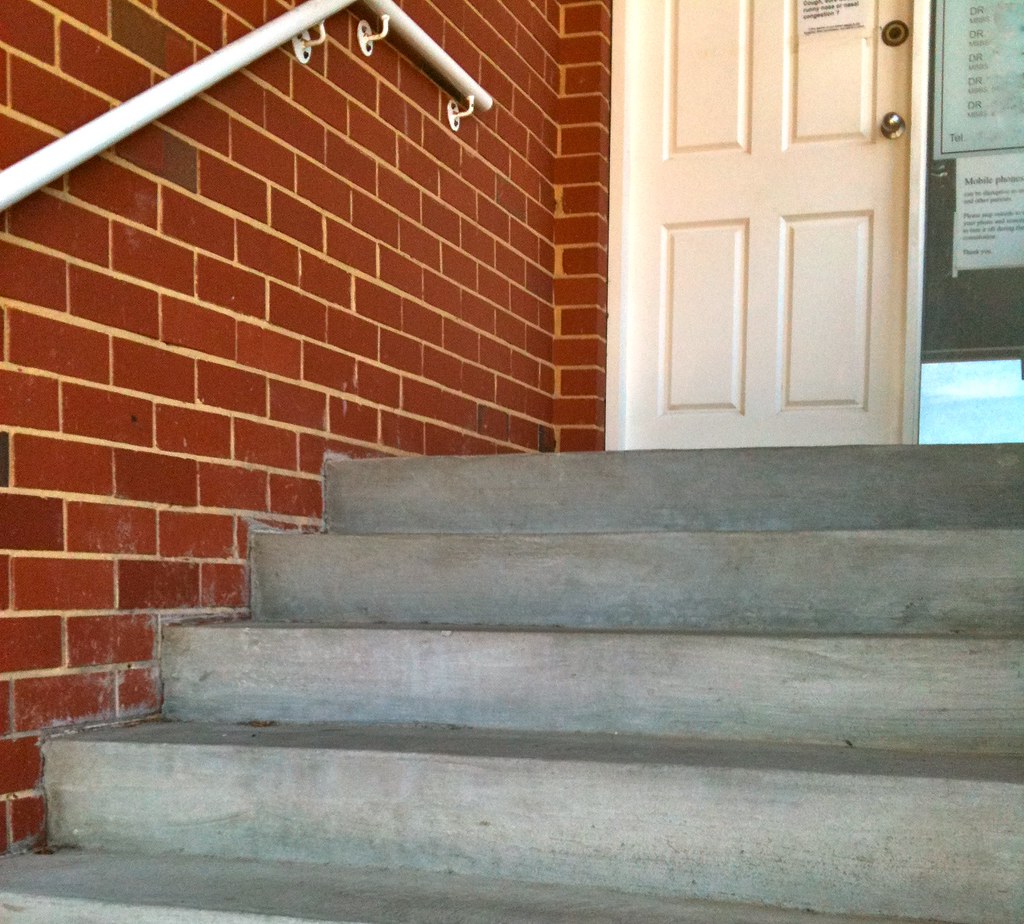
No, It’s Not As Easy As You Think

When I talk to people in the United States about disability and the need for accommodations, I am usually met with a bit of bewilderment. “You mean there’s still more work to be done on accommodations? I thought all that had been taken care of.” These are people who are used to seeing wheelchair ramps at the entrance to government buildings, used to seeing the hand switch for wheelchair users to open automatic doors, used to seeing the braille at the ATMs. Given their observations of those existing accommodations and a minimal awareness of the Americans with Disabilities Act (ADA) that mandates those accommodations, they assume that there’s been a consensus on the need to provide accommodations, a law mandating those agreed-on accommodations, and general compliance with that law.

As we well know, that is far from the truth. None of those assumptions are as true or are interpreted as broadly as people tend to assume. There is no general consensus on the need to provide accommodations for the broad range of disabilities that exist – there is general agreement that people who use wheelchairs should have access to government buildings, but there is nothing even close to general agreement on how to accommodate people with depression or even whether depression is a disability “deserving” of accommodation. The US does have a law mandating accommodations – but there are not equivalents in every country and there are significant holes in the ADA itself, often putting the burden of requesting accommodations and demonstrating a need for them on the person with a disability. Finally, the idea that agencies and businesses affirmatively comply with the ADA, obviating the need for enforcement, is just patently false.

A recent federal court decision in underlines all of these realities. In 2005, the American Council of the Blind filed a lawsuit against the Social Security Administration (SSA) “to compel SSA to provide alternative formats of communication that would enable [people with visual impairments] to have more equal access to participate in SSA programs.” (Court documents and information available through DREDEF’s site.) It took until 2009 for a court to agree and order SSA that it is required to issue notices to people with visual impairments in a format they can read – in Braille, large print, e-mail that can be read by a screen reader, computer disks, or audiotape recordings.

This lawsuit undercuts each of the assumptions above. First, there is clearly not consensus on providing accommodations, even to what would be considered a relatively “easy” impairment to accommodate – it is easy to anticipate the functional difficulties that a person with a visual impairment would encounter when presented with a written notice. A lot of these people – 250,000 of them – are getting benefits from SSA specifically because they have a visual impairment, so they’ve given SSA extensive documentation of those impairments and information on the functional limitations caused by the impairments. A much larger group – about 3 million in total – get retirement benefits from SSA. At any rate, SSA knows that these people have visual impairments and has detailed information on how those impairments affect them. And it still has not provided accommodations.

But what about the second assumption – there’s the ADA, right? It turns out that the SSA is not subject to the requirements of the ADA! The ADA applies only to state and local governments and agencies that receive federal funding – it does not apply to federal agencies such as SSA. (Raise your hand if you knew that – few people do!) The only disability rights law that applies is a precursor to the ADA, Section 504 of the Rehabilitation Act of 1973. While the requirements regarding accommodations from government agencies are largely similar, the Rehabilitation Act does provide limited rights in comparison to the ADA.

It’s also very clear that the SSA – despite being the primary provider of cash and medical benefits for people with disabilities – did not consider that it had any obligation to provide accommodations. When individual plaintiffs with visual disabilities requested that they be given notices in alternative formats, they were simply told that no other formats were available. This included notices to which people must respond within 10 days or risk losing their benefits. Even when they were initially sued in 2005, SSA argued that the Rehabilitation Act “did not even apply” to the issue of notices to people with visual impairments. Similarly, SSA did not consider itself obligated to let benefits recipients know that they had accommodation rights under the Rehabilitation Act and laying out a process for them to request and enforce those rights.

The result of the litigation is that SSA is now required to develop a procedure to 1) notify benefits recipients of their rights to accommodations for visual impairments  and 2) provide notices in alternative formats when recipients request them. Which is certainly a good thing – but one that I would simply expect from a government agency that administers disability benefits, rather than having to be ordered by a federal court after 5 years of litigation. And if accommodations that are this common sense, from a federal agency set up to deal with people with disabilities, are so hard to obtain and enforce, that demonstrates how very far we are from a society where PWDs are meaningfully accommodated.

Integrating Primary and Mental Health Care

The increased integration of mental health care into primary care is one of my pet issues. Currently, primary care providers (PCPs), also called general practitioners, provide over half of mental health treatment in the United States – which results in up to 50% of mental health problems going unindentified, undiagnosed, and untreated through the primary care system. This is a wasted opportunity, as PCPs have significant opportunities to identify behavioral health problems early and provide interventions and treatments to prevent further deterioration.

This indicates a significant split between the physical health care and mental health care systems, where people are expected to go to their PCP for physical health issues and to self-refer to a mental health care clinic or specialist for mental health treatment. This is problematic for a whole host of reasons – primary among them the simple fact that this system simply isn’t working – even though the prevalence of mental disorders in primary care is somewhat higher than the overall population, PCPs are ineffective at identifying those people and providing them with treatment. Expecting people to identify themselves as experiencing a mental disorder, overcoming societal stigma to seek diagnosis and treatment, and assuming they have the ability to access mental health services through a fragmented and poorly financed system erects barriers to treatment that are likely insurmountable to someone experiencing an untreated mental health problem. Unsurprisingly, these barriers are likely more pronounced for already vulnerable populations such as the elderly and low-income minorities.

There are a lot of benefits to better integration of mental health care into the PCP’s role. The PCP is usually the patient’s first contact with the health care system and an individual is much more likely to know how to access care from a PCP than from an unintegrated mental health system. Patients are often more willing to attend appointments with and follow up with their PCPs because of the removal of stigma from receiving treatment. Other patients may not have meaningful access to a separate or nonintegrated mental health system, either due to financial barriers, long waiting lists, or other barriers.

The most significant problem, in my view, is the expectation that an individual should be able to determine they are experiencing a mental health problem. Given that the majority of PCPs, who have medical degrees and extensive training, fail to identify and diagnose mental health issues, expecting untrained laypeople to do so – while they are experiencing the mental health problem – is beyond absurd. It is even more absurd given that many mental health issues have a physical component. Depression results in fatigue and appetite changes, as does mania. The physical experience of a panic attack is often interpreted as a heart attack. Auditory or visual hallucinations could easily be interpreted as problems with the sensory organs themselves. This is sometimes heightened by an individual’s cultural context, as many Asian cultures describe the experience of depression almost exclusively in physical terms. Expecting an affected individual to untangle the complicated interplay of physical and mental effects and diagnose themselves with a mental health problem prior to seeking treatment is bound to fail.

Another argument in favor of integration is the huge overlap between physical and mental health problems. Estimates of this comorbidity vary wildly, but range somewhere from 20% to 80% of primary care patients (useful data, no?). Having a patient access two separate mental health care systems for their treatment ensures fragmented treatments that may contradict each other and are certainly not coordinated for maximum effect. Better integration would ensure treatments for physical and mental health issues complemented each other and treated the patient as a whole person.

This seems like an uncontroversial and common sense suggestion. It was embraced by the United States Surgeon General in 2001 and by the World Health Organization in 2008, but has seen little progress or momentum since then. Some local treatment systems are taking steps towards integration, such as these trainings done by the British Columbia health system, but there have been few steps towards addressing this issue in the larger health system.

The Community First Choice Option

So it looks like here in the United States, after what seems like a full century of arguing and revising and protesting and name calling, our legislature may actually pass a health care reform bill today. This is far from an unqualified victory – the bill is a very mixed bag from a number of viewpoints, and PWDs have both reasons to be happy and reasons to be upset. In other words, there’s not one “right” way to look at the bill from a disability rights perspective and people can still be committed to disability advocacy whether they love or hate this bill. (You’ll notice I cagily haven’t taken a position on the overall bill.)

There is one aspect of it that is very exciting, though, and has been the result of strong advocacy from ADAPT and the National Council on Independent Living: the Community First Choice Option. The CFC Option would give states the option to request federal funding to provide in-home assistance and support to PWDs. The goal of these programs is to facilitate PWDs staying in a community-based setting – living independently, with a partner, family, or other arrangement – rather than moving to a full-time care institution such as a nursing home.

PWDs would be able to access a variety of types of assistance, as ADAPT describes:

Services under this option would include services to assist individuals with activities of daily living (ADLs), instrumental activities of daily living (IADLs), and health-related tasks through hands-on assistance, supervision, or cueing. ADLs include eating, toileting, grooming, dressing, bathing, and transferring. IADLs include meal planning and preparation; managing finances; shopping for food, clothing, and other essential items; performing essential household chores; communicating by phone and other media; and traveling around and participating in the community. Health-related tasks are defined as those tasks that can be delegated or assigned by licensed health-care professionals under state law to be performed by an attendant. Services also include assistance in learning the skills necessary for the individual to accomplish these tasks him/herself; back-up systems; and voluntary training on selection and management of attendants. Certain expenditures would be excluded, including room and board; services provided under IDEA and the Rehabilitation Act; assistive technology devices and services; durable medical equipment; and home modifications.

There is a similar program, In-Home Supportive Services (IHSS) currently existing in California that is based primarily on state funds that has proved a win for both PWDs and for state budgets. The benefits for PWDs are clear – they are allowed the dignity and independence of a community-based setting rather than needing to move to an institution for support. It has also benefited the state, however, because the average yearly cost per IHSS consumer is $10,000, compared to the $60,000-80,000 it would cost to institutionalize that person. Since Medicaid, the state and federally funded health insurance program for low-income folks, would bear the bulk of the cost of institutionalization, IHSS provides a significant cost savings. These are programs that do the right and moral thing by allowing a PWD to remain in the community while saving the state money at the same time – a win-win. For yet another win, family members of the PWD can sometimes be paid to serve as a caregiver, increasing income to the household to ameliorate the poverty disproportionately experienced by PWDs and their families.

Here are a couple of stories from IHSS consumers about how the program affects their lives:

Jill has had back surgery and 3 knee surgeries and is unable to stand for more than 20 minutes at a time. Her 11-year-old daughter has ADHD and needs to be watched at all times. The combination of dealing with knee and back pain, migraines one to three times a week and caring for her daughter Courtney leaves Jill unable to take care of certain household needs such as cooking and cleaning her home. Without IHSS services Child Protective Services might have placed her daughter Courtney in foster care.

Christie Ritter: On October 1st, 2002, I was stopped at a traffic light. It was my day off from being a respiratory care therapist in a hospital. I worked neonatal and pediatric specialty. I was sitting at the light, waiting for it to turn green, heard some screeching tires. Next thing you know, I have a car coming through my driver’s side door. Broke my neck and my lights went out. So when I woke up, found out my neck was broken and I’m a quadriplegic.
Jahad:
Ritter has some movement in her arms and legs, but she can’t grip or hold things and she can’t hold herself up well enough to walk. Ritter fought for in-home care. And with therapy and assistance, she holds down a full time job and lives in her own home.

There are problems even with this portion of the bill – the availability of the optional federal funding has been delayed a year, and individual states can still opt not to administer the program. It is, however, a good and positive step in the right direction.