Category Archives: social attitudes

The frustration of incremental progress

The place I work does a lot of trainings for other organizations on health care programs. A number of health care programs are available only for people with long-term disabilities, so the trainings always include a fair amount of discussion of what disability is and who is disabled.

My organization is relatively progressive and puts a priority on protecting vulnerable populations. We have a section of the training talking about the government’s requirement to provide translation and interpretation services for people who do not speak English. We discuss programs for minor children who want to obtain family planning or pregnancy services without their parents being notified. We highlight the special rules for homeless people to work around their lack of a fixed mailing address or phone number.

When it comes to disability issues, though, there isn’t always the level of awareness and sensitivity that I would like. Recently, I was sitting with two co-workers talking about potential interactive activities to add to the training. One co-worker suggested making a poster with photographs cut out of magazines that we should show to the trainees and ask them to point out who is NOT eligible for Medicaid (the U.S. goverment health program for very low-income folks).

“We can use the photos to show them that people on Medicaid aren’t just homeless people pushing shopping carts on the street,” she said. “And it’s also good to remind people that you can’t tell someone’s disability status just by looking at them.”

“Yeah,” responded another co-worker. “It’s always good to remind them that someone could have a mental health disability or something like fibromyalgia that you can’t see just from looking at them.”

HURRAH, I thought. People who are aware of these issues of disabilities that aren’t immediately apparent by looking at a photo. People who want to include this information in a training, want to highlight it with an interactive activity, to make sure everyone understands that. This is progress. This is positive.

“We could Britney Spears and Lindsay Lohan on the poster,” my co-worker continued. “Nobody knew how crazy both of them were at first! I mean, who would have imagined that they were so totally loopy and unhinged? They’re SO CRAZY!” And then she and my other co-worker laughed and laughed.

I froze. Do I mention that we don’t actually have access to their medical records or diagnoses so have no idea what’s going on with them other than what’s reported in the not-at-all unbiased mainstream media and gossip columns? Do I mention that if we go by what’s been reported, I have the same diagnosis as Britney and could be considered just as “loopy and unhinged”? Do I distinguish between drug and alcohol problems and mental health disorders? Do I argue that laughing at people with disabilities that way undermines the message they’re trying to convey with the activity?

I didn’t say anything. I’d already used up a lot of my “humorless” allotment arguing against using an example of a welfare recipient as a single mother with 11 kids so felt that to make any inroads on this issue, I’d have to disclose my own status, which I just wasn’t willing to do. So I let it go by.

Incremental progress.

The Brain Is Still A Giant Mystery

Optical illusions are one of those things that seem fun and frivolous but actually illustrate deep insights into how brains function. I recently saw an illustration of the “hollow mask illusion” over at the Wired Magazine Blog and it made my jaw drop. In the illusion, a person viewing a concave face (like the back side of a hollow mask) perceives it as a convex face, like the front side of the mask. This illusion is so strong that even when a person is aware of the illusion they are still unable to see the concave face because the brain perceives it as a convex face.

Check out this video and see if you perceive the concave face as concave or convex, or both:

Description of video: hollow Charlie Chaplin mask is attached to a rod, rotating slowly. As the mask rotates and the concave inner side of the mask comes into view, it seems to pop outwards, becoming convex.

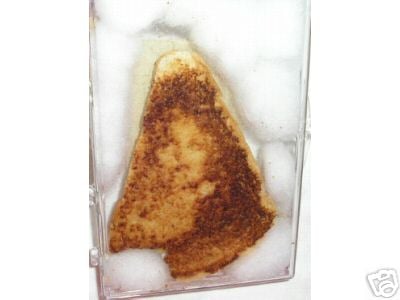
I have watched this video upward of ten times, and no amount of anticipation, concentration, stern looks, putting hands on hips, or even cursing has allowed me to see the concave side of the mask as concave. Every single time, the visual information goes into my brain and some filter is applied to the raw information and POOF it’s convex again. It seems that this illusion works only for human faces, as “it doesn’t work well with other objects, or even with upside-down faces.” This suggests that there is a program in the brain trying really hard to find face-like patterns in visual information – this is why we see faces in clouds, or snow covered mailboxes or even grilled cheese sandwiches. We can also recognize faces when they are distorted or compressed or otherwise obscured:

The New York Times > Science > Image > Distorted or Blurry, the Face Shines ThroughThis is likely a developed ability to allow us to recognize faces quickly and unconsciously instead of having to consciously process the facial features and determine that it was a face. It was helpful to humans to be able to recognize faces of other humans, both to determine that they were human and to distinguish them from other humans.

The results of a recent study strengthen the suggestion that this is a process applied by the brain on received visual input. Two researches in London found that people with schizophrenia did not experience the illusion and reported seeing concave faces. When they used an fMRI scanner to measure brain activity on people with and without schizophrenia while viewing the rotating mask, there was a significant difference between the brain activity of people with and without schizophrenia:

[The researchers] analyzed the fMRI data using a relatively new technique called dynamic causal modeling, which allowed them to measure how different brain regions were interacting during the task. When [neurotypical] subjects looked at the concave faces, connections strengthened between the frontoparietal network, which is involved in top-down processing, and the visual areas of the brain that receive information from the eyes. In patients with schizophrenia, no such strengthening occurred.

Dima thinks when [neurotypical] subjects see the illusion, which is somewhat ambiguous, their brains strengthen this connection such that what they expect — a normal face — becomes more influential, overpowering the actual, though unlikely, visual information. [People with s]chizophrenia , meanwhile, may be unable to modulate this pathway, accepting the concave face as reality.

What I think is most interesting about all this is the clear illustration that the functioning of the brain is still largely a mystery to us. This illusion basically exploits a processing error that occurs in neurotypical brains and, incidentally, is used in a lot of the illusions at Disneyland’s Haunted Mansion ride. But there are so many other processing glitches that instead of being seen as an amusing and harmless byproduct of a neurotypical brain, are seen as problematic and annoying if they are credited at all. I work and concentrate better when I play music or I take a three minute break to play Bejeweled. Why? I have no idea. But I doubt that any supervisor asking me why I’m playing Bejeweled could explain to me why their brain perceives the concave mask as convex. Or could stop doing it if they just tried a little harder. Maybe if we had a better understanding of how brains worked it would be easier for people to understand and credit the reality of mental disabilities.

Note: clearly, this illusion is not a diagnostic test for schizophrenia and should not be treated as such.

I Hope You Feel Better

I hope you feel better.

They mean well. They always do. It’s what people say when they hear someone they know is in pain or ill or uncomfortable. I’ve learned that tears and “Why would you say that to me?” while an accurate reflection of how it makes me feel is pretty much guaranteed to lead to all sorts of unpleasantness I don’t want to have to deal with.

Whoa where did that come from I was just trying to be nice. What’s wrong with her? Can’t you just take it for what it’s meant?

I really can’t. For one thing my brain doesn’t process subtext quickly enough to have conversations at full neurotypical voice conversation speed — I’m doing the best I can keeping up with the text alone. But I don’t wear a sign that says “I am not good at auditory processing.” If I did I’d be explaining that all the time too. I don’t like talking that much.

(What’s that mean? It means I hear fine. I hear everything. ((When tinnitus isn’t in the way meh.)) What I have trouble with — and sometimes it’s harder than others — is pulling the thread of one person’s voice out of everything else that’s coming in through my ears and turning sound into meaning. If there’s a television in my visual field this task gets harder. This is why I take books to restaurants; I usually can’t make out what the person I’m eating with is saying anyway.)

Well. I can take it as it’s meant when it’s someone who doesn’t know me. When the person saying it doesn’t know that I have a disease that leaves me in pain all the time and exhausted all the time and makes it hard to walk and think and work and all the Weird Shit that goes along with it I can accept “I hope you feel better” because it doesn’t actually mean anything. It’s just politeness.

When the person who’s saying it has heard me or read me (often we’ve also had the conversation amndaw wrote about in her Who Hates to Hear They Look Great? post) it hurts. Lately I’ve been not eating much and throwing up a lot and it’s not a lot of fun. I mentioned that I didn’t feel good at my LiveJournal and every comment was a form of this. I even got one in imperative voice: “feel better soon.”

I have a chronic disease that isn’t curable and I have not heard of it going into remission. This is not temporary. Sometimes the symptoms are excruciating. Sometimes the symptoms aren’t so bad. They never go away. Even if I never feel any better than I do right now my life will still be worth living and I’ll still be happy and I’ll be okay because I work really hard at living my life and being as happy as I can in it. For me it includes accepting that I will not get better. It also includes some complaining about feeling rotten because accepting that I won’t get better doesn’t turn it into rainbow-flavored unicorn shit.

Demands that I feel better discount all that.

I want to tell people to please not say that to me. But I know how it’ll go. I’ll be the mean cripple yelling at people who were just trying to be nice. So I mostly don’t say it.

Bonus Section:
Since most essays from marginalized people on the topic of Insensitive Things Privileged Folks Have Said To Us will garner at least one comment along the lines of “Well if you’re going to tell people they shouldn’t say whatever how about you tell us what we should say.” At which I’m like thanks for the derailment attempt that’s so thoughtful! I am so delighted to do this work for you you have no idea. But I do actually have something here. An expression of sympathy that doesn’t include a request or demand that I do something impossible is always nice. I’m a really big fan of “That sucks. I’m sorry you don’t feel good.”

Not So Silent

As I’m typing this, it’s the wee hours of the morning of December 6th. Today marks the 20th year since the Montreal Massacre, when Marc Lepin walked into the Ecole Polytechnique and murdered 14 women, blaming feminism for ruining his life. (He also injured 10 other women, and 4 men, before turning the gun on himself.)

Over the past 20 years, I’ve probably attended 14 memorials for the Massacre. The ones I’m most familiar with were the ones held at the first university I attended. There, we would gather in a solemn circle lit only by candles. 14 young women would each read the name of one of the dead, and blow out their candle, and we would mourn.

Last year I attended Halifax’s first “Not So Silent Vigil”. Instead of focusing on the murders in Montreal, this vigil was for all the women in Canada who have been victims of domestic violence. Speakers, singers, dancers, and even a hilarious feminist comedienne took on the subject of violence and sexism. There was a moment of silence, in memory of our dead. There was a moment of screaming, for the women who cannot or will not scream.

We have this memorial for gender-based violence every year. In recent years, national vigils have begun to remind us of dead and missing First Nations women (Sisters in Spirit Vigil [PDF]) There are vigils around the world for trans* men and women. We are beginning, slowly, to talk about how these different identities mean that some women’s deaths count, while others don’t merit more than page B3 in the local news.

The Not-So-Silent Vigil (last year) was a group project where many women representing many groups in Halifax came together and created a dramatic and moving experience. I found it to be inclusive of First Nations women and Africa-Nova Scotian women, although others may have different opinions.

It was until I was walking home with Don that I realised that there had been no mention of women with disabilities.

I don’t fault the people behind the Vigil for this. They did a lot of hard work to bring together the groups that they did, and I have no idea if more people will be involved this year, if women with disabilities will be included. (If not this year, then I should get myself involved for next year – I think the women who do this work every year take on a great deal, and I wouldn’t want to ask them to do more than they already are.)

But I also wonder – would it be controversial for me to ask for a moment of silence and screaming for Tracy Latimer? Every time her murderer, her father, comes up for parole, the newspapers take the opportunity to argue whether or not it was morally wrong for him to murder Tracy. People argue that he should be released, because it’s not like he’ll kill again. Disabled children don’t come along every day, after all.

I don’t know, I don’t know. It’s really hard for me to write about this. I don’t want to risk being told that the murder of women with disabilities is a special interest that shouldn’t be brought up at this memorial. But at the same time, I have no reason to believe that I would be told that (except that I’ve been told that in the past, about other memorials to violence against women, but not by this group). Is it appropriative to want to name our names, to remind everyone that violence against us is sometimes considered okay, because our lives are considered less worthy?

Katie-Lynn Baker was starved to death by her mother. Her murderer argued that she could tell Katie-Lynn, who had Rett Syndrome (a form of autism) and couldn’t speak, wanted to die, so she just stopped feeding the 10 year old girl. Her murderer was never even charged with a crime.

Chelsea Craig was fed a lethal dose of medication by her mother, who was found not criminally responsible due to mental illness. The accused claimed she murdered Chelsea because she didn’t want to leave Chelsea alone with her father.

The murderer of Charles-Antoine Blais drowned him in the tub because his autism was too much for her. After her year of community service, she became a spokesperson for an Autism foundation in Montreal. He was 6 years old.

We don’t talk about these names, these deaths, very often. Tracy’s comes up whenever her murderer is up for parole, but I had a hard time finding information about the other names, about Chelsea and Katie-Lynn and Charles-Antoine. We don’t seem to have a national memorial, a day to honour the children who are murdered for being disabled, the women who are raped for being institutionalized, the beating and torture of cripples done out of boredom. We don’t recite the names of our dead.

Should we? Should I incite controversy and recite the names today? Should I shout them during our moment of screaming, for myself if no one else? Should I approach the women who have worked so hard on this vigil and ask to be a part of it, so next year I can recite the names of every woman with disabilities murdered in Canada in the next 12 months?

Is silence ever the right answer?

Today we remember our dead, killed for being women and daring to attend Engineering School, and I recite these names, like a rosary, every year.

Geneviève Bergeron
Hélène Colgan
Nathalie Croteau
Barbara Daigneault
Anne-Marie Edward
Maud Haviernick
Maryse Laganière
Maryse Leclair
Anne-Marie Lemay
Sonia Pelletier
Michèle Richard
Annie St-Arneault
Annie Turcotte
Barbara Klucznik-Widajewicz

I hope you will all forgive me, but this has taken 2 1/2 hours to write, and I have no idea if I’ll be able to discuss it.

Which Is Worse: Reality TV or the commentary on it?

I’d heard mentions recently of the show Hoarders, on A&E. (I’m not going to link to their site.) The show, from what I gather, is a series with episodes focusing on individuals who compulsively hoard possessions. I’ve never watched it and do not plan to, as I’m extremely uneasy about television shows that focus on people in crisis to, well, entertain other people. I have the same issues with Intervention (also an A&E show) and the Celebrity Rehab/Sober House/Sex Addicts shows with Dr. Drew. I understand that on some level, they could be useful or educational or contribute to diminishing stigma and demystifying therapy and counseling, but mostly it just feels like taking advantage of people who are dealing with addiction or disability.

This is especially true as the core of all reality tv is, of course, drama – so the shows focus on people in absolute crisis, at proverbial rock bottom, relapses and failures. And the drama is heightened when the person’s disability or addiction is as extreme as possible. So the Hoarders show focuses on people who are extreme hoarders, having lost friends and family because of their compulsions, not someone who has a drawer in the kitchen filled with old takeout menus. This extremely heightens the message that the person in the show is an “other,” a “freak,” to be gawked at.

And that’s the problem – even if I never watch these shows, there are still people who watch them and then talk or write about them. I’ve managed to avoid the worst of it, but commenter Penny, catastrophe discovered this “gem” at Jezebel and sent it my way as an example of the ableism at its extreme. It’s bad enough that before I go any further, I should warn you that some of the quotes are truly horrifying and you may not want to read them. We start off on a great foot with the title: “Sometimes, A Hoarder Just Can’t Be Helped.”

The very first sentence of the post informs us that the author found Augustine, the woman who is the focus of this episode of Hoarders, “frankly, very hard to empathize with.” Red flag! You are not watching this television show to determine whether the person with a disability is worthy of your empathy! Or rather, if you are, you should turn the tv off immediately. This is a real woman, a person, a human. The premise of the show, indeed the title of the show, indicates that she has a disability that has had a monumental effect on her life and functioning. If you are watching a show about her without empathy, then you’re just pointing at a sideshow freak.

The post then goes on to applaud the professional counselors who come to help Augustine, “who miraculously remain positive and chipper throughout the entire ordeal” even though there is stuff in the hoarded material that the author clearly considers to be super duper gross. But in the author’s eyes, Augustine’s biggest sin is not hoarding icky things, it is that she “has no remorse for what her actions have done to her family and her community … and absolutely no gratitude toward the people who are trying to help her stay in her home. She only blames other people for her situation.” This is the point in the post where my jaw actually dropped open. Yes, the woman who the show profiles specifically and explicitly because she has extreme compulsions to hoard … has strong compulsions to hoard! The author seems to think that Augustine has been hoarding out of spite or stubbornness and now that these people are helping her, she will just “snap out of it” and repent. But that’s not how a disability works. And blaming Augustine for not being magically cured of her disability during the course of taping is cruel and ableist.

But wait – it gets even worse. We are not done applauding these saintly folk who have taken time out of their days to help this woman with a disability who does not even appreciate all that they are doing for her. “Watching this episode, it’s impossible not to be struck by the generosity and caring of the people who are helping Augustine, and to wonder if their resources couldn’t be used helping other people who actually want to change.” Yup. That’s a direct quote, really. Or, in other words, Hey, we sent a counselor down there, and she didn’t immediately change her entire life and patterns of thinking. So fuck her. We’re done with her. Because this woman with a disability didn’t act the way we wanted her to. “Augustine seems less like a person with a compulsion caused by feelings of loss who desperately wants to get her life in control, and more like the clinical definition of a sociopath.” Or, because she wasn’t disabled in the way the author expected her to be disabled, we should give up on her.

So for me, the commentary is worse than the show itself. The show just places the person with a disability in the public eye – it takes a member of the public to do the pointing and laughing.

Disability 101: Treatment Suggestions and Why They Are Not a Good Idea

I suggested a treatment/”cure” to a PWD for her/his/zie’s condition, and they ignored my suggestion/did not throw themselves at my feet with gratitude/got upset. Why? I was only trying to help!

Many people who do not live with chronic health issues, perhaps in a spirit of wanting to help those they know who are in pain, disabled, chronically ill, or affected by a neurological or mental health condition, may suggest different treatments or ways that they believe the person with the condition, illness or disability should use to “get better.” Many PWDs and chronically ill people, however, have experienced this exact process before, and often to the point where such “well-meaning” pieces of advice get…well, annoying; a stranger, acquaintance, co-worker or relative might suggest something that has been suggested many times before. Such “well-meaning” suggestions may imply some very different things to the PWD, chronically ill person, person with a mental health condition, or non-neurotypical person, namely:

…that they cannot be trusted to manage their own health, disability/disabilities, or course of treatment. Many people with disabilities and chronic illnesses have found treatments that improve their quality of life. Even with these treatments, they will probably still remain disabled/ill or still have their condition; the treatments that they have worked so hard to find, additionally,  most likely work for them. It is not your job, whether you are a friend, relative or other person concerned for the PWD’s “well being,” to bombard them with suggestions for different treatments, or push them to “just try” treatments (some of which may even be questionable in their effectiveness). There is a long history of people with mental health conditions, the non-neurotypical, persons with disabilities and chronically ill people being forced into undergoing treatments, into hospitals, and even into institutions by able-bodied people who presume that those with the health problems are not pursuing the “right” kind of treatment, and that this must be corrected—even at the expense of the individual’s humanity. Unless you are a professional, doctor or other specialist working with the person who has one of these conditions, and/or unless the treatment that they are undergoing is actively damaging their health, it is probably best to keep your recommendations about what course of treatment that you think the individual should be undergoing to yourself.

…that you are frustrated by the individual’s inability to “get better.” You may not say or even think this outright, but in some cases, actions speak louder than words.

…that you want to be given cookies/be thrown a parade/told you are fantastic for suggesting something that, in actuality, has probably been suggested to the individual many times before. In its more severe forms, this tendency is known as the “savior” or White Knight complex. Here’s the problem: Disability, chronic illness, mental health conditions, non-neurotypicality and pain, for the most part, are not things that can be cured. They can be dealt with, but it is oftentimes up to the person with the condition—-with appropriate support from family and friends-—to decide which treatments he/she/zie would like to pursue. Though you might like to, you cannot be the affected person’s able-bodied savoir. It is not the job of PWDs/chronically ill people to make you–an able-bodied person–feel better about yourself, whether by following your every treatment-related suggestion, or being uber-thankful whenever you deign to offer well-meaning advice that is related to their condition(s).

In addition, finding the right treatment(s) to improve quality-of-life can be a long, tiring, and agonizing process for many persons with disabilities, chronic illnesses, health conditions, mental health conditions, and neurological conditions. For many, starting an entirely new treatment for their condition(s) would, on some level, entail starting all over again; since getting to the point to where they are able to function and where their quality of life has been improved takes a long time, do you think that many non-able people would want to start from square one again to “just try” a treatment that’s been suggested, offhand, by a “concerned” person in their lives, that might not even work for them—-or that, in some cases, may make them worse? Because of each individual’s limitations when it comes to things such as time, finances, energy, tolerance/intolerance of additional discomfort or pain, or medication/treatment side effects, starting over with a “new” treatment might actually be a huge inconvenience for some people with disabilities, chronic health conditions, non-neurotypicality, or mental health conditions.

An earlier version of this piece was posted at Faces of Fibro on July 6, 2009.

I don’t have a “real” mental health condition, I’m just weak, and other bad self-talk

One of the hardest things for me in dealing with my mental health condition is my very strong theory that everyone else is having exactly the same problems that I am, but they’re just 8 million times better at dealing with them, and hiding them from everyone else. And thus, I don’t talk about my mental health, much, because everyone else is obviously coping with the same thing, and I’m just a big whiner who can’t cope and fails at everything and is useless and should just run away and everyone will be better and– stop.

For extra special bonus points, my mental health condition will also remind me that if I just try hard enough, if I just do more things, I will prove that I’m coping Just Fine and everyone will love me and why would anyone want to talk to someone who isn’t doing all this extra stuff and if I just could cope the way everyone else did I wouldn’t have these problems and I would just be good enough and not have to do all these things and– stop.

It’s a fun game my brain chemistry plays with me and part of the reason it’s so successful is because of how mental health conditions are portrayed in popular culture.

I don’t talk about how my brain is working this week (this month, this semester) because I’m afraid. I’ve already experienced backlash related to my mental health condition online, and I fear “coming out” to my professors, my classmates, or the people on any of the six committees I’m on this semester because suddenly I’ll be weak. I’ll be the scary girl who might snap. Maybe they’ll ask about my experiences being detained by hospital authorities for “my own good”. Maybe they’ll start to doubt the validity of my research, or dismiss my opinions, or stop telling me about meetings, or start talking about me behind my back, whispering and then they’ll be making fun of me all the time and it will be just like high school and I am not sure I can cope with that again and I don’t want to go to the hospital and I don’t want to go to the doctor and tell them I’m not coping because they’ll lock me away and– stop.

It took me a decade of this constant self-talk before someone told me it wasn’t “normal”, and that I could get help to deal with it. And despite having gotten effective help in the past, despite increasingly being able to keep myself focused and on task and not falling apart all over the place, I’m still deathly afraid of talking to people about mental health concerns. I’m still afraid, today, right now, to go to my doctor’s appointment because doesn’t everyone have their heart pounding in their ears during class? Isn’t everyone convinced their profs all hate them? Doesn’t everyone think that if they just stretch themselves a little thinner, they’ll be good enough?

The only reason I resisted getting help for so long, when I could have been getting help as soon as I started having these symptoms, was because Mental Illness has a huge social stigma attached to it. People like me, who “just” have such bad self-talk that they harm themselves in ways that aren’t easily noticed (six committees? plus the writing for the paper? Plus the FWD/Forward blog duties? Not to mention trying to finish the MA in a year? With a husband who’s recovering from cancer surgery and has a disability? And trying to make sure everyone eats healthy, and trying to keep the housework up? Self, what are you doing? Besides doing it all wrong, of course.) can end up not seeking help because I’m not crazy, I’m just stupid and lazy. We’re lead to believe “real” mental health conditions are like t.v. version of schizophrenia and movie versions of OCD.

I had a great ending planned to this, that would invite people to talk about how pop cultural portrayals of mental health concerns affected them. I also wanted to write about how I don’t want to put a stigma on schizophrenia and OCD, but on the way these conditions are portrayed in the media, but if I keep writing, it’s going to be another way to not go to the doctor and get a needed prescription for anti-anxiety medication. Last year I didn’t go to the doctor until I thought I was having a heart attack and could barely breath.

But it’s all in my head, right? People like me, we’re just weak.

Guest Post: Hanging Up the Cane

Lis is a 22-year-old university student from Western Canada. She studies psychology, and is currently working at a school for at-risk inner-city youth. In her free time, she writes fanfiction and participates in the Society for Creative Anachronism.

The first time I held my cane, I cried.

It wasn’t a feeling I expected, to be honest. I’d been fired the week before from a job I enjoyed, for telling my employer I was in too much pain to stand for the entire shift, but things were coming out on my side. I had all my friends and family supporting me, and I’d found enough self-esteem to file a complaint with the provincial Human Rights Commission, alleging discrimination on the basis of disability. It was time, in my mind, to give up beating around the bush.

I’d been raised by parents who lovingly ignored my seemingly minor birth defects, who didn’t want to stigmatize me any further than a Gifted girl in public school could be. They felt that letting me wear normal shoes was the least they could do. When a nagging ache formed in my right knee and hip in my teens, I tried to ignore it and the fact that it wasn’t going away. I was twenty before I went to a podiatrist, who didn’t have to do more than examine my hips and spine when I told him I was in pain before snorting in disbelief and saying, “Yeah, no wonder.”

My right leg is five and a half centimetres shorter than my left, with the discrepancy fairly evenly distributed between my femur and tibia. It’s the kind of thing only the tailors who hem my pants notice, when they call my house anxiously asking me to come in for a second fitting in case they made a mistake.

But I was sick of living in pain, and after I’d been fired for requesting a stool it didn’t feel worth denying my pain anymore to look abled, so I went out to the Mobility Aids aisle of the local London Drugs. A fellow fanfic writer who used a cane had told me what to look for: adjustable, orthopedic, and unrepentant. The one I picked off the rack was a vivid aqua.

Then I cried holding it in my hands, because I couldn’t pretend anymore that I wasn’t disabled.

After that was over, I went down to Stationery for a pack of Sandylion stickers, made my purchase, and sat outside that drugstore wiping the tears from my face and plastering the cane with pink and purple butterflies.

How do I say what that cane meant to me? None of the abled people I’ve met understand it with anything but pity. I’ve always had low self-esteem and what my psychologist later diagnosed as social anxiety, a terror of asking that my needs be met, of attracting unwanted public attention. Now I had a public declaration of my needs, and it was bright blue. The cane did some of my talking for me, so I became able to stutter a request for a seat on the bus, or ask not to walk long distances. I was attracting the sidelong glances and whispers I’d always feared, but all they made me do now was grip my cane a little harder and stare back at them. I knew I was in the right. They knew it, too, because they always glanced away.

How can I explain that after years of living in pain to be what was expected of me, that cane taught me to say I want and I need and I deserve? That it was never something I was bound by; that it gave me the ability to walk further, stand longer, move quicker than I would before? That I missed it when it wasn’t in my hand?

Society marginalizes disabled bodies and takes away their sexual agency, but being visibly disabled helped me find mine. I’d always felt anxious about my body, about being attractive, about being good enough: I always chided myself for not reaching some nebulous ideal. The great lie I had been able to believe when I was abled was that perfection was achievable: that if I only said and did the right things, I’d escape criticism from myself and others. It was in facing criticism and dismissal that I learned I’d been playing a mug’s game. The point wasn’t to make other people happy; my body didn’t and couldn’t exist to meet their standards. The only standard I could meet was mine. I used to be mousy, deliberately homely, as if my unfitted jeans and baggy shirts said, I quit, don’t criticize me for not being sexy. I wasn’t trying anyway. I was able to use the invisbility cloak of disability to begin to experiment with femininity, with ornamentation, without needing to be perfect. I could wear a low-cut shirt, I reasoned, because I’d have my cane. Nobody would look at me anyway.

(Oh, but it surprised me, the first time somebody looked anyway.)

Being disabled meant, for the first time, having the ability to talk about my body and my frustrations with it without judging it as bad. It meant that I, with all my flaws visible and invisible, was still worthy. That I still possessed dignity. That I was still human, no matter whose standards I failed to meet.

I don’t know how to explain any of this. I don’t know how to respond when I walk into work now, freely and unassisted, and have a coworker say, “Hey, you aren’t using your cane! That’s fantastic!”

The orthotic lift I started using a year ago finally stopped hurting, enough that a slight increase in height at the end of September took away the pain in my knee within two weeks, which got rid of my need for the cane. My ambient pain has at least halved. I’m not relying on prescription painkillers to get through my day. I can climb stairs. I’m beginning to hope I can even fence again. After so long living with pain I didn’t think would ever go away, I almost don’t know how I feel. I guess I’m happy. I’m cured, right? I’m enjoying my body again. I definitely don’t miss the pale, persistent ache in the shoulder of my caning arm that no height adjustment could completely banish. I ran to my car last week, just because I can do that now.

My cane still hasn’t moved from its habitual place, on the floor of my car between the seat and the door. I don’t take it out to use it anymore, haven’t touched it for the last two weeks, but I can’t bring myself to hang it up. Sure, part of me’s waiting for the honeymoon to end and the pain to come back at any moment, but that’s not it. That cane has been a friend to me. It’s been part of my voice, my statement about who I am, and a lack of apology about being flawed in public. It’s helped me move, let me go places, allowed me to function. It has been a source of succor to me in my hour of need, and I find it as hard to cast aside now as it was to pick up in the first place.

What I really want to say to the well-meaning people who wish me health and happiness is, it isn’t about the cane. It wasn’t about receiving pity from people in public for being disabled. It wasn’t about the looks or the whispers. I was in pain that disabled me from truly living for years before I picked that thing up. It was never about the cane.

It was about me.

I’d Rather Be Dead

I didn’t think I’d need to do this but it has come up: This post is not a place to discuss the merits of assisted suicide. Many disabled people, including me, find it really unsettling. In the context of able-bodied and neurotypical people telling us our lives aren’t worth living it is especially inappropriate. Comments on the subject will not be published.

Warning: The following includes graphic descriptions of medical unpleasantries.

I could never live like you. I’d rather be dead. You’re so strong. You’re so brave. How do you do it?

I have a chronic pain condition. Most of the time I don’t bother getting into detail because I don’t feel like it but it’s illustrative here, so I’ll share. I live in pain. It pools in my hips and my left knee and my right shoulder and sometimes my legs turn to stone. Every step I walk hurts and I keep getting slower and more labored. (My disability is invisible only in the most technical sense. Fortunately people have lots of practice not seeing disability! So, phew.) Sometimes, like the other night, my hands hurt so much I can’t get the non-child-resistant easy-open top off the bottle of pain meds.

(If my hands hurt so much why do I type? Why not use a voice writer? Because this voice here, this is the voice I write with. This is not the voice I speak with. I would write far less if I had to use my voice to do it. And it’s only pain.)

And then there’s the Weird Shit. (It’s a technical term.) I take antibiotics daily because if I don’t I get a urinary tract infection which leaves me crumpled in the bathtub screaming, gushing blood, graying out, waiting for the big antibiotics to get working. Sure I could go to the emergency room and I have — where they give me the same antibiotics I’d get from calling my urologist’s answering service and pain meds weaker than what I take daily. And I get to deal with having medical professionals react to me being trans* and poor.

A sore throat once turned out to be a fungal infection, another one was a tonsillary abscess, the treatment for which was getting stabbed with a large-bore needle then having the contents of the abcess squished out. It was about as comfortable as it sounds, and it tasted every bit as good. I did not bite the nurse practitioner who was treating me. My general practitioner later looked at me really weird when I expressed concern that my next sore throat (it was just a virus and a runny nose) might be one of these until I explained that I’d actually had these things.

The big one was when a cold — in the space of three weeks — became bronchitis, then pneumonia. If I rolled onto my right side, I felt like I was drowning. If I sat up, I felt dizzy. A chest x-ray showed much of my left lung was wrong. I was admitted to hospital that day, the five doctors that came that night took my wife into the hall and told her the things that could be killing me. There was fluid in the space around my lung. They poked at me and stuck a needle in and drew off three hundred millilitres. I didn’t get appreciably better. They installed a peripherally introduced central catheter so they could give me vein-killing antibiotics like vancomycin and aureomycin. The fluid they’d drawn off, cultured, proved to be sterile. More chest x-rays showed shadowy bits around my heart and more imaging showed fluid buildup there too — between having a lung and a third to breathe with and a heart working under the increased burden, I was understandably tired. Even more understandably when some time during the week I was in hospital, my red blood cell count fell through the floor. They were tracking everything that came out of me so it wasn’t like the blood was going anywhere, it just… vanished. They gave me more blood. Later they got the bright idea of drawing off the fluid around my lung at least and took me down to radiological medicine. I got to sit up for it. They did throw in some lidocaine, which at the time I hadn’t figured out that I could say “Hey I don’t metabolize this like most people I need more time for it to take effect before you start stabbing me with shit” so the ginormous fucking needle they stabbed me in the back with? I felt most of that. Ow. I wasn’t supposed to see it (mustn’t discomfit the patient, even if she finds things comforting that most people don’t), but I got a look at the three-litre vacuum bottle half full of murky green fluid they’d sucked out of me. I felt much better, though that lung felt crinkly like cellophane from having been collapsed so long. It was a teaching hospital, so the place was crawling with med students who all (I heard — the nurses wouldn’t actually let them come near my room for which I am still grateful) made excuses to come read my chart. I was medically interesting. I never did get a diagnosis. A real diagnosis, I mean. I know full well that ‘idiopathic pericarditis’ means ‘the membrane around your heart is inflamed and we don’t know why.’

On a fun side note, while I was in hospital busy being sick with Weird Shit I kept getting calls from work. I was the only person in the company who knew how to do what I did, so I provided user support. From my hospital bed. On morphine, with blood running into my arm. It was kind of impressive, in an appalling way. When I was home (I was out of work almost two months and none of it was remotely vacational — at some point I’ll write about having had a whole week of vacation in the ten years since my diagnosis with this chronic pain condition) they sent someone to bring me a computer so I could do some things, occasionally.

I’ll stop with the Ways Kaninchen Zero Is Very Very Ill now. The point is yeah, there’s a lot going on. Most of us could tell similar stories, or scarier ones.

I cry, often. Even with the meds I’m in a lot of pain all the time. I’m exhausted, all the time. I work thirty to forty hours a week in spite of it (though I’m running up against the limits of that too).

People who don’t live with chronic pain wonder how I do this. How do I live with this much pain? How do I keep going? How have I done this since I was a teenager? (I’m thirty-seven now.) I must be a fucking paragon of moral fortitude, because (I’m told) I’m not even all that bitter about it (though I am, sometimes). I’m happy, when I can get around the depression I’ve carried most of my life too.

I could never live like you. I’d rather be dead. You’re so strong. You’re so brave. How do you do it?

I hear this a lot. It’s actually not a secret, though I think the able-bodied are somewhat afraid of the answers. It’s not even difficult. Most anyone could live my life, probably. I have a good life. My doctors listen to me when I tell them what’s going on with me which is wonderful after so many years of being told I wasn’t in pain because the tests didn’t show anything. I have books, games, computers. Because of the last I have friends and I fall in love about five times a year. (I’ve been working on doing things that scare me and I’m telling people more that I’m infatuated, crushing, in love. And that they don’t have to feel the same way about me at all.) Sometimes I can actually stop writing a story and call it finished.[1]

Here’s how I do it: I want to live. I don’t want to be dead. My life is worth living. It’s not tragic. It’s easy. We’ve all got the means to get acclimated to a new home, new furniture, changes in climate and environment. Having a different bodily environment or neurological environment is just something else to get used to.

The commenters in the Why Are They So Angry At Her? thread have it right, I think. The physio/neurotypical haven’t bothered to consider our lives from any perspective but their own and all they see are limits. They imagine being ill with the flu (which leaves me in bed and miserable and hating it too), or an injury that hurt and impaired their movement but ultimately healed: a sprained joint, a broken bone. (All of which I’ve done also: counting the events where more than one bone broke at a time as one, I’ve broken bones more than ten times though I’m a little fuzzy on exactly how many — broken toes are hard to track.) They recall how miserable being ill or injured was and imagine having a disability (or several) as being ill or injured and thus miserable all the time.

We’re not. Even when depression is part of a constellation of symptoms or a side effect of meds or just something else to live with, we’re not. We’re just living, like everyone. When we hear “I’d rather be dead” it often sounds like “you should be dead.” And with good reason. People with disabilities are killed by those who should care for them. Parents kill their disabled children and the public’s sympathy is with the murderers. Caregivers in institutional facilities kill residents and few people care.

Amanda has written extensively about this at Ballastexistenz, and her Background, to the Foreground post is excellent. Not Dead Yet is dedicated to working against euthanasia and assisted suicide policies that make killing us legal, or at least fuzzy. Lauredhel’s post at Hoyden About Town about Christian Rossiter’s lawsuit to refuse nutrition hits most of the points I try to make when I talk about this issue. It’s despair and isolation that drive us to want to die. The neuro/physiotypical don’t see that part of it.

There are social feedback loops that reinforce these attitudes and keep us isolated. Ignorance and fear and hate go together. Neuro/physiotypical friends and relatives stop inviting us to things after a while. We’ve said we can’t come a number of times: we weren’t up to it for whatever reason that day, the venue wasn’t accessible, we didn’t have transportation. Eventually it becomes habit, justified by unhelpful concern. Whatever place isn’t accessible (it’s too much bother to plan for real utility). Oh, they probably won’t feel up to it (our lives are miseries anyway). Around it goes.

[1] Some of my stories can be found at my story blog, though be warned: nearly all of them involve themes of sex, violence, death, horror.

This is something I avoid thinking about

As a single lady with a disability, I have lots of complicated and tangled thoughts about romantic relationships. While there’s a lot to say there (my therapist can attest to that), it all boils down to my belief about myself (which I want to make very clear is how I think about me, not something I think applies to any other person with a disability in the entire world ever) that my disability makes me too much of a handful, too much work, too much effort, too much pain in the ass, to be worth loving.

This is of course demonstrably untrue – I have friends and family who love me dearly and demonstrate that daily. I have been in romantic relationships in the past as a person with a disability, relationships that ended for reasons not at all related to my disability.  And so most of the time, this fear is a tiny tiny voice in the far back of my head that only comes out when things get especially dark.

But then there are actual studies like this: Men Leave: Separation And Divorce Far More Common When The Wife Is The Patient. Some findings:

A woman is six times more likely to be separated or divorced soon after a diagnosis of cancer or multiple sclerosis than if a man in the relationship is the patient. Researchers were surprised by the difference in separation and divorce rates by gender. The rate when the woman was the patient was 20.8 percent compared to 2.9 percent when the man was the patient. “Female gender was the strongest predictor of separation or divorce in each of the patient groups we studied,” said Marc Chamberlain, M.D., a co-corresponding author and director of the neuro-oncology program at the Seattle Cancer Care Alliance (SCCA).

The study was relatively limited – it examined only patients diagnosed with either multiple sclerosis or significant brain tumors. And it did find that longer marriages were much less likely to result in separation or divorce. But overall, I found this pretty disheartening.