All posts by lauredhel

About lauredhel

Lauredhel is an Australian woman with a disability.

Quickhit: “From Cool to Crippled” in advertising

Bad Cripple shows us a couple of ads, in Why Equality is Elusive, Part I and Part II.

DontDriveStupid ad

Description [emphases are mine]: The ad is headed, in red,

“Drive stupid and score some kickin’ new wheels.”

This heading is placed beside the image of an slim adolescent boy, white-appearing and dark-haired, wearinga red T-shirt, black jeans, and black Converse-style sneakers. He is sitting in a hospital-style wheelchair. His arms are slumped on the armrests, his back hunched, and his head bent such that his face is in shadow and not clearly visible.

The small text in the ad reads:

“Nothing’s cooler than the day you get your driver’s license. But as soon as you start driving stupid, it’s not so cool anymore. Texting, using your iPod, racing, they all fall under the category of stupid. And dangerous. So before you get behind the wheel and try to prove how cool you are, here’s a little harsh reality. Nothing kills more Utah teens than auto crashes. Not fazed? Okay, how does the thought of spending the rest of your life in a wheelchair grab you? Look, every year far too many Utah teens go from cool to crippled in the blink of an eye. So if you’re one of those drivers who think they have something to prove, you can start shopping for your wheelchair now. And hey, if you think that’s harsh, wait until the day you roll it into school.

Drowsy Driving | Distracted Driving | Aggressive Driving | Impaired Driving | Not Buckling Up
Zero Fatalities
DontDriveStupid.com

As Bad Cripple says:

But the ad relies on antiquated and deeply rooted fears to scare teens noting that “every year far too many Utah teens go from cool to crippled in the blink of the eye”. Great, this undermines forty years of legislative initiatives meant to empower people with a disability. Teens are being taught that a wheelchair is akin to a tragedy, a fate worse than death.

If you go to the website, the header currently has a headshot of a conventionally-pretty white brunette girl with sutured wounds on her cheek and lip. The heading says, “Driving stupid can really make you look bad.”

So there’s the Don’t Drive Stupid campaign: it is assumed that for teen boys using a wheelchair is worse than death – and for teen girls, the worst possible fate is to have minor wounds on her face.

It is interesting to contrast these official messages – ableist, sexist, objectifying, dehumanising – with the posters made by high school students themselves for the campaign: a car knocking the motif off a signpost, ‘When you drive you hold someone’s life in your hands”, “you know you’re tired when you swerve to miss your car freshener“, “Last message received” with a crash and a breaking cellphone, and various others – none of which rely on stereotypes about marginalised groups at all.

~~~~

Next up, Bad Cripple brings us this Nike advertisement:
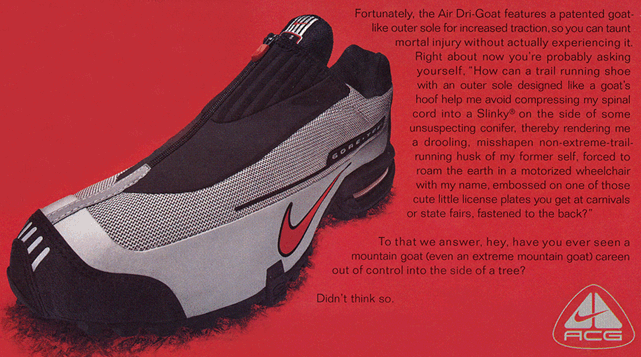
Air Dri Goat ad

Description: A Nike shoe sits on a red background. The text reads:

Fortunately, the Air Dri-Goat features a patented goat-like outer sole for increased traction, so you can taunt mortal injury without actually experiencing it. Right about now you’re probably asking yourself, “How can a trail running shoe with an outer sole designed like a goat’s hoof help me avoid compressing my spinal cord into a Slinky on the side of some unsuspecting conifer, thereby rendering me a drooling, misshapen, non-extreme-trail-running husk of my former self, forced to roam the earth in a motorized wheelchair with my name embossed on one of those cute little license plates you get at carnivals or state fairs, fastened to the back?”

To that we answer, hey, have you ever seen a mountain goat (even an extreme mountain goat) careen out of control into the side of a tree?

Didn’t think so.

Bad Cripple commentary reads, in part (check out the rest):

If anything is unusual about the above Nike ad it is the fact it was pulled. Imagery of this sort is sadly the norm and abounds. I see it every day on television, in newspapers, on the internet and in a plethora of magazines. Some people in disability studies call such images examples of the “defective person industry”.

Yup.
Recommended Reading for February 18th

Warning: Offsite links are not safe spaces. Articles and comments in the links may contain ableist, sexist, and other -ist language and ideas of varying intensity. Opinions expressed in the articles may not reflect the opinions held by the compiler of the post. I attempt to provide extra warnings for material like extreme violence/rape; however, your triggers/issues may vary, so please read with care.

Salon: How childbirth caused my PTSD [WARNING: story of obstetric assault and PTSD symptoms. More accurately labelled “obstetric trauma”, not “birth trauma”.]

He confirmed that I didn’t have PPD or any of its cousins. Yes, I had depression. Yes, I had anxiety. Yes, I was postpartum (four months at this point). But what I had was something else, something those specialists, so married to their own territory, couldn’t see. I had post-traumatic stress disorder.

Dis/Embody: Lost and masculine mobility [SPOILERS for Lost]

Perhaps the most frustrating thing about men and mobility impairments, particularly in dramatic television, is how often they are seen struggling against disability and attempting to overcome it to regain a properly dominant masculine identity. Disability as narrative obstacle, as it were. How much more novel and relevant would it be to watch a character adapt, craft alternative forms of masculinity, and resist cultural narratives of cure and exceptionalism?

Phoenix New Times: Shocking Pink: Arpaio’s Detention Officers Unnecessarily Terrorized a Psychotic Inmate Because He Resisted Wearing Pink Underwear [WARNING: assault, violence]

Esquire: Roger Ebert: The Essential Man

Now his hands do the talking. They are delicate, long-fingered, wrapped in skin as thin and translucent as silk. He wears his wedding ring on the middle finger of his left hand; he’s lost so much weight since he and Chaz were married in 1992 that it won’t stay where it belongs, especially now that his hands are so busy. There is almost always a pen in one and a spiral notebook or a pad of Post-it notes in the other — unless he’s at home, in which case his fingers are feverishly banging the keys of his MacBook Pro. […]

He calls up a journal entry to elaborate, because it’s more efficient and time is precious:

When I am writing my problems become invisible and I am the same person I always was. All is well. I am as I should be.

He is a wonderful writer, and today he is producing the best work of his life.

New York Times: Fighting Denied Claims Requires Perseverance

Ms. Carr’s form of shock is all too common. The Department of Labor estimates that each year about 1.4 billion claims are filed with the employer-based health plans the department oversees. Of those, according to data collected from health insurance industry sources, 100 million are initially denied. In simpler numbers, that is one of every 14 claims. […]

“About 53 percent of appeals work in our state,” said the Kansas insurance commissioner, Sandy Praeger. “That demonstrates that the process works.”

Chris Walters at The Consumerist: Protect Yourself From Unexpected Fees At Medical Clinics

An anonymous reader wrote to us to ask what he should do about unexpected bills from a medical clinic. He chose the clinic precisely because he can’t afford hospital bills in the hundreds of dollars, and was led to believe that there’d be no out-of-pocket cost. It turns out there was.

Jody McIntyre at Electronic Intifada: Interview: Disabled activist continues struggle in Bilin

Everyday, people were just waiting for the moment I would die. At first, on the news they said I was a martyr; my father heard on the radio that his son had died. Later, they changed the report, and said that I was a “living martyr.”

“Saying conjoined twins are disabled is insulting!”: Evelyn Evelyn, redux

[Cross-posted to Hoyden About Town]

Something that has really struck me about the conversations around Evelyn Evelyn is the reaction that “Conjoined twins don’t have a disability! To say they do is insulting!”

Not all commenters make the link between the two statements – some stop at the first – so I’ll take these two separately.

A little background: Evelyn Evelyn is Amanda Palmer and Jason Webley’s new ‘art project’, presented as fact but understood as fiction, in which they “discover” poor struggling musically-gifted conjoined twin orphan women, save them from their child porn and circus-exploitation past, and help them – in a long drawn-out process, due to the women’s traumatic fallout and difficulty relating – produce their first record. Palmer and Webley dress up as the twins to perform on stage, co-operating to play accordion, ukelele, and sing. They can barely restrain their sniggers while they interview about this oh-so-hilarious and edgy topic. More in the Further Reading.

“Conjoined twins don’t have a disability!”

So, a note on normalcy. The idea that some people would shout in defence “But conjoined twins don’t have a disability!” took me by surprise. I wonder how these people are defining “disability” in their heads, if they’ve ever thought about the subject – do they picture a hunched figure, withdrawn, unable to work, self-care or socialise? Do they picture someone undergoing huge medical procedures, someone with prostheses or other visible aids? What is the image in their heads?

Because disability can be all of these things, and none of these things. Disability isn’t a checklist, or a fixed point. Disability – and normalcy – are socially constructed. Disability is the interaction between a characteristic or a group of characteristics often called “impairments”, and a world that recognises people with these characteristics as abnormal.

Disability is considered a tragedy, a fate to be avoided at all costs. Disabled people are those that society defines as “abnormal”. Disabled bodies are the ones that don’t fit in typical boxes. Disabled people are people that the physical and social environment doesn’t accommodate. Disabled people are considered defective, deformed, faulty, frightening, feeble, freakish, dangerous, fascinating. Disabled people are stigmatised, laughed at, looked down upon, marginalised, Othered. Disabled people are medicalised. Disabled people are defined in terms of how currently-nondisabled people view them.

Disabled bodies are those that are subject to the able-bodied stare.

It is obvious with the most cursory of glances that in our society, conjoined twins are disabled. Society does not accommodate them. They are medicalised from fetushood. They are spectacle. Their operations are videoed and broadcast across the world. They are displayed, tested, stared at, discussed, and mocked, purely because of the shape and layout of their bodies. They are the subject of comedy fiction and “inspiring” tragedy nonfiction.

How can people simultaneously look at this project as funny and edgy and worth paying money to stare at, while considering conjoined twins to be “not disabled”? Why are their bodies so hilarious, then? Why is it so funny when Palmer and Webley cripdrag-up in that modified dress? Why do they snigger and smirk as they talk about “the twins” and their tragic tale? They do this – you do this – because you do see these bodies as Other. Fascinating, bizarre, freakish. Fodder.

People with disabilities resist these definitions, resist being marginalised, Othered, stared at, compulsorily medicalised. (Just as we try to resist, where possible, being beaten, abused, raped, exploited, exhibited, forcibly sterilised.) We laugh at ourselves plenty. We reclaim terms like “crip” and “gimp” and “crazy”. This does not grant able-bodied people free rein to mock us, to play schoolyard imitative games, to use child porn survivors as a little bit of “colour” for their projects.

There is a lot more to be said on the social construction of normalcy. I strongly recommend Lennard Davis’ Enforcing Normalcy . For more reading, check out this booklist at Hoyden About Town, our booklist here at Disabled Feminists, and our blogroll.

“To say that conjoined twins have a disability is insulting!”

This one’s quicker and easier to debunk. No, it’s not insulting. It’s as simple as that. It’s not an insult because being disabled is not an inferior state. Saying that someone is disabled is no more insulting than saying “Lauredhel’s a woman” or “Barack Obama is black”.

Being disabled just is.

~~~

Further reading on the Evelyn Evelyn conversation:

Annaham’s post here at FWD, Evelyn Evelyn: Ableism Ableism?

Amanda Palmer’s blog: The Whole Story Behind “Evelyn Evelyn” [WARNING: invented story about child sexual abuse and exploitation; the other links discuss this also]

Amanda Palmer’s blog: Evelyn Evelyn Drama Drama

Jason Webley: Blog #1 – Evelyn

Amanda Palmer’s twitter, in which she remarks “setting aside 846 emails and removing the disabled feminists from her mental periphery, @amandapalmer sat down to plan her next record.”, and follows up “pain is inevitable. suffering is optional.”

SPIN magazine: Meet Amanda Palmer Proteges Evelyn Evelyn

Sady at Tiger Beatdown: AMANDA PALMER WANTS TO SHOCK YOU. Just Don’t Get Upset About It, ‘Kay?

TVTropes: Rape Is The New Dead Parents

The linkspam roundups: First, Second, Third (and possibly more as time goes on)

Recommended Reading for February 17th

Warning: Offsite links are not safe spaces. Articles and comments in the links may contain ableist, sexist, and other -ist language and ideas of varying intensity. Opinions expressed in the articles may not reflect the opinions held by the compiler of the post. I attempt to provide extra warnings for material like extreme violence/rape; however, your triggers/issues may vary, so please read with care.

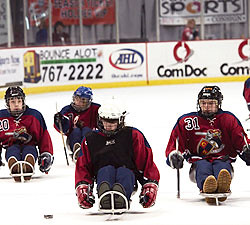
four people in uniforms and helmets on hockey sleds

new jersey newsroom: Sled Warriors: Children with disabilities teach disabled veterans how to play hockey

Here’s a twist. Imagine a child teaching an adult? Well, it’s being done right here in the Albany area where the kids’ Sled Warriors ice hockey team is holding a teaching clinic for adults.

The twist, you see, is this: the adults are disabled war veterans. Their teachers are youngsters who are athletic, strong-willed, courageous and determined – and physically challenged. It’s all part of the Stride Adaptive Sports program, a fairly new therapeutic recreation-related service for individuals with disabilities that spans many Northeastern states, including New Jersey.

hkfreeman at The Living Artist: Ableist Activism

It is a great irony that as I have become more aware of and invested in the need for social justice activism, I am less able than ever to participate in it. […]

In short, I am irked that right when I am most willing to Do Something, I am drowned in ableist pleas to Do Something that I cannot do. I am doing what I can – my art, blogging, participating in discussions when and where my spoons permit – but in the face of those endless pleas for phone calls, personal appearances, and donations, my best attempts are framed as pathetic excuses for avoiding “real” activism.

Times of Malta: Gozo churches urged to provide easier access for persons with disabilities

The National Commission, Persons with Disability, said today that complaints about lack of accessibility increased by 76 per cent last year compared to previous years. […] Mr Camilleri attributed the increase in complaints to the fact that people with disability were becoming more aware of their rights.

An area of concern, he said, was that despite the commission vetting building development plans submitted to Mepa, several new buildings still did not provide for access for persons with disability, meaning that the buildings were not built according to the approved plans.

BoingBoing: TSA forces travelling policeman to remove his disabled four-year-old son’s leg-braces

Philadelphia TSA screeners forced the developmentally delayed, four-year-old son of a Camden, PA police officer to remove his leg-braces and wobble through a checkpoint, despite the fact that their procedure calls for such a case to be handled through a swabbing in a private room. When the police officer complained, the supervising TSA screener turned around and walked away. […]

The screener told them to take off the boy’s braces.

The Thomases were dumbfounded. “I told them he can’t walk without them on his own,” Bob Thomas said. “He said, ‘He’ll need to take them off.’ ”

Ryan’s mother offered to walk him through the detector after they removed the braces, which are custom-made of metal and hardened plastic. No, the screener replied. The boy had to walk on his own.

Media Access Australia: Promoting captions at a young age benefits Deaf and hearing impaired students

Introducing captions at an early age has benefits beyond the individual child, as it impacts on changing attitudes and practice for all concerned. […]

The article looks at how using captions in a family setting from a young age promotes positive attitudes towards captions. Ensuring that all content viewed in the family home and at school is captioned helps normalise a child’s experience. Griswold also encourages the hearing impaired child to take ownership and become the ‘technology expert’ for switching captions on.

The Guardian: Anti-terror body scanners may be illegal, ministers warned

Ministers should act immediately to ensure that the use of full-body scanners at British airports is lawful, the ­Equalities and Human Rights Commission has warned.

The commission’s head, Trevor Phillips, told the transport secretary, Lord Adonis, ­serious concerns existed about invasion of privacy and there was an apparent lack of safeguards to ensure scanners were operated fairly and without discrimination.

L.A.Times: What makes Sammy run wild [meloukhia’s comment: “…the article gets better. Oh my stars, does it.”]

Obsessed with success, they find themselves in frenzies when the industry’s harsh reality clashes with their desires. Now, their condition has a name: Hollywood NOS. […]

Dr. Todd Zorick, a psychiatrist and professor at UCLA’s Semel Institute, calls the condition “Hollywood Not Otherwise Specified,” or Hollywood NOS. The unofficial term is a wry reference to the “NOS” designation in the Diagnostic and Statistical Manual of Mental Disorders, the bible of psychiatric ailments, which refers to a condition that impairs a patient but doesn’t fit with any specified, recognized disorder. Hollywood NOS describes a negative pattern of behavior for the sole purpose of achieving validation. The patients usually display a combination of symptoms: impulsiveness, anxiety, poor self-esteem and some personality disorder traits.

Recommended Reading for February 16th

Warning: Offsite links are not safe spaces. Articles and comments in the links may contain ableist, sexist, and other -ist language and ideas of varying intensity. Opinions expressed in the articles may not reflect the opinions held by the compiler of the post. I attempt to provide extra warnings for material like extreme violence/rape; however, your triggers/issues may vary, so please read with care.

frida writes: Valentine’s Day: Sex and Disability 2 [warning: discusses sexual abuse]

Here’s what I want: a movement from a culture of abuse and denial of our rights to sexual autonomy.

The Age: Bible bashing the homeless, Abbott style [This man wants to be our P.M. Seriously. ~L]

I was in Canberra last week and had the opportunity to ask Opposition Leader Tony Abbott whether a government under his direction would continue with the Rudd government’s goal of halving homelessness by 2020. His answer was no.

In justifying his stance, Abbott quoted from the Gospel of Matthew: ”The poor will always be with us,” he said, and referred to the fact there is little a government can do for people who choose to be homeless.

WA Today: Fine print hides risk of genetic test offer

Insurer NIB has begun offering its customers cut-price personalised genetic tests – which could expose them to higher premiums or even leave them unable to get life insurance or insurance payouts.

But the company says it has no ulterior motive and only wants to help its members manage their health. […]

Under the official “Genetic Testing Policy” of the Investment and Financial Services Association of Australia, life insurance companies can demand that a prospective customer hand over the results of any genetic test they have had done.

Vindy.com: Police trained to deal with disabilities

Township law enforcement is becoming more attuned to interacting with residents with a physical or mental disability.[…] “The major thing that can happen is the officer doesn’t realize the disability right away,” he said. “The officer will react on what he perceives is happening instead of what is actually happening.” […]

[Patrolman Tom Collins] said one thing officers should realize is that, like someone who raises his or her voice when worked up, a deaf person’s hand signals become more exaggerated. “Officers shouldn’t take that as a sign of aggression,” he said. […]

Kloss said no matter the severity of the disorder, those with autism usually have a set way of doing things. He said officers need to be aware of what could force an autistic person out of his or her comfort zone.

The Canadian Press: HEALTHBEAT: Drugs tested to improve learning in Fragile X syndrome, may give autism hints

Now a handful of drug makers are working to develop the first treatment for Fragile X, spurred by brain research that is making specialists rethink how they approach developmental disorders. “We are moving into a new age of reversing intellectual disabilities,” predicts Dr. Randi Hagerman, who directs the MIND Institute at the University of California, Davis, a study site. […] The experimental drugs have an unwieldy name – mGluR5 antagonists.

Media dis&dat: California law will clarify information about administering insulin to school-age students with diabetes

“This law will effectively address the dangerous situations currently faced daily by California’s school children with diabetes,” said Dwight Holing, Secretary?Treasurer Elect of the American Diabetes Association. “If passed, this legislation will clarify existing law and help children with diabetes in California public schools to get the care they need and are entitled to under federal and state laws.”

“Depriving these children and their parents of an effective solution to this critical health issue is a civil rights problem that can best be solved by the legislators of this state,” said James Wood of Reed Smith, LLP, pro bono counsel for the American Diabetes Association.

New York Times: Study Suggests More Veterans May Be Helped by Talking About Killing

Mental health experts said the new study confirmed findings from research on Vietnam veterans and did not break much new ground. But they said it underscored that treating stress disorder among veterans is often very different from treating it in people who, say, have been raped or have been in car accidents.

“People don’t understand the moral ambiguity of combat and why it is so hard to get over it,” said Rachel Yehuda, a professor of psychiatry at Mount Sinai School of Medicine in New York. “What makes combat veterans ill is not always about being a victim, but, in some instances, feeling very much both a perpetrator and a victim at the same time.”

Recommended Reading for February 15th

Warning: Offsite links are not safe spaces. Articles and comments in the links may contain ableist, sexist, and other -ist language and ideas of varying intensity. Opinions expressed in the articles may not reflect the opinions held by the compiler of the post. I attempt to provide extra warnings for material like extreme violence/rape; however, your triggers/issues may vary, so please read with care.

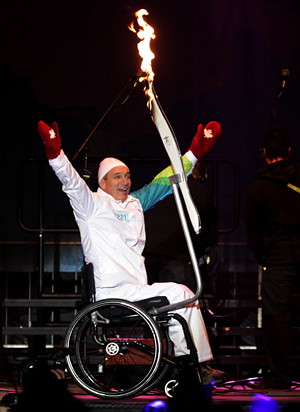
Rick Hansen with the olympic torch

Rick Hansen carries the Olympic torch. [image source]

Assiya at For a Fairer Today: Olympic ceremonies win

Every day, I am reminded that people with disabilities are considered lesser by society. Which is why, when Rick Hansen rolled in tonight bringing the torch, I smiled so wide my face hurt.

Haddayr: Plucky Cripples Don’t Let Lack of Bingo Card Stop Them [I recommend reading the tongue-in-cheek comments on this one!]:

I asked for help and you delivered! Here’s the final disability bingo card for reporters! Folks seemed like they wanted one for Stuff People Say To You, so I might tackle that one next.

ballastexistenz: Aspificating snobbery over the DSM all over again

And some of us might rightly find it insulting to be referred to as the ones that others had to be oh-so-tragically “lumped in with” (you know, “crazy”, “low functioning”, “retarded”, “autistic”, or other categories that people seem to do their darndest to distance themselves from). Like we have disability cooties or something from the way some people behave, and like having the medical people put us in the same category as our “betters” is such a terrible threat (and like it changes anything about who any of us really are). […]

Anyway as much as this is a rant against snobbery it is also a call to remember what is important. Look to that beautiful shifting central set of attributes that make us alike and different. Stop using the periphery to divide us.

Feminists with Female Sexual Dysfunction: FSD news from the NVA and the DSM

Then, via Helen @ Questioning Transphobia, we also now have access to a draft of the DSM-V (Diagnostic and Statistical Manual of Mental Disorders.) The final version of the DSM-V is currently slated for release sometime in 2013. So be sure to check out that draft, too!

Why is this important? There’s a couple of different reasons; for one thing gender identity disorders and sexual dysfunctions are listed in the DSM, (yes even sexual dysfunctions caused by medical/health issues,) which is a powerful force behind having disorders recognized, researched, diagnosed, and treated. The manual is not without a fair share of controversy, however, particularly from a feminist perspective.

There are also some new sexual health diagnoses up for consideration, including hypersexual disorder (but not Restless Genital Syndrome? Is that up for consideration, and if not, why?) sexual coerison disorder, sexual disinterest disorder in women and men (related to hypoactive sexual desire disorder,) and, notably, Genito-Pelvic Pain/Penetration Disorder. This would include vaginismus & dyspareunia not due to a medical condition. (Pain due to a medical condition would still be under code 625.x – vulvodynia falls under this category.)

Astrid at Astrid’s Journal: Temper Dysregulation Disorder with Dysphoria: The Missing Link or a Can of Worms?

There is a new childhood mental disorder being proposed for DSM-V: temper dysregulation disorder with dysphoria (TDD). When I first read its criteria, my thoughts were: “Finally, it’s about time people are acknowledging not all children’s irritability is bad behavior.” Quite honestly, if this disorder had been around in DSM-IV in 1994, I would’ve been a surefire candidate for a diagnosis, except for the fact that autism should be ruled out first – but then again, I’m not sure autism would’ve been the first thing a shrink thought of when seeing me if TDD had been on the books.

The Pursuit of Harpyness: Ms. M on Living With Chronic Illness, a Guest Post

Those of us who live with invisible illnesses live in two worlds – the one where we “pass” if we are having a good day, and the world we retreat into when our symptoms flare. We may drop out of sight for a day or two or three, but people are so busy they may not notice we’ve been gone.

Other People’s Worlds: Temple Grandin talks the HBO movie

This is a transcript of Temple Grandin’s first interview with the Autism Women’s Network after the premiere of HBO Films’s biopic Temple Grandin. She also talks about augmentative communication and education. […]

Temple Grandin: Mick Jackson picked out Claire Danes. The reason why he picked her out was he’d seen her do a reenactment of the Andrew Wyeth painting “Christina’s World,” which is a painting of a lady that’s crippled. Claire Danes dragged herself across the street in New York like she was Christina, and then Mick decided that she’d be the one. Then, of course, Claire Danes, she became me. She didn’t just act me and learn the lines—she became me.

Recommended Reading for February 14th

Warning: Offsite links are not safe spaces. Articles and comments in the links may contain ableist, sexist, and other -ist language and ideas of varying intensity. Opinions expressed in the articles may not reflect the opinions held by the compiler of the post. I attempt to provide extra warnings for material like extreme violence/rape; however, your triggers/issues may vary, so please read with care.

Sins Invalid: Sins Invalid’s Interview with Terry Rowden

Leroy of Sins Invalid: We are both music historians, and in The Songs of Blind Folk, you touch on the invisibility of Black blind female Blues artists. Can you expand on this for our readers?

Terry Rowden: As I wrote in The Songs of Blind Folk, the fact that blind and other disabled women were perceived as being particularly vulnerable made and continues to make the image of a blind woman on stage an uncomfortable one for audiences that have been much more willing to accepted disabled male performers.

Carnal Nation: It Can’t Happen Here [***stalking/sexual assault/NSFW WARNING***]

Nina does not aspire to the street punk life, but she’s usually barely a heartbeat from the gutter anyway. She lived in constant peril of losing her home. Her mother was always threatening to throw her out, and would often go so far as to pack Nina’s bags and toss them through the door onto the street. Alternately, she would lock Nina in her room for whole days. She constantly belittled Nina, saying she “looked disabled” and would never be able to make it on her own in the world.

Toronto Sun: Elections Canada must open door to disabled

In March 2008, Hughes went to vote in a federal byelection in Toronto Centre — when Bob Rae was elected — only to find the polling station was in a church basement and not accessible to disabled people.

Determined to vote, he crawled down the stairs on the seat of his pants.

When he had to face the same stairs in the general election of October 2008 he complained to Elections Canada officials who “dismissively said it was not their problem,” Hughes’ lawyer said.

Brisbane Times: Holidays without hassles: a rare find for the disabled

The business [BE Lifestyle Retreats] now employs 10 fully-qualified staff and includes a retreat at Cooran in the Noosa hinterland that accommodates four people and a four-bedroom holiday house at Peregian Springs.

Special features of the accommodation include electric beds, pressure mattresses, hoists and commode chairs as well as wheelchair access and wheelchair accessible vehicle pick-up and delivery service. Picnic packages and tours to wheelchair accessible venues can be organised.

Charlotte Observer: One man in a wheelchair, one big day for racial equality

From his wheelchair, [the Rev. Cecil Ivory] led Rock Hill blacks through a bus boycott that shut down the bus company. He led the NAACP. And now he was leading the lunch counter sit-ins. He told those gathered that night he was determined to wheel himself into McCrory’s the following day and park himself at the lunch counter. “His reasoning: How could he be arrested for not violating the custom, for not taking up a stool reserved for white customers?” Boone said. “Plus, he clearly couldn’t stand up in the back to eat.” […]

Soon Assistant Police Chief John Hunsucker and another officer arrived. Hunsucker instructed the manager to ask Ivory and Hamm to leave, Ivory wrote. The manager did.

Ivory asked why.

Hunsucker said “he did not care to discuss the matter,” he wrote. Ivory argued they had just “made previous purchases … and no one had objected.” He added he wasn’t sitting on a stool reserved for whites. Still, Hunsucker arrested the two.

KATU: Disabled man tasered by Transit Police officers

[Jamal] Green, 34, is disabled, with serious cognitive impairments. His lawyer says it is hard for Green to understand and follow orders. According to McKenzie, her grandson was attempting to get home using the public transit system. He initially got on a bus that wasn’t operating, but when the police officers first approached Green they instructed him to show his hands. According to a Portland Police spokesperson, Green didn’t comply with the request and instead kept them tucked up in his sleeves.

The police report indicates that the first officer warned Green he would use a tazer, then did so. Then the other officer, who deemed the first tasering ineffective, tasered Green a second time. Green says that he didn’t understand the commands as he was confused why the officers wanted to see his hands. He was eventually taken to jail then later released.

But Green’s grandmother is also upset that the officers confiscated his seizure medicine. The police report confirms that they officers initially thought it was ecstacy and at first attempted to charge Green with posession of a controlled substance.

[More detail and security video at The Portland Mercury]

Chatterday! Open Thread.

This is our weekly Chatterday! open thread. Use this open thread to talk amongst yourselves: feel free to share a link, have a vent, or spread some joy.

What have you been reading or watching lately (remembering spoiler warnings)? What are you proud of this week? What’s made your teeth itch? What’s going on in your part of the world? Feel free to add your own images. (Anna insists that these should only be of ponies, but I insist that very small primates, camelids, critters from the weasel family, smooching giraffes, and cupcakes are also acceptable.) Just whack in a bare link to a webpage, please – admin needs to deal with the HTML code side of things.

Today’s chatterday backcloth comes via Tjflex2 on flickr, who took the photo in a cemetery in Prague.

red squirrel

Recommended Reading for February 12th

Warning: Offsite links are not safe spaces. Articles and comments in the links may contain ableist, sexist, and other -ist language and ideas of varying intensity. Opinions expressed in the articles may not reflect the opinions held by the compiler of the post. I attempt to provide extra warnings for material like extreme violence/rape; however, your triggers/issues may vary, so please read with care.

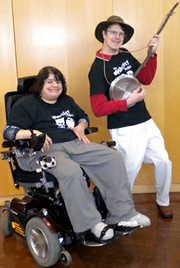
Tom Sawyer actorsSt Louis Globe-Democrat: Tom Sawyer to be staged by actors with disabilities as part of ‘Big Read’

“The Assorted Short Adventures of Tom, Huck and Becky” will be performed for local students by That Uppity Theatre Company’s DisAbility Project, an ensemble of actors with and without disabilities, as part of St. Louis’ “Big Read” project.

This is possibly the first production of this classic book to be created through a disability perspective and performed primarily by actors with disabilities. […]

The ensemble has 15 active members, both with and without disabilities, who are diverse in age, race, ethnicity, class, occupation, education, religion, sexual orientation, physical ability and performance experience.

Politics Daily: My Left Breast Put Fancy TSA Scanner to the Test

Then she said she needed to check something. And she began sweeping her hands around my left breast and rib cage.

This didn’t bother me all that much; in fact it made me smile. For one thing, I don’t really have any feeling in my left breast. That’s because it doesn’t exactly exist. For six years now, it’s been a composition of part of my lat dorsi (mid-back muscle) and a skin graft from my back, supplemented by a sac of silicone. That, ladies and gentlemen, is the result of a mastectomy and reconstruction, which in turn is the result of breast cancer. […]

The takeaway here is, if you have fake body parts, you should be prepared to explain them to the full-body screening folks at the TSA.

WHEELIE cATHOLIC: Saying it doesn’t matter, when it does

Now imagine this being repeated over and over in the course of a number of hours, days, weeks, months, even years, when a resentful, angry person responds like this when you as a person with a disability make a choice. […]

Their reaction may be passive or outright anger. Sighing. Heaving. Verbal retorts. Arguing. Complaining. Or worse.

Makes me wonder if “learned helplessness” is really that or an intelligent choice in the face of these situations.

“Any color is fine.” “Doesn’t matter which flavor it is.” No, don’t rock the boat. Just don’t say anything. This can even lead to not asking in the first place.

SnowdropExplodes at A Femanist View: Dancing on Wheels 1st episode [includes spoilers]

Britain has until now never entered into the European Wheelchair Ballroom Dancing Championship. The objective of the series is to find a couple to represent Britain in the next competition.

The wheelchair dancers are all novices to dancing, but have been wheelchair users for some time (the shortest has been for 18 months after becoming paralysed). The temporarily-able-bodied dancers are all celebrities who either appeared on Strictly Come Dancing or else have dancing training due to their showbiz background.

The Smith College Sophian: Dis/Ability: An Introduction

As Smithies, there is a lot on our minds. Worries about classes, papers, exams, relationships, fitting meals into our schedules, money and so many other things constantly flit through our minds.

But how many of us worry about getting our course materials in accessible formats, having a note-taker whose notes we can follow, or deciding whether to go on medical leave for the third time in as many years or to tough it out for one more week – only to pay for it for months after?

Maybe you don’t have to think about those things. We do.

The News Tribune: Delvin backs closing institutions housing disabled

At the top of [Arc advocates’] wish list was for the Legislature to consider closing the state’s institutions and allow people to live and get services in their own communities.[…]

Teresa Payne, an Arc client and advocate for people with disabilities, said people should be allowed to choose where and how they live.

Payne, who has impaired vision and slight mental retardation because of a birth defect that affected her brain development, lived in the state’s Lakeland institution as a child and left when she was 17 because she was allowed to make the choice. She said she doesn’t remember much about living there because she was medicated, but she knows her life is better because she lives independently now.

“I am successful,” Payne said. “I am in the process of buying my own home. I have a part-time job. I serve on the (Developmental Disabilities Council) board. I want others to have the same opportunities.”

Recommended Reading for February 11th

Warning: Offsite links are not safe spaces. Articles and comments in the links may contain ableist, sexist, and other -ist language and ideas of varying intensity. Opinions expressed in the articles may not reflect the opinions held by the compiler of the post. I attempt to provide extra warnings for material like extreme violence/rape; however, your triggers/issues may vary, so please read with care.

Marian E. Lupo: Bringing Back the Baby Lion: Reflections on the Conference on Disability, Culture, and Human Rights, Disability Studies Quarterly, Vol 29, No 4 (2009)

The question I began my presentation with is a question still with us: “We have global poverty, we have global disability, but we also have global resources. Who has those global resources?” I would suggest, as one source, the multinational corporations, which now occupy the historical space of unjust wealth carved out by the East India Company.

I say unjust because the wealth owned by these entities is premised and accumulated based on the human body as commodity, as object. Those already disabled are a disvalued commodity. The process of extracting economic “value” from other bodies all too often produces “disability,” and a devaluation of the now exhausted commodity. Thus, once the value of these bodies is used up, they are discarded. In the U.S., more value may be extracted from the exhausted commodity through the cold-blooded ingenuity of the profiteering insurance industry.

My suggestion is that disability is a given of the human condition, not an economic exception. Thus, the equitable distribution of resources is not a privilege to be earned, but the most basic component of human rights. Basic respect for the disabled means respect for the inherent fragility and mutability of the human body.

Wicked Local Cambridge: Letter: Don’t deny access for handicapped

Imagine a woman in a wheelchair, trapped in her home, with no way to get in or out. No, this is not a scene from a horror movie; it’s the daily reality of Lesa Dane.

Trapped in her home for more than three weeks, Lesa, a paraplegic, was recently denied a building permit for a chairlift to be put in her second-floor condo by the city’s building commissioner — more concerned with whether the chair might obstruct a stairwell than the safety of a disabled woman who suffered a crippling autoimmune disease that left her in a wheelchair. […] The commissioner stated her application would not be approved unless she had a 6-foot-wide staircase.

SFGate: Legal-test firm fights blind student in court

The company that administers the California bar exam has asked a federal appeals court to stop a blind law student from using computer-assisted reading devices in the test, which starts in two weeks. […] Enyart works as a law clerk for Disability Rights Advocates in Berkeley and would suffer no hardship by waiting a few months for an appeals court to review the case, the company said. […]

Enyart, 32, has been legally blind since 15 from macular degeneration and retinal dystrophy. As a UCLA law student, she took tests on a laptop with software that magnified the text and read the questions into earbuds. […]

The examiners offered a pencil-and-paper test with questions displayed on a large screen, a human reader and twice the usual three-day testing period. Enyart said she would become nauseous from having to look at the screen and needed the computer setup to have a fair chance of passing.

MSNBC: Different colors describe happiness, depression: Study could help doctors gauge moods of patients with verbal challenges [I wonder how culture-bound this is? ~L]

The study found that people with depression or anxiety were more likely to associate their mood with the color gray, while happier people preferred yellow. The results, which are detailed today in the journal BMC Medical Research Methodology, could help doctors gauge the moods of children and other patients who have trouble communicating verbally.

NPR: Children Labeled ‘Bipolar’ May Get A New Diagnosis

In a move that could potentially change mental health practice all over America, the American Psychiatric Association has announced that it intends to include a new diagnosis in its upcoming fifth edition of the Diagnostic and Statistical Manual — and hopes that new label will be used by clinicians instead of the bipolar label. The condition will be called temper dysregulation disorder, and it will be seen as a brain or biological dysfunction, but not as a necessarily lifelong condition like bipolar.

Telegraph.co.uk: Patients in ‘vegetative’ state can think and communicate

Experts using brain scans have discovered for the first time that [a minority of] victims, who show no outward signs of awareness, can not only comprehend what people are saying to them but also answer simple questions. […]

The patient was then asked six simple biographical questions including what was the name of his father and whether he had any sisters. In each case, his thoughts were picked up by the scans within five minutes. In each case he was 100 per cent accurate. […]

Jacob Appel, an expert in medical ethics at the Mount Sinai Hospital in New York, said that doctors should help end the lives of people trapped in their bodies, if they think that is what they want.

[Note that there is nothing in this article suggesting that the technique might be used to drive assistive/communicative technology to improve the quality of life of the few people who could use it. There is only the rush to use the tech to find out whether people want to die.]

Related: SciAm: Conditional Consciousness: Predicting Recovery from the Vegetative State