Category Archives: mental health

Stigma Hurts Everyone

I read an interesting post recently, from a self-described “functioning alcoholic” discussing the possibility of treating alcoholism with pharmaceutical drugs. While there’s no successful pharmaceutical treatment at this time, there are a few things in development and it’s seeming increasingly probable that the drug companies will focus research and development efforts on coming up with something.

More interesting to me than the potential treatment itself were the issues raised in the post about concerns raised by this treatment possibility – because all of the concerns seem to be based on observations of how psychiatric medications have been implemented and viewed since their development. (These issues also obviously apply to pharmaceutical treatments for other conditions, including fibromyalgia, migraines, etc.)  The issues raised by the author of the original post include:

  • “Is it appropriate to battle a chemical addiction with another chemical?” This is parallel to the often-voiced concern about whether chemical/medication-based treatment is an appropriate response, or if it will just replace the symptoms of mental illness with dependency on psychiatric drugs.
  • “Won’t the pharmaceutical companies “define alcoholism down” in an attempt to get the broadest possible consumer base for their products?” – This is parallel to the concerns about encouragement to overdiagnose mental health conditions such as ADHD and depression in order to broaden the market for pharmaceutical interventions. It also draws from concerns about advertising Abilify and other psych drugs directly to consumers through TV and print marketing.
  • “Is life really worth living if you’re sober all the time?” – while the original author clearly intends this as a joke, I find it similar to arguments I’ve heard that “messing with someone’s emotions” through pharmaceutical intervention will inherently result in significant changes to that person’s personality and identity. This seems similar, in that it questions whether life will be the same if such a fundamental component of their self is being affected by pharmaceutical treatments.
  • “One of the arguments against a medicine-based treatment of alcoholism is that while it may certainly curtail the physical addiction it does nothing to address the underlying reasons why someone might choose to drink—anxiety, depression, an unwillingness to be in the world without some kind of sedating agent to take the edge off of existence.” This idea is often used to argue that medication-based psych treatment alone is insufficient, and must be combined with some kind of psychotherapy to effectively address the underlying emotional issues driving the mental illness. It is also sometimes used to suggest that taking medication alone is “cheating,” by mitigating the symptoms of underlying trauma or disorder without addressing the root causes, allowing the patient to ignore the root causes and eventually causing greater harm.
  • “I’m not unsympathetic to the argument that a certain amount of drinking is just fine. I know plenty of folks who drink almost as much as I do and manage to keep it all together. Why castigate their actions or make them think they need “treatment” for what could be considered just another lifestyle choice?” This parallels many of the discussions regarding what constitutes a mental illness and ties into the ideas of “neuroatypicality,” where a person’s mental functioning is described as different than typical mental functioning, without a value judgment as to whether typicality is better or worse than atypicality. It also references the underlying conception that being labeled as someone who could benefit from pharmaceutical treatment is shameful or stigmatizing, a judgment which would surely spread to those on the borders of atypicality.

I found all this fascinating because, while I’m used to hearing these arguments and issues raised in the mental health treatment context,  it’s clear that they are permeating our society and discourse beyond their direct application to mental illness.  Here, the spectre of passing out ADHD drugs in every elementary school classroom is being raised as a potential concern in the as-yet hypothetical development of a treatment for alcoholism – a serious condition which can lead to significant health consequences up to and including death.

To me, this says that addressing these issues – the misinformation, the stigma, and the bad acts of pharmaceutical companies – is important not only to people with mental illness, but also to the groups who could benefit from pharmaceutical developments and interventions yet to be developed. It is clear that these issues are so significant that they could discourage people from supporting or even considering the possibility of future treatments that could potentially help millions.

The Space Between…

Jennifer Hawkins, a white woman, poses nude with her arms purposefully placed, on the cover of Marie Claire magazine.This post originally posted at random babble… on 06 January 2010

The policing of other women’s bodies is never OK from a feminist standpoint. I can’t stress that point enough. It doesn’t serve any productive purpose in feminist discourse.

It is mostly an understood concept among people outside of the mainstream of feminism. Those who are able to work their theory around the concepts of white, straight, cis, upper-middle class, educated, able-bodied privilege.

Yet, a concept that still slips into the space between understanding is the difference between criticizing someone who comes from a place of thin privilege and tearing someone down for a body that is not like your own.

This article at Bitch, to me, was the latter.

It doesn’t seem like so long ago that I was a size 0. And yet, looking at myself now it feels so far away. That is something I am coming to grips with even today. But my mind remembers it all so well. How can nothing be something? And even at nothing I felt all my flaws. I covered in my towel so I didn’t have to glimpse myself in the mirror and be disgusted by what I saw. I still do that now! I refused to own a scale, afraid of what I would see (I still do that now!)…because it would send me into fits of fear and rage and crying…because no matter how much I threw up and refused to eat I could not weigh what all the charts said someone of my height and weight should…and my thighs jiggled and my belly bulged and my arms — while muscular from kitchen work — wiggled. Even though I was actually nothing. My clothing size was nothing.[1. Why are women’s sizes arbitrary numbers? Why can’t they be waist measurements? That would be more consistent?]

Jennifer Hawkins has thin privilege. Yes. She most certainly does. But when I was struggling I had two kinds of people to look at in magazines and on television: overly photoshopped women who were too perfect, and purposefully imperfect women meant to make me hate myself so that I would work to not be like them. There was no campaign of women of any size coming out to say “we are imperfect, but here we are“.

I will grant this: The Bitch piece does criticize the way that Jennifer Hawkins’ flaws have been the main focus of her nude cover. That is not the conversation that this cover should be invoking in feminist circles. But if she is talking about how hard this was for her, that is not something we should be criticizing. Dismissing her hesitancy, her own insecurities just because she is thin and has a different body type than someone else… that is not feminist either. When has it ever been OK for us to dismiss another woman’s experiences?

Why can’t we, as feminists, understand that?

She no longer has the protection of her Photoshop Deflector Shields, so she is in a vulnerable place, but her thin privilege doesn’t put her in the same place as all the fatties of the world who are crying in clothing stores because shirts are not made for their bodies. I get that. I think Kelsey Wallace at Bitch, for whom I just did a mostly lovely guest blogging stint w/ some of the FWD/Forward team, even gets that despite what I am garnering from her post.

Jennifer Hawkins is not the same as me. She does not know what it is like to walk into a doctor’s office and have hir assume that the pain or illness is caused by my weight before they know anything about me. She does not know the pain of the stares when I have trouble walking somewhere, as if it is definitely because I am a fattie. Or how clothes are made for people like her and not for me…or how society is made to make me feel like I am a big worthless pile of shit whose only chance at redemption is to adopt a “Lifestyle Change” for just sixty bucks a month or whatever.

But while we are throwing stones at Hawkins and scolding her for making us all feel like crap, let’s remember that she is entitled to feel like crap too. And other women who look like her, who aren’t models, who might feel like crap about themselves, they are allowed to feel that way too if they want too. Because some of them might be trying to recover or hold on or what the fuck ever. Maybe they are healthy, and have been told to Eat a Sandwich[2. Yes. I linked to them. I want people to see how awful that thread is, and how flippantly and dismissively that is defended, even when it is pointed out to the mod to be harmful. As in, she doesn’t care that some people find it harmful.], as if it funny or hip, but they can’t gain weight or can’t eat that much for whatever reason.

Or, maybe we, women of any size, are allowed to love our bodies and just be fucking happy, no matter what, and these women on these covers should show us that at any size we can all be beautiful (and maybe we will see more variance soon…but I am a silly, idealistic girl[3. I can’t back this up. I am not.]).

We can criticize thin privilege without policing other women’s bodies.

Just sayin’…

SSRIs, Violence, Walking, and Dogs

Recently a link was making the rounds on Tumblr about how SSRI anti-depressants caused violent and homicidal reactions in people (h/t to the lovely Cara for making sure we saw it). I was largely ignoring it because, frankly, there’s a lot of unproductive discussions about whether SSRIs, or anti-depressants in general, or even psychotropic drugs as a whole, are teh most awesome things ever! or an evil tool of big pharma or poisoning our children or should be put in the water supply to help the population at large. And my attitude towards psych treatment, whether it be therapy or medication or anything else, is pretty similar to my attitude about religion: everyone has the right to make their own determinations about their treatment and whether they would or would not like to take psych meds, and just as my atheism doesn’t make someone else’s faith any less valid, I can support someone’s decision to reject psych meds without lessening my own right to believe they help me personally. (To extend that, I support anyone’s right and decision to pursue or not pursue any kind of treatment, to identify as they feel appropriate, and to reject the whole framework and basis of psychiatry.)

That said, I thought it might be useful to take a look at this article to discuss some of the issues I see in a lot of these arguments and discussions. The basic gist of the article is to publicize an archive of “3,500 crime related news reports linked to the use of SSRI antidepressants … Pharma and the FDA may still be agnostic about SSRIs causing violence but 700 murders, 200 murder-suicides and 47 postpartum depression cases, including the 2006 case of Andrea Yates who drowned her five children on Effexor, don’t lie.” The article describes the site as “more of a public service than the FDA which has yet to withdraw the drugs named in the 3,500 stories–or even call them dangerous,” so the clear goal of the article is to encourage prohibition of SSRIs as a class.

That’s a pretty broad goal to be supported by such thin and unconvincing evidence – and that’s my problem with these kinds of arguments. Whenever I talk about these kinds of science articles, I often use the same phrase: “correlation does not equal causation.” This means that although two variables may be very closely associated, there’s not enough information to figure out which of them causes the other, or even if the two are related by anything more than chance and coincidence. A simple example is that everyone who orders food at McDonald’s is a human. Can we assume that if a dog walked into McDonald’s and ordered food, it would magically transform into a human because of the correlation between ordering at McDonald’s and being human? No.

To unpack this further, let’s look at the fact that a lot of people who walk in my neighborhood have dogs. I know some people who got dogs specifically in order to encourage themselves to do more walking – so the dog is influencing how often they walk. However, I also know people who do a lot of running or hiking and got a dog to keep them company on their outings – so their walking/running influenced their having a dog. So does being a person who walks outdoors make you more likely to get a dog, or does having a dog make you more likely to walk outdoors? We just do not have enough information to figure that out. This means my observations of walkers and dogs should not justify a public policy to issue dogs to every household to ensure people walk outdoors.

To extend this to the SSRI stories, there’s not enough evidence for us to determine if people who are not violent or homicidal become so when they are given SSRIs, or whether people who are already violent or homicidal are likely to be given SSRIs for treatment. And that’s a very important thing to be absolutely clear on when we’re talking about having the FDA eliminate an entire class of anti-depressants that some (including me) rely on for treatment.

There’s a couple other factors in the dog analogy that I also see at play in this SSRI story:

  • Observer bias: I think dogs are pretty cute, so when I’m out and about, I tend to notice pedestrians with dogs more than I do pedestrians without dogs. So if I see 10 pedestrians and 4 of them have dogs, I’m much more likely to notice and remember the dog people and think that the majority of pedestrians have dogs. Similarly, self described “anti-SSRI advocates” are more likely to notice and prioritize instances where SSRIs occur with violent behavior.
  • Who is observed: I happen to live two blocks from the most popular dog park in town, so people from miles away drive here in order to hike with their dogs. There are a lot of trails that don’t allow dogs and if I lived right next to one of them, I’d likely see a lot more walkers who are dogless. So I’m not looking at the entire population of walkers and dog owners when I’m observing a connection between those two characteristics – I’m looking at a population more likely to suggest to me that the two are connected. Similarly, the SSRI stories are drawn entirely from crime reporting. Stories about people who take SSRIs and do not engage in violent, homicidal, or otherwise criminal behavior are not going to be in a crime story – so the archive is looking at a subset of SSRI-takers that is more likely to confirm their perception that SSRIs cause criminal behavior.
  • Interpreting evidence to fit desired results: when growing up, I tried out the “dogs will make me walk and exercise more” argument on my parents. This is because I wanted to get a dog, and I was trying to put together any argument I could to support that conclusion – I had started with the conclusion instead of with the evidence. Some of the stories mentioned in the article make me wonder if the SSRI stories suffer from the same problem. One of the quoted stories is “Lynyrd Skynyrd harmonicist Mike Caruso’s remark that, ‘the doctor put me on Cymbalta. That turned me manic.'” To me, giving an anti-depressant to someone with undiagnosed bipolar and triggering manic behavior is a very different argument than if taking the SSRI created violent or homicidal behavior that hadn’t previously existed in the person.

In order to convince me that SSRI used caused these behaviors in people who otherwise would not display them, I would want to see a clinical study where people were observed before and after starting SSRI treatment and a control group was also monitored while not having SSRI treatment. Those kinds of scientific studies are the only way to meaningfully determine whether the two variables have any kind of causal relationship.[1] And without that data, this article does a lot more harm than good – by reinforcing existing perceptions that criminals are all mentally ill and by shaming or scaring people who take and benefit from SSRIs.

[1] I should note that requests for data and scientific studies are often used to invalidate or minimize reported personal experiences from marginalized groups, an academic privilege argument of sorts. I do and continue to credit individual experiences where SSRI treatment caused specific behaviors for that individual, but I feel very uncomfortable making blanket decisions about whether or not these drugs should be available at all, for anyone, based on third party descriptions of the experiences of others.

It Will Always Be The First Thing I Think Of

**TRIGGER WARNING FOR DISCUSSION OF SELF-HARM**

I’ve been under some significant emotional stress lately, more so than usual. And I’ve had a couple of incidents when I received some very upsetting news. Of course I’ve cried. Sobbed, even. And reached out to my friends and family and cared for myself in all the healthy and productive ways I learned in my years of therapy. Take a hot bath. Read a good book. Snuggle with the kitty. Get enough sleep. All that kind of thing.

But before that – before the tears even start welling up, much less spilling over – my mind flashes on an image of my left forearm. Sometimes it’s being slashed with a razor blade. Sometimes it’s being burned with a cigarette or the hot metal of a lighter. In one particularly vivid recent image, my left wrist was being smashed with a hammer. This happens in less than seconds, before any other reaction. It’s entirely unconscious and I’m often surprised by how quickly and vividly the images take over my consciousness.

I used to self harm a lot. I thought I’d made it up myself, back when I realized that scratching at one spot on my skin with a thumbnail would peel back the skin to expose glistening wet red pain. I quickly progressed to razor blades and learned the exquisite joy of making a perfectly straight line in my skin, imposing some kind of geometry and order on my out of control body that would hopefully extend into my increasingly disordered mind. I learned how pressing a hot lighter to the inside of my ankle would send a poker of pain straight up my body in a wave so powerful it drove out every other sensation or thought. I learned about long sleeves in summer, the trick of putting a painful cut on the inside of my wrist so it would throb every time I took my mittens on or off. My arms looked so bad people thought I was using heroin. (Even writing this out makes me want it.)

And then I stopped. (Not so easily, of course, lots of safety contracts and lists of health coping activities and techniques and medication and relapsing and all of that. But I stopped.) And it’s been … I don’t even remember the last time I did it. Over 10 years, certainly. Long enough that you can hardly see any of the scars unless you know exactly where to look.

But it is still the first thing I think of. My first unconscious innate reaction to stress or emotional pain or just feeling overwhelmed and drowned by my own emotions. It is always there, just under the skin, waiting for me to be weak enough for it to take over again. That’s why I will never trust myself enough to have a razor blade or an x-acto knife in the house – I know that if they’re there, I’ll lose my way sometime.

[I just turned my head and saw two straight pins sitting on the desk (I was mending a hem) and *boom* I see them plunging into my wrist, just near the bone. It’s not that I imagine the process of picking them up – my mind flashes straight to an image of me pushing it into my skin, with the idea that “this is right, this is good.” I can almost feel myself relaxing while I visualize it and then I shake my head and it’s gone and I’m disappointed in myself for even thinking of it.]

I’m beginning to think it will never stop. I may never do it again – I hope I never do it again, I intend never to do it again – but it will always be there. It will always be the first thing I think of, before there’s even time to think.

Veterans Find Self Expression and Therapy

Moderatrix’ Incredibly Verbose Note: The linked article in Stars & Stripes held a couple of problems for me. One: It gave an impression that pharmaceutical therapy is somehow not a reasonable treatment for people dealing with mental health or anxiety disorders. This should not be taken as the opinion of myself, nor any member of the FWD/Forward team. I believe that it shows how stigmatized that direction of therapy can be, and how mental health services can be socialized to make men feel “weak” for needing them. How a person chooses to treat their mental health or social anxiety disorders is between themselves and their health care provider. Comments judging this course of therapy will be deleted and the commenter possibly banned pending a review. I will not have someone coming to this board and seeing their choice of therapy, which is helping them, mocked or dismissed.

Two: The linked article says that bibliotherapy is “poetry therapy”, when nothing I have found is that specific. Anything that I have found online, as well as my background in Greek and Latin root words, says that bibliotherapy is any type of therapy using the written word as supplemental therapy. I found that statement by the S&S writer misleading. I am willing to be corrected, but I am more inclined to believe that it is a part of a broad spectrum of treatment options. I find it like saying that “pharmaceutical therapy” means keeping someone pumped full of morphine all the time (not that there is anything wrong with that if that is what you need to manage your specific needs).

Nonetheless, I found the article incredibly interesting, and am ecstatic to find that veterans are finding ways to get care in ways that make them comfortable. Enjoy.

Spc. Victoria Montenegro received an Army Commendation Medal, complete with a “V” for Valor for helping her other team mates when her vehicle exploded in Karbala, Iraq. That same accident also threw shrapnel into her forehead and right eye. It gave her a complex fracture and bone loss in her left hand.

It also left her with PTSD.

Spc. Matt Ping also came back from “The Sandbox”, his time spent in Northern Afghanistan, he found himself mixing flashback with childhood memories. For him, the thought of a pharmaceutical approach, the normal approach taken by the VA, was too unappealing.

For both of them, a different kind of therapy program has been incredibly beneficial.

The Walter Reed Medical Center in Washington, D.C. has a program, run by Roseanne Singer, that helps veterans deal with their PTSD through the written word, mostly poetry. Participants are welcome to come to an informal gathering that takes place in the lobby of the Mologne House. Participants are under no obligation to participate, they may come whenever they feel comfortable, talk as much or as little as they like, and share or not share what they have written. The program does not analyze or critique, but rather focuses on getting veterans who find it otherwise difficult to communicate their feelings to convey them through writing. Or, as Ping , also now a part of Lisa Rosenthal’s Vet Art Project in Chicago describes poetry therapy:

“Poetry helps me deal with coming back to a society that’s gone in a different direction,” Ping said. “Coming home is one of the strangest things I’ve ever encountered. The 16 months of isolation and being secluded and then coming back and trying to be the same person you were before you left. I don’t know if that’s possible.”

Ping also has a blog where he shares his poetry (I have only scanned the front page, and I make no guarantees about triggering language).

Montenegro’s poetry focuses on the pain of being a “young, short, wounded female in a world of men,”.

“A lot of times around the hospital, I’d be mistaken for somebody’s family member,” she said. “It bugged me.”

Overall, finds the self-paced program beneficial, and enjoys the control over her own healing the . There is no pressure to heal at an expected rate, no one telling her that she should be over it by now. If she doesn’t want to share something, she doesn’t have to.

You can read her poem “Perspectives” (which I thought was moving) at the S&S link, and if you have a flash player you can listen to her read it.

The more ways we find to help our returning troops the better. If they aren’t thriving in the traditional therapy programs (and I can understand why), or if they aren’t being given proper therapy in addition to their drug treatments (I can relate), then we need to find therapy programs that do help them. We owe it to them.

For Cereal, Internet?

A periodic feature in which we highlight some of the more ableist posts and comments in the blogosphere – the things that made us throw up our hands and ask “FOR CEREAL???” *

Today’s edition: a post at Jezebel titled “Woman, Go Take Your Pills!”: Schoolgirls Respond To Samantha Bee’s Christmas Conspiracies. Which, already – are you for cereal, Jezebel? The post reviews a Daily Show segment in which Samantha Bee meets with schoolgirls and, in the tradition of the Daily Show, presents outlandish and absurd positions to them as serious arguments. For example, she tells them that she doesn’t believe that Obama was born in the United States. The humor in the segment is the shocked and outraged responses from the schoolgirls to these positions and arguments.

At one point in the segment, one of the schoolgirls tells Bee “woman, go take your pills.” Which is problematic for a whole slew of reasons – the assumption that irrational or absurd political arguments are a sign of underlying mental illness, the assumption that medication is an appropriate treatment for all mental illnesses, the assumption that bystanders have a right to dictate the treatment a person pursues or receives for a mental illness. But none of these problems seem to have occurred to Anna at Jezebel, who chose the phrase to title the piece.

And the immediate response of commenters wasn’t to push back against this ableism, or to explain why using such a phrase is problematic, but to embrace the phrase as their “new smackdown,” per boobookitteh, or celebrating the “straightforward verbal beatdown these girls delivered so awesomely,” per BillyPilgrimisnotmylover.

So I award a “FOR CEREAL?” to Jezebel for approving of the phrase and using it to title their post, and a second “NO REALLY, FOR CEREAL?!” to the commenters for enthusiastically embracing this offensive phrase as their new go-to insult.

*(Actually, what I say, and what I considered titling this, is “Are You Fucking Kidding Me With This Crap, Internet?” but I’m trying to use less salty language.)

“Bad Activist” moments

I read a blog post recently by a woman with muscular dystrophy and her experiences going out to eat in restaurants. The author mentioned how wait staff rarely give her a menu, or give her a children’s menu instead of the standard menu. When this happens, she often just looks on with her mom’s menu rather than asking the wait staff to give her her own adult menu. She described that as a “bad activist moment.” While I enjoyed and appreciated the rest of the post, and marveled at the ableism she routinely experiences – wait staff giving her a sippy cup to use?! – the idea of “bad activist moments” particularly stuck with me.

A “bad activist moment,” if I understand it correctly, is a potential opportunity to highlight ableism, educate TABs on the abilities of a PWD, and instruct people on the correct way to interact with a PWD. It could also apply in other contexts – the opportunity to highlight and correct patriarchal or sexist behavior, or racist behavior, or ageist behavior, or any number of other discriminatory and oppressive behaviors. In this context, the person experiencing or observing the problematic behavior is a member of the class negatively affected by such behavior, but it could also, for example, extend to me as a white woman observing behavior that discriminates against Latinos.

I definitely think this idea has value and recognize that the term “bad activist moment” is likely shorthand for “an identifiable moment of opportunity for direct personal activism that I didn’t take” rather than a judgment on whether the person is actually at heart a good or bad activist. But I’m concerned that framing it as a “bad activist moment” suggests that to be a good activist, we must speak up and speak out Every Single Time we observe negative behavior, not just that affecting PWDs, but that affecting or oppressing any minority group or marginalized class. I know that I do not do this and if I did, I would likely suffer significant consequences. I feel I’m already on the edge of being characterized (and thus dismissed) as the girl who has a problem with everything and is hyper-sensitive on these issues and cannot in any way ever take a joke ever – and that’s with me pointing out about 1 in ever 10 problems I see. I worry that if I devoted more time and energy to those issues, I’d be pigeonholed as “politically correct girl” and nothing I said would be taken seriously or considered.

More seriously, though, it is infinitely more risky to raise issues of discrimination and oppression when you are part of the group that is being discriminated against or oppressed. Not only might this require someone who is “passing” to identify and out themselves, but explicitly claiming membership in the targeted group can lead to further discrimination and marginalization. In the racial context, it’s often characterized (and thus dismissed) as someone “playing the race card.” I’m not aware of a similar term in the disability context, but the trope of an “uppity” activist who “thinks they’re entitled to something” extends to all oppressed or marginalized groups. Identifying as such opens a person up to further attacks and discrimination and even physical violence.

Even without these very real risks, I believe that we should all allow ourselves the option to pass up potential opportunities for activism while still considering ourselves to be good and powerful activists. Even if all we did was live our lives as PWDs, that in itself would be an activist act, demonstrating that PWDs have interests, passions, relationships, emotions, LIVES. We would qualify as activists even if we passed up every single potential opportunity to do affirmative activism work.

My ultra-wise co-contributor Chally once told me that taking care of myself was a feminist act. Placing myself at the top of my priorities – even though I am a woman and “should” prioritize caring for others or building a family, even though I am a PWD and thus “have minimal value or worth to society” – is an act of activism. Can I do more than that? Yes, and I do, but I always try to keep in mind that my activism is and should be secondary to my own well being. In part because I’m not going to be able to do any activism at all if I burn out or hurt myself physically or mentally doing activism work. But also because the simple act of prioritizing myself is, in itself, activism.

So take the opportunities for activism that you feel you can. And let the others go by. And remind yourself at the end of each day that you were a good activist that day.

The frustration of incremental progress

The place I work does a lot of trainings for other organizations on health care programs. A number of health care programs are available only for people with long-term disabilities, so the trainings always include a fair amount of discussion of what disability is and who is disabled.

My organization is relatively progressive and puts a priority on protecting vulnerable populations. We have a section of the training talking about the government’s requirement to provide translation and interpretation services for people who do not speak English. We discuss programs for minor children who want to obtain family planning or pregnancy services without their parents being notified. We highlight the special rules for homeless people to work around their lack of a fixed mailing address or phone number.

When it comes to disability issues, though, there isn’t always the level of awareness and sensitivity that I would like. Recently, I was sitting with two co-workers talking about potential interactive activities to add to the training. One co-worker suggested making a poster with photographs cut out of magazines that we should show to the trainees and ask them to point out who is NOT eligible for Medicaid (the U.S. goverment health program for very low-income folks).

“We can use the photos to show them that people on Medicaid aren’t just homeless people pushing shopping carts on the street,” she said. “And it’s also good to remind people that you can’t tell someone’s disability status just by looking at them.”

“Yeah,” responded another co-worker. “It’s always good to remind them that someone could have a mental health disability or something like fibromyalgia that you can’t see just from looking at them.”

HURRAH, I thought. People who are aware of these issues of disabilities that aren’t immediately apparent by looking at a photo. People who want to include this information in a training, want to highlight it with an interactive activity, to make sure everyone understands that. This is progress. This is positive.

“We could Britney Spears and Lindsay Lohan on the poster,” my co-worker continued. “Nobody knew how crazy both of them were at first! I mean, who would have imagined that they were so totally loopy and unhinged? They’re SO CRAZY!” And then she and my other co-worker laughed and laughed.

I froze. Do I mention that we don’t actually have access to their medical records or diagnoses so have no idea what’s going on with them other than what’s reported in the not-at-all unbiased mainstream media and gossip columns? Do I mention that if we go by what’s been reported, I have the same diagnosis as Britney and could be considered just as “loopy and unhinged”? Do I distinguish between drug and alcohol problems and mental health disorders? Do I argue that laughing at people with disabilities that way undermines the message they’re trying to convey with the activity?

I didn’t say anything. I’d already used up a lot of my “humorless” allotment arguing against using an example of a welfare recipient as a single mother with 11 kids so felt that to make any inroads on this issue, I’d have to disclose my own status, which I just wasn’t willing to do. So I let it go by.

Incremental progress.

The Brain Is Still A Giant Mystery

Optical illusions are one of those things that seem fun and frivolous but actually illustrate deep insights into how brains function. I recently saw an illustration of the “hollow mask illusion” over at the Wired Magazine Blog and it made my jaw drop. In the illusion, a person viewing a concave face (like the back side of a hollow mask) perceives it as a convex face, like the front side of the mask. This illusion is so strong that even when a person is aware of the illusion they are still unable to see the concave face because the brain perceives it as a convex face.

Check out this video and see if you perceive the concave face as concave or convex, or both:

Description of video: hollow Charlie Chaplin mask is attached to a rod, rotating slowly. As the mask rotates and the concave inner side of the mask comes into view, it seems to pop outwards, becoming convex.

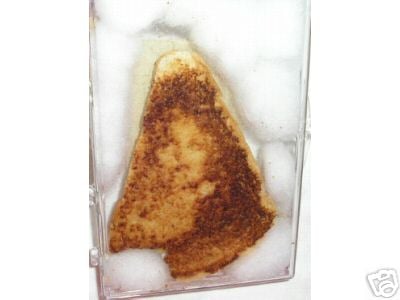
I have watched this video upward of ten times, and no amount of anticipation, concentration, stern looks, putting hands on hips, or even cursing has allowed me to see the concave side of the mask as concave. Every single time, the visual information goes into my brain and some filter is applied to the raw information and POOF it’s convex again. It seems that this illusion works only for human faces, as “it doesn’t work well with other objects, or even with upside-down faces.” This suggests that there is a program in the brain trying really hard to find face-like patterns in visual information – this is why we see faces in clouds, or snow covered mailboxes or even grilled cheese sandwiches. We can also recognize faces when they are distorted or compressed or otherwise obscured:

The New York Times > Science > Image > Distorted or Blurry, the Face Shines ThroughThis is likely a developed ability to allow us to recognize faces quickly and unconsciously instead of having to consciously process the facial features and determine that it was a face. It was helpful to humans to be able to recognize faces of other humans, both to determine that they were human and to distinguish them from other humans.
The results of a recent study strengthen the suggestion that this is a process applied by the brain on received visual input. Two researches in London found that people with schizophrenia did not experience the illusion and reported seeing concave faces. When they used an fMRI scanner to measure brain activity on people with and without schizophrenia while viewing the rotating mask, there was a significant difference between the brain activity of people with and without schizophrenia:

[The researchers] analyzed the fMRI data using a relatively new technique called dynamic causal modeling, which allowed them to measure how different brain regions were interacting during the task. When [neurotypical] subjects looked at the concave faces, connections strengthened between the frontoparietal network, which is involved in top-down processing, and the visual areas of the brain that receive information from the eyes. In patients with schizophrenia, no such strengthening occurred.

Dima thinks when [neurotypical] subjects see the illusion, which is somewhat ambiguous, their brains strengthen this connection such that what they expect — a normal face — becomes more influential, overpowering the actual, though unlikely, visual information. [People with s]chizophrenia , meanwhile, may be unable to modulate this pathway, accepting the concave face as reality.

What I think is most interesting about all this is the clear illustration that the functioning of the brain is still largely a mystery to us. This illusion basically exploits a processing error that occurs in neurotypical brains and, incidentally, is used in a lot of the illusions at Disneyland’s Haunted Mansion ride. But there are so many other processing glitches that instead of being seen as an amusing and harmless byproduct of a neurotypical brain, are seen as problematic and annoying if they are credited at all. I work and concentrate better when I play music or I take a three minute break to play Bejeweled. Why? I have no idea. But I doubt that any supervisor asking me why I’m playing Bejeweled could explain to me why their brain perceives the concave mask as convex. Or could stop doing it if they just tried a little harder. Maybe if we had a better understanding of how brains worked it would be easier for people to understand and credit the reality of mental disabilities.

Note: clearly, this illusion is not a diagnostic test for schizophrenia and should not be treated as such.

I Don’t Trust Myself

One of the aspects of my bipolar that I find the most exhausting is the need to constantly monitor my own moods. Even though I am medicated to the hilt and haven’t had a manic episode in 5 years or so, I spend at least part of every day worrying that I am edging too far towards mania or depression.

Part of this is good – I’m attuned to my moods, I know if I’m experiencing a big swing, I can immediately address it with my psychiatrist and adjust my meds or go back into therapy or whatever needs to be done. That has served me very well in the past, allowing me to catch hold of a rope before I slide so deep into depression I can’t manage to do anything to help myself.

But it also means that I have what I think of as a dual consciousness. One part of me experiences things, reacts to them, has emotions. And the other part of me sits back and watches and worries. Is that a reasonable response to the external stimuli? Is that within the normal range of emotion? Am I just a touch too upset about something? Is that bouncy happy feeling I have because it’s a sunny day, or because I’m starting to verge into mania?

This means I’m not sure I fully experience any of my emotions, because a portion of me is always reserved for this meta-cognition, this constant monitoring and evaluation of how I feel. And ironically, it’s the strongest or deepest emotions that cause me the most concern and trigger that meta-cognition the most, meaning it’s those emotions I experience the least. I’m not sure I have any idea what it feels like to be happy without that edge of worry. I’m not sure I have any idea what it feels like to be sad without part of my brain running through my recent sleep schedule and medication dosages.

This is why I value so highly the experiences that force my meta-brain to shut the hell up. The most recent example was a Nine Inch Nails concert where I was pressed between the bodies of strangers, drenched in sweat, with aching feet and legs, but the music and the beat were so loud they filled all available space and my brain was thinking of nothing but screaming along with the lyrics I’ve heard so often they seem like a part of me. I couldn’t feel anything but music and the bass running through my body, couldn’t keep hold of any thought except the words of the song. They filled me up so much that my meta-brain had no room to be separate. And I got some time to simply experience things, to just feel, without that separate evaluation and judgment going on.

I don’t know how to create those experiences for myself – when I’m so overwhelmed by sensory input that the meta-brain that usually sits in the balcony and comments on everything going on gets forcibly dragged to the floor to experience things with the rest of me. But at the same time, I credit that meta-cognition with keeping me safe and protected and getting help when I desperately need it, so I don’t want to turn it off entirely.

I just wish the checks I put on myself to keep myself safe didn’t lead so directly to feeling dissociated from my own emotions and experiences.