Category Archives: recommended reading

Recommended Reading for JD 2455264.5

Warning: Offsite links are not safe spaces. Articles and comments in the links may contain ableist, sexist, and other -ist language and ideas of varying intensity. Opinions expressed in the articles may not reflect the opinions held by the compiler of the post. I attempt to provide extra warnings for material like extreme violence/rape; however, your triggers/issues may vary, so please read with care.

Athena, Ivan and the Integral: Disability Blog Carnival Number 64: caught us with our pants down [submission deadline: March 31st]

The theme of our issue of the disability blog carnival is the following: breaking down stereotypes. We posed the following question: if you could break down one single stereotype, which would it be and why?

Trib Local: Disabled dancer reaches for dreams in ‘Prayer’

Lane has said she is not interested in hearing how inspiring and wonderful people think she is to do something like this despite being in a wheelchair.

Wheelchair Dancer: Do You Work?

Whether or not one is employed is a standard part of the social profile that new doctors seem to want to know — particularly in my case, since I don’t have a clear single diagnosis. “Work” for a doctor seems to serve as a bright line between genuinely disabled and neurotic, psychosomatizer. For far too many within the medical system, work serves as a talisman between a healthy coper and a drag on the medical and welfare systems.

Sunderland Echo: Wheelchair users face rail footbridge woe

Wheelchair users are facing a lengthy diversion if plans for a footbridge over a railway line go ahead. Network Rail wants to remove level crossings at Dawdon as part of a scheme to upgrade signals along the East Durham coast. Crossing the tracks on foot near Princess Road and at the town’s station would be stopped once footbridges are installed.[…]

Coun Bob Arthur, who represents the Dawdon ward on Durham County Council, said: “There is growing concern from people and they have been on to me about this because the bridge would not be suitable for wheelchairs and pushchairs.

NPR: Nine More Airports To Get Body Scanners

The Transportation Security Administration on Friday announced nine more U.S. airports that will receive body-scanning technology, as the U.S. heightens its effort to detect hidden explosives and contraband amid a threat highlighted by an attempted bombing on Christmas Day.

The Consumerist: New Airport Screening Machines To Launch Monday

These new “backscatter” type machines are different — and one would hope improved — from the existing “millimeter wave” types already being used in various spots around the country. Some of you might remember the story from a few weeks back of a millimeter wave machine in Denver being set off by an artificial breast.

BBC News: Women refuse to go through airport body scanners

Two women were stopped from boarding a plane at Manchester Airport after refusing to undergo a full body scan. The passengers were due to fly to Islamabad on 19 February when they were selected at random to go through the new scanning machine. […] The women were warned they were legally required to go through the scanner, after being chosen at random, or they would not be allowed to fly, an airport spokesman said.

Kelly Kleiman at Huffington Post: Full Body Scans Are a Feminist Issue

Surprisingly, a pair of otherwise civil-libertarian friends shrugged when they heard this rant. “I’m not with you on this one,” they said. They cited the impersonality and brevity and
disposability of the images. (I’m skeptical of the proposition that the government will
collect information and throw it away: since when?) They reduced me to inarticulate dudgeon, because I couldn’t imagine how they could fail to share a response I felt so viscerally.

And then I realized: they’re men. They haven’t spent their entire lives bracing themselves
against precisely the violation of being stripped naked by a stranger. As far back as grammar
school, it was accepted practice in my middle-class neighborhood for a boy to threaten to grab a girl walking home and strip her. I don’t know if this was ever actually done, but the mere threat was effective in keeping girls frightened and under control. And, as Susan Brownmiller established, the threat of rape-including the notion if not the actuality of nakedness-is the pervasive device by which men keep women in line.

Muslimah Media Watch: Naked Ambition: Airport Body Scanners Only Offensive to Muslim Women?

As much as having naked images of their bodies taken and viewed by strangers may be an upsetting idea to many Muslim women, why focus only on us? Or religious groups in general (The Jewish Daily Forward’s article claims that the airport scanners run “afoul of Jewish law.”)? The American Civil Liberties Union has issued a statement against the scanners that does not single out any specific religious group or gender. It seems likely many people would be equally offended by both the breach of personal privacy and the indignity of being constantly suspect while traveling or merely going about their business—why should the media assume that Muslim women are the only ones who will have ethical, ideological, or personal issues about the airport body scanners?
Recommended Reading for Stardate 63649.1

Warning: Offsite links are not safe spaces. Articles and comments in the links may contain ableist, sexist, and other -ist language and ideas of varying intensity. Opinions expressed in the articles may not reflect the opinions held by the compiler of the post. I attempt to provide extra warnings for material like extreme violence/rape; however, your triggers/issues may vary, so please read with care.

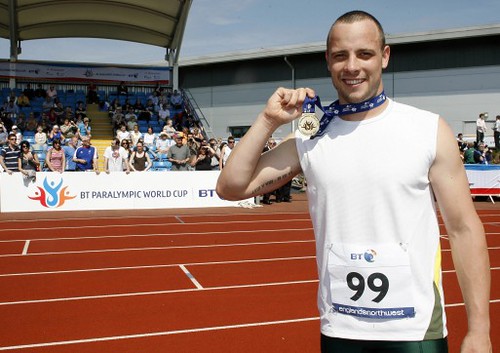
Oscar Pistorius shows off his medals on a sunny day at the track

More Than The Games: Pistorius hoping for fast times at the BT Paralympic World Cup

Oscar Pistorius will again be the marquee name of the 2010 BT Paralympic World Cup after the South African confirmed his participation at the annual event in May. The 23-year-old, a four-time Paralympic gold medallist, will defend his 100m and 400m titles in Manchester as he continues his bid to compete at the 2012 Olympics and Paralympics in London.

In 2008, Pistorius, dubbed the Blade Runner, was cleared to compete at in IAAF able-bodied events by Court of Arbitration for Sport, but failed to achieve the qualifying time for the 2008 Olympics by 0.7 seconds.

Laura Overstreet at LeftyByDefault.com: Things that make you go hhhmmm….

Getting a Maid of Honor dress has been a little more difficult, simply because I need separates and sizing is a little wacky with me. Not really a huge deal though. I decided that going to a dressmaker would be easiest. Or it seemed easiest until I visited one yesterday.[…]

She then said, “You are very unlucky,” and I don’t remember what I said or did, but I know I was in shock. That was a new one on me. I have been asked this question more times than I can count and never heard that one. She went on to say, “You must cry all the time.” Uh, not so much.

Wheelchair Dancer: Thinking Beyond The Label? Not Quite

The advertising campaign is the first nation-wide campaign about employment for PWD. It’s on the television and the radio; there’s a website. I have yet to see a paper version. It’s not working for me. It’s not just the slogan, “Evolve Your Workplace,” (eek — misuse! infelicities!), it’s the way disability is presented.

Activists have spent a long time trying to educate people about the dangers of assuming everyone is a “little bit disabled.”

Serene Vannoy at serenejournal: Next week: Disability Awareness Week!

Next week is Disability Awareness Week at Cal and we are working to spread the word as much as possible. […]

UC Berkeley is considered by many to be the birthplace of the disability rights movement, and the students, staff, and faculty of UCB are committed to continuing that tradition. That is why the Disabled Students Union, Disabled Students Program, and the ASUC are coordinating the fourth annual Disability Awareness Week.

UPI.com: U.N. to safeguard Haitian disabled rights

A group of U.N. experts will look into the plight of Haitians with disabilities, disproportionately affected by January’s earthquake, the United Nations said. […] The group also will look into the situation of people with disabilities in other countries affected by natural disasters, including Chile, which was struck by an 8.8-magnitude earthquake last weekend.

Sydney Morning Herald: All the world’s a stage – some can’t get in

But amid the graphs and tables illustrating the positive findings in the Australia Council for the Arts report More than Bums on Seats: Australian participation in the arts was some less palatable news: people with disabilities and migrants from non-English-speaking countries are being left behind.

The council’s last similar survey was released in 1999. How far has access to the arts progressed for people with disabilities – one in five nationwide, or more than 4 million? “Not very far would be my summary,” Australia’s Disability Discrimination Commissioner, Graeme Innes, says.

“Many, many venues are not accessible for people who use wheelchairs. There are only 15, I think, cinema screens around Australia – out of the 2000 or 3000 screens showing movies – that show movies with captions for people who are deaf or have a hearing impairment. There are even less cinemas providing audio description for people who are blind or have a vision impairment. I think that the arts community and deliverers of arts have got a long, long way to go before people with a disability are anywhere near in an equal situation.”

Sydney Morning Herald: Access still a hurdle, says film buff

Andrew Longhurst knows all about the difficulties that can discourage people with disabilities from going to shows or other forms of the arts and entertainment. As someone with a bone disorder who has used a wheelchair for most of his 35 years, he has encountered just about every barrier, beginning with physical access. “It’s a general rule that if you can’t get in the front door, it’s pretty much game over,” Longhurst says. But he’s not fussy: “Any door will do.”

Entry is just one consideration of many — from parking and distance to mobility challenges inside — when weighing up an unfamiliar venue. “I’m very adaptable . . . I can climb up steps on my backside,” he says. “I make it work. But if it’s entertainment, if it’s arts, it’s supposed to be enjoyable.”

Recommended Reading for Gimpuary 151st

Warning: Offsite links are not safe spaces. Articles and comments in the links may contain ableist, sexist, and other -ist language and ideas of varying intensity. Opinions expressed in the articles may not reflect the opinions held by the compiler of the post. I attempt to provide extra warnings for material like extreme violence/rape; however, your triggers/issues may vary, so please read with care.

wheelchaircurling

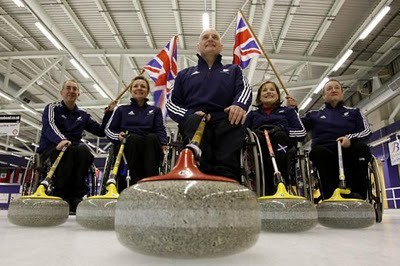
British wheelchair curling team

Wheelchair Curling Blog: GB’s McCreadie “quietly confident of gold”

Bob Cowan reports Michael [McCreadie, British team captain] saying: “If we play at our best we will be a real handful for any country in the world …. The GB Paralympic teams work just as hard all year round and prepare for our winter games just as much as the competitors who are presently out in Vancouver for the Winter Olympics.”

Check out the rest of the Wheelchair Curling Blog, this Youtube video of wheelchair curling, and this Disaboom writeup which explains the game: Wheelchair Curling: Meet Paralympian Patrick McDonald .

kestrell at Reading in the Dark: Does anyone else experience a sense of horrified fascination whenever they read the word “blind” in a book title? [comments are actually recommended on this one]

What stereotypes do my fellow blind readers feel need to be included in the blind bingo card? Definitely the psychic blind person, although if you can make that an African-American blind person you get double points. And the pathetically helpless blind person, double points for combining it with other negative images of ageism. And the emotionally-isolated blind person, or the blind person who has nothing to do all day because s/he can’t reaqd or pursue any intellectual hobbies.

Washington Post: House approves bill to limit physical restraint of students [WARNING]

The House approved a bill Wednesday to limit the physical restraint and seclusion of students in schools, a response to an investigation last year that found numerous reports of students abused or killed through such disciplinary measures.

The bill, approved 262 to 153 with support from Democrats and two dozen Republicans, would establish safety standards in schools and prohibit physical restraint and seclusion of students except to stop imminent danger of injury.

Honolulu Advertiser: Hawaii’s special treatment courts threatened by fiscal crisis

As a result of budget cuts, the 11 treatment courts, including those for adults with mental health issues and families with substance abuse problems, are handling fewer cases, providing less treatment and delaying more services, Judiciary officials say. At least one court is at risk of running out of treatment money by the end of the fiscal year, five have wait lists for accepting new clients, and O’ahu’s Adult Drug Court has reduced its treatment capacity by nearly 20 percent.

BBC: More help for adults with autism

Plans have been published by ministers in England to tackle the “social exclusion” of adults with autism. Campaigners have long accused the state of ignoring adults with the condition – just 15% are in employment and half live at home.

Burnham & Highbridge Weekly News: Burnham teen fights vile online disability abuse

A determined Burnham girl is fighting back against the cyber bullies who posted vile taunts on a web page she created to raise awareness of disabilities.

A Facebook group set up by schoolgirl Lydia Williams, who has a young sister with Down Syndrome, was hijacked by anonymous bloggers who uploaded cruel photos poking fun at disability, and left sick jibes on the comments section.

Recommended Reading for February 4th

Warning: Offsite links are not safe spaces. Articles and comments in the links may contain ableist, sexist, and other -ist language and ideas of varying intensity. Opinions expressed in the articles may not reflect the opinions held by the compiler of the post. I attempt to provide extra warnings for material like extreme violence/rape; however, your triggers/issues may vary, so please read with care.

Knox Leader: Talks over parking for disabled in Boronia

…are in talks to put a much-needed “disabled” car parking space in front of the school after a mother was forced to park in a no-go zone and fined for it. A Wantirna mum is livid at Knox Council for having no “disabled” spot at her daughter’s school and then fining her $117 for parking in a school safety zone. But she said she had no choice because there was no “disabled” parking outside the school. Her daughter, 5, who has a disability, has just started at the school. […]

Department of Education and Early Childhood Development spokesman Nick Higgins said when a child with a disability was enrolled at a mainstream school, the needs of the child were assessed and catered for through the department’s integration program. Where possible the department also advocated for indented parallel car parking spaces outside school grounds. But Mr Higgins put the onus for “disabled” parking on the council.

The Lariat Online (Baylor University): Faculty Senate focuses on Disabilities, BU bookstore

Faculty members have recently been looking into concerns about how far to go to accommodate disabled students. Dae Vasek, director of the Office of Access and Learning Accommodation for Baylor, addressed some of the concerns of the faculty at the meeting.

Dr. Dennis Myers, chair of Faculty Senate, said an example concern was if a student with a disability is required to follow the same attendance policy as other students.

Vasek said the answer was yes. Myers said faculty members were also concerned about students who might disrupt class, such as students who have panic attacks. “It is not permissible, whatever the accommodation for the student, for the student’s behavior to be disruptive to the class,” Myers said.

Students who have disabilities that may be disruptive are asked to sit in the back of class.

Edmonton Journal: NDP MP’s bill seeks to outlaw genetic discrimination

Increased use of genetic testing is leaving Canadians more vulnerable to discrimination on the basis of their genetic characteristics, a Winnipeg MP says.

“We’re starting to hear about people who are actually losing job opportunities, employment opportunities because of (their) genetic characteristics. So it’s a real issue,” Judy Wasylycia-Leis told a news conference Thursday, flanked by members of the newly created Canadian Coalition for Genetic Fairness.

Assiya at For a Fairer Today: Time

Sometimes when people ask me what activities I do, I jokingly include my health as an activity. I either say, “I get sick a lot” or “and I have chronic health problems” or something like that. Often it’s kind of awkward and I make a mental note to never say that again (until the next time of course). But here’s the thing: being ill, or disabled, or whatever label you want to afix, takes a LOT of time.

Nilesh Singit at Disability News Wolrdwide: The Right to Learn

Universal primary education by 2015: this is the second of the Millennium Development Goals (MDGs), agreed by every country in the world in 2000. Yet this mission will only succeed if it reaches all children, including those with disabilities. Today more than 80% of all children in developing countries are enrolled in primary school, but up to 90% of children with disabilities in developing countries do not attend school.

Panel at The Guardian: A matter of life, death and assisted dying

After two high-profile court cases reignited the arguments around assisted deaths last week, Observer policy editor Anushka Asthana brought together five of the most outspoken figures in this controversial debate and put to them the most challenging questions raised by these cases.

See also:

Madeleine Teahan at The Guardian: A welcome message for the weak

BBC Daily View: Assisted suicide law clarification

Clair Lewis at The Independent: Disabled people need assistance to live, not die

Dominic Lawson at The Independent: Who are we to decide that a dependent life is a pointless life?

[NB: These latter links are purely for your information. I request that you take discussions of the pros and cons of euthanasia/assisted suicide elsewhere. Thanks. ~L]

Recommended Reading for March 3rd

Warning: Offsite links are not safe spaces. Articles and comments in the links may contain ableist, sexist, and other -ist language and ideas of varying intensity. Opinions expressed in the articles may not reflect the opinions held by the compiler of the post. I attempt to provide extra warnings for material like extreme violence/rape; however, your triggers/issues may vary, so please read with care.

captionedplay

A scene from an open-captioned performance of “Twelfth Night” in Central Park last year.

New York Times: Making Broadway Accessible for the Disabled

“No one wants to feel left out of a performance,” said Lisa Carling, the director of the Theater Development Fund’s [TDF] accessibility program, which offers assistance to theatergoers with physical disabilities. “If you miss a punchline or a dramatic statement, everyone else is included but you are not.”

Pulling out a comment from this article from “HAROLDAM” of Ft Myers:

I dislike the metaphors “the” and “disabled.” We are not a generic ” ‘the’ disabled” […] “Universal access” is a metaphor that is appearing quite often, it intends that venues not disable people from attending, participating. That electric door that opens for you, opens for people with disabilities. That curb cut that allows wheelchairs easy access, allows baby carriages the same access.

aris_tgd in access_fandom on dreamwidth: Dancing on Wheels ep 3: Simone, Harry, and the reality TV narrative.

So the drama in Episode 3 of Dancing on Wheels is interesting because it’s the first time on the show they’ve really talked about the representation of people with disabilities on and because of the show. And given the subject, I’d like to talk about the edit that the producers gave Simone and Harry this week.

sarahj at My Own Last Words: Celebrity Stuttering

Connecting to other people who stutter is important to me. People like Marty Jezer, who embrace their identity as someone who stutters, make me more inspired to accept me and my stutter as they are. Celebrities that hide and denounce their stutter as a childhood vice plays into the “inspiring disabled person” story that I and many others detest.

Bernama.com: Facilitate Accessibility For Disabled, Urges Chew

The disabled are finding the environment increasingly unfriendly, no thanks to a wonderful law which glaringly lacks proper enforcement. […]

These were among encumbrances that need to be addressed to facilitate the accessibility of a disabled person, said Women, Family and Community Development Deputy Minister Datin Paduka Chew Mei Fun. Expressing displeasure towards the snail-pace progress in creating a barrier-free environment, she said:

“A wonderful law without proper enforcement cannot create a disabled-friendly environment…a lack of cooperation from the local authorities would make it almost impossible to create a barrier-free environment.”

Washington Post: Parity law requires mental health benefits comparable to physical care benefits

While visits to [Denise Camp’s] internist for physical problems required a $20 co-pay, her weekly therapy sessions with a social worker cost $50 and trips to the psychiatrist who prescribed her medication were $75. A similar disparity applied to medicines: Drugs to treat the crippling depression that ended her engineering career cost her twice what she paid for an antibiotic. […]

Camp is among an estimated 140 million Americans, most of them covered by group insurance plans provided by employers, who are the beneficiaries of a sweeping new federal law designed to guarantee parity in insurance coverage.

The law, which took effect for most plans Jan. 1, applies to groups of more than 50 employees and is designed to end what Health and Human Services Secretary Kathleen Sebelius called “needless and arbitrary limits on care.” Higher deductibles, steeper co-pays and other restrictions are no longer allowed for mental health and substance abuse treatment.

The Mainichi Daily News: People with disabilities snubbed by Tottori prefectural housing complex manager

The manager of a prefectural housing complex appointed by the Tottori Prefectural Government refused to rent apartments to three people on the grounds that they had disabilities, it has been learned. […]

Officials said that the 25 people were selected to enter the 156-apartment complex in Yonago, Tottori Prefecture, in August and December last year and January this year. A prefectural official reportedly handed over information on the 25, including the name of the householder, the number of people in each home, and data on whether there were elderly or people with disabilities. The official also verbally conveyed the level of disability of three candidates who used wheelchairs.

The manager subsequently refused to allow two of the disabled people to enter the apartments. One other person with a hearing disability who was selected in June last year was also turned away by the complex manager on the grounds that he had a disability.

Recommended Reading for March 2nd

Warning: Offsite links are not safe spaces. Articles and comments in the links may contain ableist, sexist, and other -ist language and ideas of varying intensity. Opinions expressed in the articles may not reflect the opinions held by the compiler of the post. I attempt to provide extra warnings for material like extreme violence/rape; however, your triggers/issues may vary, so please read with care.

Modus Dopens: In Utah, miscarriage = criminal offence

What counts as non-”reckless” behaviour? If you don’t eat five portions of fruit and veg a day and do (gynecologist-approved) cardiovascular exercise three times a week, is that “reckless”? What if you have a glass of wine at a party (there being no scientific basis for believing that drinking in moderation poses any risk to a fetus)? What if you take over-the-counter medication for a headache, without a doctor’s prescription? What if you take prescribed medication that carries a pregnancy risk?

Elizabeth Switaj at Gender Across Borders: Are Children an Oppressed Class?

Many people I respect have written about this subject before. Unfortunately, I haven’t been able to find most of these posts through Google, though I remember that one appeared here. You see, when I first started seeing these posts, my response was anger. Haven’t women, and disabled women in particular, been fighting not to be treated like children? Doesn’t saying that children are oppressed undo all of that?

But enough people I respect had commented on the subject that I sat on my rage and thought about it for a while. Eventually I came to see was that my reaction to the idea of children as an oppressed class resembled the way some temporarily able-bodied feminists respond to discussions of ableism. Able-bodied women don’t want to be treated like “cripples”, after all. Then I had to admit that of course children are oppressed as a class.

Hoyden About Town: Not your punchline, Amanda Palmer.

If you missed this week’s Good News Week, or couldn’t see it because you’re not in Australia, here are the “disabled feminists” sledges aimed at FWD/Forward from Amanda Palmer, Des Bishop, and Paul McDermott. The ones we’ve been talking about in Otterday.

CBC News: Stroller rules for buses rejected in Ottawa

City staff and advocates of seniors and people with disabilities had proposed tighter rules in response to complaints about the area at the front of the bus reserved for seniors, pregnant women, people with disabilities and passengers with small children. Customers and operators said the strollers blocked other passengers and resulted in injuries. However, parents said folding up their strollers was difficult and impractical.

NPR: For Some Jobs, Asperger’s Syndrome Can Be An Asset [Remind anyone of The Speed of Dark?… ~L]

Thorkil Sonne is the founder of Specialisterne. The company currently has three dozen consultants with autism spectrum disorder doing software testing and data entry.

“[The company] actually sees autism — the autism characteristics — as a potential competitive advantage,” Sonne says.

Maia Szalavitz at Time: Are Doctors Too Reluctant to Prescribe Opioids?

Decisions about a patient’s pain treatment are now made much more collaboratively, but even in modern times, the process is fraught with moral judgment, stemming largely from the nature of available pain treatments and an incomplete understanding of how to use them. Patients who ask for more pain drugs are eyed as potential addicts; doctors who prescribe pain medications too frequently fear being arrested for it.

Recommended Reading for March 1st

Warning: Offsite links are not safe spaces. Articles and comments in the links may contain ableist, sexist, and other -ist language and ideas of varying intensity. Opinions expressed in the articles may not reflect the opinions held by the compiler of the post. I attempt to provide extra warnings for material like extreme violence/rape; however, your triggers/issues may vary, so please read with care.

Radical Bookworm: Ottawa Columnist Argues for Forced Sterilization

From Dr. Gifford-Jones of the Ottawa Sun: Should women who deliver FAS children be sterilized?

Short answer: No.

Long answer: No no no no NO what the fuck is wrong with people.

National Minorities with Disabilities Coalition: Black Disabled History 2010 [USAns can Register for the Black Disabled Leadership Summit here]

The National Minorities with Disabilities Coalition like many local and state minority disability organizations was born out of frustration with the persistent and pervasive disenfranchisement of minority individuals with disabilities and their families. Despite the significant gains made by some groups within the disability rights movement, in 2010, we still cannot ignore:

* Lack of cultural competence among service providers and policy makers, leading to their disrespect for beliefs other than their own

* The absence of significant numbers of minority persons with disabilities among senior professionals and policy makers […]

ewin at Blossoming Into Hysteria: A Note On Depression [Note: discusses suicide]

Having just found out that Andrew Koenig did, in fact, take his own life, and that he had been a lifelong sufferer of chronic depression, I’d like to note a few things.

The Sacramento Bee: Federal judge blocks cuts to California’s adult day care program

Disability rights advocates have scored another victory — and thwarted another budget cut — with a federal court injunction this week that blocks tightening eligibility guidelines for getting into California’s adult day care program.

An Oakland-based judge’s preliminary injunction Wednesday is “a major victory” because it recognizes that seniors and the disabled could be “irreparably harmed by losing these crucial services,” attorney Elizabeth Zirker of Disability Rights California said Thursday.

Paul Hochman at Fast Company: Bionic Legs, i-Limbs, and Other Super Human Prostheses You’ll Envy [I’m guessing this author thinks accessible parking is a super duper “perk”, and that it’s awesome having a fatiguing disability ‘cos you get to sit around all day. ~L]

Save your tears for Tiny Tim. A boom in sophisticated prostheses has created a most unlikely by-product: envy.

There are many advantages to having your leg amputated.

Pedicure costs drop 50% overnight. A pair of socks lasts twice as long. But Hugh Herr, the director of the Biomechatronics Group at the MIT Media Lab, goes a step further. “It’s actually unfair,” Herr says about amputees’ advantages over the able-bodied. “As tech advancements in prosthetics come along, amputees can exploit those improvements. They can get upgrades. A person with a natural body can’t.”

New York Times: Long-Term Care Hospitals Face Little Scrutiny [WARNING: abuse/neglect in hospitals]

Despite the rapid expansion of long-term care hospitals and the serious illnesses they treat, Medicare has never closely examined their care. Unlike traditional hospitals, Medicare does not penalize them financially if they fail to submit quality data.[…]

The 22 violations represent an estimated 2 percent of the serious violations Medicare found nationally, even though Select operates less than half a percent of the nation’s hospital beds. Put another way, on a per-bed basis, Select hospitals were cited about four times as often as the average.[…]

Therefore, long-term care hospitals are most profitable if most patients are discharged at or just after their 25th day, with a few discharged earlier. Select adheres closely to this formula, with an average length of stay at its hospitals of about 24 days, according to public filings. At some Select hospitals, the 25th day is called the “magic day,” ex-employees say.

Recommended Reading for February 26th

Warning: Offsite links are not safe spaces. Articles and comments in the links may contain ableist, sexist, and other -ist language and ideas of varying intensity. Opinions expressed in the articles may not reflect the opinions held by the compiler of the post. I attempt to provide extra warnings for material like extreme violence/rape; however, your triggers/issues may vary, so please read with care.

Mia Mingus at Leaving Evidence: “Intersectionality” is a Big Fancy Word for My Life (Excerpts from MBGLTACC 2010 Keynote Address)

We live in a heterosexist society, we live in an ableist society and we all have a responsibility to actively work against it. We can’t guarantee that things won’t be ableist or won’t be racist (that’s not the world we live in right now); but we CAN guarantee that when there is racism, when there is ableism, that we will do something about it. We will LISTEN to those most impacted; we will listen to people of color, we will listen to disabled folks; we will listen to trans folks; we will listen to the queer disabled people of color—and hear them. […]

So I would say the same thing to the queer able-bodied folks in the audience and the folks who benefit from able-bodied privilege (in many different ways): how are you connecting your fight for queer liberation to challenging able-bodied supremacy? How are you connecting your queerness to your able-bodied privilege? How are you listening to queer disabled folks in your world, supporting them and practicing solidarity? How are you actively noticing how ability, ableism and able-bodied supremacy play out in queer communities, student groups, organizations, and movements?

cripchick: memo on “intersectionality”

“intersectionality” is not simply the meeting place of single issue politics. it is something where pieces of our experiences are so intertwined and so entangled together that they cannot be pulled apart into strands.

the way you treat intersectionality is like asking me to look up in the sky and pinpoint where the clouds begin and end.

megpie: Sometimes Shit Happens

But try explaining this to the average layperson who doesn’t have depression, and they look at me as though I’m even more crazy than I actually am – I can’t just be this depressed without a REASON; it goes against all logical thought. […] So maybe what’s needed is a little less time spent searching for the massive, traumatic REASON for my mental illness, and a bit more time spent on dealing with the reality of its existence.

justira at Dreamwidth: Utah actually considers criminalizing miscarriage, my brain explodes

And then there is the presumption that a family without children is incomplete, not a proper family, so when are going to start a family? You better do it before you’re 30, or 90% of your eggs will shrivel up! And then it’s back to the fertility clinic, but watch out, if you have the gall to delay having children for that long you will probably have some kind of gross disabled kid. Better get a gene scan just to make sure and keep working on those cures! Unless you’re some lazy unemployed slut, in which case you should be sterilized against your will. Feminists / liberals / pro-choicers / whathaveyou don’t get a free pass here, either, not when shit like this and this needs to be said. Not to mention this and this. Not when you use a misogynist slur to describe one of the lived realities of women in childbirth. In short: white, non-disabled upper-class women are to have white, non-disabled children, whether they want them or no, and be goddamn happy about it.

The Washington Post: Shinseki: US will fix broken VA disability system

Veterans Affairs Secretary Eric Shinseki said he’s making it a top priority this year to tackle the backlog of disability claims that has veterans waiting months – even years – to get financial compensation for their injuries. […]

Shinseki said he’s often asked why, 40 years after the Vietnam war and nearly two decades after the Gulf War, his agency is still trying to resolve issues related to those veterans’ illnesses. […] Shinseki said he’s looking ahead to make sure Iraq and Afghanistan veterans with post-traumatic stress disorder and traumatic brain injuries don’t have similar problems getting financial compensation.

The Telegraph: Travel industry ‘failing to cater for disabled’ [via Rolling Rains Report]

Britain’s leading travel companies are failing to serve the needs of disabled travellers, new research has found. […]

Brian Seaman, head of consultancy at Tourism for All, said the travel industry needs to do more to understand the needs of disabled travellers. “We have conducted independent research in the past by sending disabled travellers to the high street to find a disabled-friendly holiday to Majorca,” he said. “In every case, not one travel agent was able to offer a product that might have resulted in a booking. The agents had great difficulty in finding suitable accommodation and when it came to visiting the accommodation on the island that they were able to find, they turned out not to be as accessible for disabled people as the agents had suggested.”

Recommended Reading for February 25th

Warning: Offsite links are not safe spaces. Articles and comments in the links may contain ableist, sexist, and other -ist language and ideas of varying intensity. Opinions expressed in the articles may not reflect the opinions held by the compiler of the post. I attempt to provide extra warnings for material like extreme violence/rape; however, your triggers/issues may vary, so please read with care.

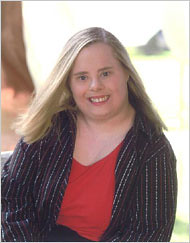
Andrea Fay Friedman

NYT Arts Beat: ‘Family Guy’ Voice Actor Says Palin ‘Does Not Have a Sense of Humor’

Image: Andrea Fay Friedman, who has Down syndrome, was a voice actor in a recent episode of “Family Guy” criticized by Sarah Palin.

One person who supports the “Family Guy” staff is Andrea Fay Friedman, the 39-year-old actor and public speaker who played Ellen in that episode. Like the character, Ms. Friedman also has Down syndrome.

In an e-mail message sent on Thursday to The New York Times, Ms. Friedman wrote:

” I guess former Governor Palin does not have a sense of humor. I thought the line “I am the daughter of the former governor of Alaska” was very funny. I think the word is “sarcasm.””

ninjanurse at Kmareka.com: Talking Back to Sarah Palin

You may agree with her or not, but it’s good to remember that people with Down Syndrome are not God’s innocent angels sent here to teach us something about life, but actual people who have their own lives to live. Trig Palin will grow up, and I hope he will have a good life. Sarah Palin better hope she doesn’t pick up the NYT some day and see a best-seller called, ‘Drafted–My Life on the Campaign Trail When Mommy Went Rogue’, or ‘Going Rough–Missed Naps and Noisy Crowds in Days that Made History’. At least it’s not ‘Vice-President, Dearest’ –not yet.

Ally G. at The disABILITY Enlightenment Project: disABILITY Simulations

I know I came out of that exercise feeling frustrated and discombobulated. Also oftentimes people will come out of those simulation activities thinking to themselves “gosh, I’m glad I am not stuck in a wheelchair all day” or “I feel sorry for people who are blind.”

Feelings of pity or “glad that’s not me…” are not the aim of disability rights advocates.

Marie Claire/Yahoo!7: The Battle for Care that’s Pulling Families Apart

When news broke that Australia’s only boarding school for disabled kids was set to close, it exposed once more the heartbreaking lack of support for their families. […]

The issue made headlines last November, when reports surfaced that Kingsdene Special School in NSW – the only weekday boarding school for sev-erely disabled children in Australia – may close due to the charity Anglicare having to withdraw financial support. Parents expressed their fear that if the school shuts, they may have to make the same heart-rending decision as Anita to abandon their child to DoCS.

New York Times: Countless Lost Limbs Alter Life in Haiti’s Ruins

More than a month after the earthquake, thousands of new amputees are facing the stark reality of living with disabilities in a shattered country whose terrain and culture have never been hospitable to the disabled.

Some remain in hospital tents swarming with flies; others have moved to makeshift post-surgical centers; and those who healed quickly, like Ms. Jean, have been discharged to the streets, where they now live. All need continuing care in a nation with no rehabilitation hospital, few physical therapists, no central prosthesis factory since the quake and a skeletal supply of crutches, canes and wheelchairs gradually being reinforced by donations.

“The situation for newly disabled persons is very delicate,” said Michel Péan, Haiti’s secretary of state for the integration of the disabled. “They urgently need not only medical care but food and a place to live. Also, we cannot forget those disabled before the disaster who, because of their handicap, are having trouble getting access to humanitarian aid.

Ewa Hess, Hennric Jokeit at Eurozine: Neurocapitalism [Perhaps we need a new warning category for “obfuscation”… ~L.]

It may seem uncanny just how closely the narrow path to scientific supremacy over the brain runs to the broad highway along which capitalism has been speeding for over 150 years. The relationship remains dynamic, yet what links capitalism with neuroscience is not so much strict regulation as a complex syndrome of systemic flaws.

Recommended Reading for February 24th

Warning: Offsite links are not safe spaces. Articles and comments in the links may contain ableist, sexist, and other -ist language and ideas of varying intensity. Opinions expressed in the articles may not reflect the opinions held by the compiler of the post. I attempt to provide extra warnings for material like extreme violence/rape; however, your triggers/issues may vary, so please read with care.

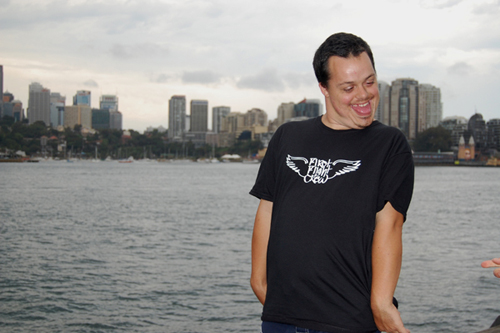
Mark Bekir in a First Flight Crew T-shirt

Image: Marky Mark (Mark Bekir) in a black First Flight Crew T-shirt.

accessibleARTS: First Flight Crew breaking into the scene:

The eight piece hip hop crew from all over Sydney is managed by Accessible Arts’ Creative Programs Coordinator, Alison Richardson and was formed in 2009 as a result of a series of workshops with Victorian based music organisation Club Wild, further development with Powerhouse Youth Theatre and all under the guidance of hip hop artist, Morganics.

Wheelchair Dancer: Passing By:

At the studio where I take classes when I am in NYC, the elevator isn’t ADA accessible: it’s painfully small. So small that there is always a line, well, a press of people waiting to go upstairs. It continues to amaze me that hyperable-bodied dancers who are about to go and dance for hours on end take the elevator. But they do, and so, when I was using my previous (wider) chair, I had to get there even earlier than the rest; I had to stand up, dismantle my chair, limp in, hold the door, drag the pieces in behind me and then reassemble the thing. It’s the sort of disability performance I didn’t want people to see.

staticnonsense: at I Am Not: A Punishment:

I am not a punishment to be bestowed upon anyone, much less my caring and supporting family. I know your beliefs strongly state otherwise, but they do not represent the reality of the situation.

My mother’s medical decisions and past choices are hers. They are not anyone else’s business. It is not our place to judge her for her decisions, especially when one does not know or one doesn’t need to know the reason why. No matter her decisions in the past, she is an infinitely caring person that has been behind me every step of the way through the trials and tribulations of my life.

IP at Modus Dopens: Why separate resources ain’t good enough:

There’s a pervasive myth that annoys the hell out of me, and I hope you’ll excuse me while I get it out of my system: it’s the idea that it’s ok for an institution to put in new inaccessible facilities as long as it also has some accessible ones elsewhere.

Really, no.

Why why why do we have to have one set of facilities for the “normals” and another set for the “freak show”? It’s humiliating, and it’s not even useful. If you’re putting in a facility from scratch, it’s often the case that you can put in something accessible for the same cost as something inaccessible. So it’s not even easier to put in two sets of facilities rather than just the one. This is just another way that we center the experiences of currently non-disabled people

PS News: Red tape cut enables disabled veterans:

Ex-Service personnel with disabilities who access income support are to be spared medical reviews at Centrelink for their Disability Support Pensions. […] Mr Griffin said TPI pensioners currently had to endure repeated Job Capacity Assessments to keep their Disability Support Pensions.
He said these assessments were “unnecessary”, as the veterans had already been through a rigorous assessment process to access DVA benefits.

Brisbane Times: When the ability to act is what counts :

Actors with a disability playing characters with a disability have been particularly prominent in Australian films this year, including Matthew Saville’s feature Noise and Clubland, which stars Brenda Blethyn. […]

Rick Randall, director of The Other Film Festival, Melbourne’s trail-blazing festival of “New cinema by, with and about people with a disability”, says roles remain few and far between in Australia. “There are a few films with minor roles played by people with disabilities, but there’s still a long way to go. The major problem, though, is that we’ve got a shrinking film industry so it’s really hard for new players to get a foothold.”

Young agrees, adding that it’s vital that disabled people are making the work as well as starring in other people’s. “When we write about our own experience, we bring something to it that non-disabled people rarely manage to capture,” she says.

New York Times: Doing an About-Face on ‘Overmedicated’ Children :

[Judith Warner] sallied forth to interview all the pushy parents, irresponsible doctors and overmedicated children she could find — and lo, she could barely find any. After several years of dead ends, missed deadlines and worried soul-searching, she was forced to reconsider her premise and start all over again.

“We’ve Got Issues” is the product of that unusual cycle. Journalists who cobble together enough anecdotes to support a preset agenda are all too common, and presumably Ms. Warner could have managed to do just that. Instead, she actually let her research guide her thoughts.