Category Archives: recommended reading

Recommended Reading for March 24, 2010

Vaginismus and biofeedback on Dr. Oz

Unlike a few months ago when Dr. Oz did vulvodynia, this time he did not have a representative from a vaginsimus awareness organization on the show. Perhaps this is because there is no such nationally recognized vaginismus organization (that I’m aware of,) as there is with the National Vulvodynia Association. There are patient-led organizations, treatment clinics, support groups, and doctors prepared to address vaginismus, yes. But for some reason Dr. Oz did not have anyone from one of these groups on the show to talk about it. Instead, he called a random audience member, Ronnie, onto the stage.

I think it is no coincidence that on this episode, without the direction of someone experienced in dealing with vaginismus, it was treated more flippantly than vulvodynia was a few months ago. Vaginismus was compared to panic attacks, localized to the pelvic floor.

One Hell Of A Ride

I’ve been talking to several people about cures and quality of life, and I find I’m struggling to organise my thoughts on my own quality of life. I’ve blogged extensively about this, both the negatives and some of the positives. But some of my interlocutors seem to want one-line generalisations like “given the choice, one would naturally chose not to be blind”.

But I can’t do that. I can’t put the whole of my disabled experiences in tidy one-line summaries like that.

T-shirt Slogan Fail

The stigma surrounding mental trauma and non-neurotypical brain conditions is a huge barrier to full emotional health. When people are unable to talk about their condition for fear of being ostracized, or losing a job, or being kicked out of housing, or losing custody of a child, or coerced into treatment regimens they don’t consent to “for their own good,” the silence they are forced into only exacerbates their suffering. It cuts them off from potential sources of support. [And let me be very clear that the fears listed above are not irrational and paranoid: they are very real occurrences; I’ve experienced a couple myself.]

I’m all for people taking steps to eradicate the stigma of having a mental illness or non-neurotypical condition, and I think it’s great to have allies in this struggle. So for the most part, the goal of the website is a decent one, and I was happy to see that the site also contains good information for people just starting out in trying to understand what it means to have a mental health condition that can impair one’s day to day quality of life.

But.

In the news:

US: Vermont cop tases and tases a mentally ill homeless 59 year old woman

A cop in Barre, Vermont repeatedly tased Ann Osborn, a 59-year-old mentally ill homeless woman who was standing in a parking lot with her arms folded.

Fiji: Hospital faces major wheelchair shortage

Health Ministry spokesman Iliesa Tora said the lack of wheelchairs was a problem especially at the Colonial War Memorial Hospital’s Emergency Unit. CWMH’s Emergency Unit, known to cater for the very critical and serious cases, now faces a problem to provide wheelchairs to assist those who can not walk or find difficulty to walk in to see a doctor. It was confirmed that wheelchairs were shared among patients and in some cases caused delays for those who needed immediate attention or wanted to go to the toilet.

Recommended Reading for March 23, 2010

Yes I Am:

And that’s the heart of it. I don’t want anyone to think I’m lazy. I’m already working part time because I simply cannot cope with full time work any more, and I can’t stand the questions I get about it. I’m not open about my health conditions, and I have no acceptable answer when I’m asked what I do when I’m not at work. I’m not studying. I’m not bringing up children. What’s my excuse?

I have been doing so much soul-searching lately, and trying to come to terms with all the changes that have been going on. Trying to come to terms with the word disabled. I still can’t say it out loud, you know, that I have disabilities. A workmate once laughed when I mentioned something about disability discrimination, because I’m not in a wheelchair or anything. Of course I’m not disabled.

I don’t think you understand the concept here: [Comments recommended]

When I call you to complain that the road repairs on State Road 50 have made the State Road 50 and S Park intersection unsafe for wheelchair users, pedestrians and bicyclists, and has already resulted in injuries, the proper response is not, “I guess you’ll just have to drive for awhile.”

In the news:
UK: Wheelchair-bound woman told to take train to reach opposite platform [Headline fail.]

Julie Cleary, 53, was hoping to use a new £2.8 million lift at Staplehurst train station in Kent so she could get out of the station after a day trip to London but was told she could not use it because of “health and safety”.

Miss Cleary was told instead to catch a train to Ashford International Station, 15 miles away, and back so she would end up on the right platform which was just 20 yards away.

Australia: Parliament House not ready for Kelly [Thanks Deborah!]

KELLY Vincent is set to win an Upper House seat, but at this stage she physically cannot get there.

While the final results could still be weeks away, the Dignity 4 Disability candidate is the likely winner.

At 21, she will become the youngest female elected to Parliament.

She is also believed to be the first person in a wheelchair, but Parliament House is not yet disability-friendly enough for her to make her way to the chamber.

US: Paralyzed Graffiti Artist Draws With His Eyes

A group of artists and hackers have crafted a gadget that lets a paralyzed graffiti artist continue making art using only his eyes. And it costs about as much as an iPod shuffle.

Zach Lieberman of the Graffiti Research Lab started working on the EyeWriter with one man in mind: Los Angeles-based graffiti artist Tony Quan. In 2003, Quan was diagnosed with Lou Gehrig’s disease, leaving virtually every muscle in his body paralyzed except for his eyes. Lieberman and developers from Free Art and Technology, OpenFrameworks and the Ebeling Group were inspired to create low-cost, open-source hardware and software for eye-tracking to help Quan draw again.

Recommended Reading

Please do not be on my side

The American Academy of Pain Medicine wants better treatment of chronic pain. So do I.

I hate that fucking joke so much.

World, please stop saying, “Achieving [something you think is awesome but it’s actually pathetic] is like winning a gold medal at the Special Olympics!”

A Special Olympics gold medal is not a dummy prize. It is awarded to world-class* athletes who have managed to beat dozens of other world-class athletes to achieve a distinction to which very few people can aspire. Special Olympics gold medallists think their medals are awesome because they actually are awesome.

March 15: Sue Boyce (b: 1951):

Happy birthday to Australian senator from Queensland, Sue Boyce, who has made disability rights issues a priority of her legislative work. She’s currently serving on the committee to consider Australian immigration laws on the subject of disability.

Should the Social Model of Disability permit Autism treatment?

Sometimes, it is hard to differentiate between direct and indirect consequences of a condition, between impairments and disabilities. IP uses autism as an example of a condition that doesn’t create intrinsic suffering, and I commented that I disagreed there, although this issue is hotly debated within the autistic community. I, for one, suffer from chronic overload, which does not always have a known trigger. It could be that, in an ideal world with low stimulation, I would not suffer from this symptom, but I often cannot tell exactly why I suffer from overload.

Please don’t say you’re sorry

Becoming committed to surviving cancer was not an easy feat. Dealing with other people’s reaction to my cancer was one of the things that made it an especially difficult process. When the people around you are treating you like you’re already on death’s door, it can be hard to see past the fatalism. If I had a dime for every person that said “I’m so sorry” or “Poor baby!” when they found out I had cancer, I’d be richer than Bill Gates.

Time to die? Plus Assembly, Bunnies, PJs and a lovely coffin:

People often have two responses when I talk about my disease and the pain, one is to ignore, like I never talked. The idea that it hey it is just Elizabeth, ‘EFM’ after all, and her condition is weird and painful (and thus somehow pain is okay..for ME). This is set up socially in terminal disease culture where immediately the HEALTHY person is given counseling, has a stack of books of dealing with THEIR pain. There aren’t really any books on dealing with pain of terminal levels, or the path one has to take in order to live while dying. The attitude is, ‘They will be dead so….’ – what is unspoken is, ‘so YOUR pain, you healthy people, at their loss needs to be addressed as does the horror of those late nights of groans and agony we will never know’. For those who HAVE the groans and agony, the idea that only the person NOT in pain is having ‘issues’ is a rather hurtful one emotionally.

Recommended Reading

Hi everyone! This is an extra huge edition of the Rec Reading, because it’s my last one for this particular RR stint. I hope you’ve all found something interesting, enjoyable, or useful out of my roundups over the past couple of months. ~L

Warning: Offsite links are not safe spaces. Articles and comments in the links may contain ableist, sexist, and other -ist language and ideas of varying intensity. Opinions expressed in the articles may not reflect the opinions held by the compiler of the post. I attempt to provide extra warnings for material like extreme violence/rape; however, your triggers/issues may vary, so please read with care.

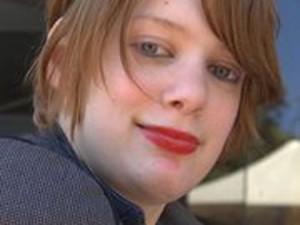
closeup photo of kelly vincent, who has bobbed red hair and bright lipstickSBS World News: Young candidate steps up to challenge [more information on the Dignity for Disability party here]

Young playwright Kelly Vincent has stepped up to be the main candidate for Dignity for Disability in the South Australian state election, after the death of the party’s founder. […]

“To step up to this new position is a great honour to me,” Ms Vincent says. “I’m running to improve the situation [for the] one in five disabled Australians.” Ms Vincent says the situation for disabled people is ‘dire’, and that she’s faced many challenges in her day-to-day life.

“I’m currently sitting in a wheelchair I’ve had for four months, but it took two years to get,” she says. “Prior to that I was using the same wheelchair from the age of ten to 21, so you can imagine the physical pain and discomfort that I was having because of that, and the loss of independence. So I learnt a lot in that experience, in battling for that chair.”

As well as issues with obtaining basic equipment, the candidate says disabled South Australians face issues with finding suitable housing and care, and find it difficult or prohibitively expensive to travel from place to place.

jeneli at almost normal: Yes I am

I’ve been thinking about disability a lot lately. Dancing around the word itself, never quite daring to apply the word to me. Never quite daring to dip more than a toe into the water, so to speak. I’ll use the word indirectly, by tagging a post with ‘hidden disabilities’ or by saying ‘I feel disabled by X, Y and sometimes Z’, but that’s about as far as I’ve gone–and even that fills me with doubt as to whether I have the right to use these terms.

The Vancouver Sun: Women under-represented in Paralympic sports

Nearly five times as many men are competing at the 2010 Games. It’s skewed by sledge hockey, which is a male-only event. But subtract the 118 hockey players from the 506 competitors and women are still outnumbered by more than three to one. […]

Even in Canada, women with disabilities are among the poorest in the country and even without needing customized and specialized equipment, sports are expensive.

But there’s also self-selection. Women generally don’t participate in sports in as large numbers as men. They also are less likely to engage in risky behaviours and, as a result, fewer disabled women acquire their injuries. Qualtrough says most women are either born with disabilities or have had cancers that required amputations. Plus, there’s the whole issue of children and families.

frolicnaked at RH Reality Check: How Endo-Aware Are You?

So yes, it’s still March, which means that it’s still Endometriosis Awareness Month. And talking with some of the members over at Live Journal’s endometriosis community brought to light how much the lack of information and lack of accurate information can make dealing with endo harder for some of us.

These misconceptions are harmful, since they can contribute to stigma associated with chronic pain and make it more difficult for people to seek out and receive proper treatment:

More from frolicnake: WHAT and Pains?

Herald Scotland: Millions in disability benefits go unclaimed by cancer sufferers

Cancer patients nearing the end of their lives are losing out financially with approximately £8 million in disability benefits going unclaimed in Scotland every year.

A report released today by leading charity Macmillan Cancer Support also shows that nearly a third of people diagnosed with terminal cancer are not claiming benefits because the system is confusing.

Top News: ‘We need a national advisor to PM on disability’

In order to ensure the rights of people with disabilities, there is a need for a national advisor on the subject to the prime minister, former chief justice of the Delhi High Court Ajit Prakash Shah said Thursday.

“There is a need for a national advisor on disability to the prime minister, as it will help in bridging the gap between policies and ground realities,” Shah said at the inauguration of a two-day meet on the disability sector in the capital.

Boston Herald: Dead man’s dad takes on wheelchair co. in $10M suit [warning: description of death may be upsetting]

The father of a South End quadriplegic who died in 2007 after his wheelchair malfunctioned during a repair session said yesterday a $10 million lawsuit against the company is about fair treatment for the disabled.

“It’s infuriating,” said Charlie Thompson, whose son Jeffrey, 29, died a day after his wheelchair malfunctioned while two technicians from Franklin, Tenn.-based National Seating & Mobility were doing routine repairs.

Rye & Battle Observer: Disabled boy forced to miss out on school

The parents of a 12-year-old boy with learning disabilities say they have been forced to educate their son at home because the education authority will not pay the £12-a-day taxi fare to get him to school. […] Lee used to get the bus from outside his house to the school gates but when the route was discontinued and replaced by a school loop bus, Lee twice became confused and ended up lost in the town centre.

Lee’s mum, Mrs Godden, said […] “The education department know that my own disability also prevents me from taking Lee to school myself so I am at my wits’ end about what to do.”

The Age: Legally blind social worker denied permanent visa

The Immigration Department has refused to grant a skilled worker’s visa to a highly qualified social worker from India because she is legally blind. Simran Kaur, 29, came to Melbourne in 2007 on a student visa with her husband, Jasmeet Singh. She had obtained a master’s degree in social work in India and completed a diploma in community welfare and development here last year. […]

The [Commonwealth medical] officer said she met the criteria for legal blindness and she would be eligible for the blind or disability pension ”in due course”. ”Such a person with this condition and severity, staying for the proposed duration of stay (permanent), would likely require the … blind or disability pension. This would result in significant cost to the Australian community,” the officer wrote.


Chicago Tribune: Artful disabilities act

“Chicago is so progressive,” says [Carrie] Sandahl, 41, an advocate for disability rights who has become a leading researcher on disability and the arts. She arrived last fall from Florida State University in Tallahassee to head a new program at the University of Illinois at Chicago called the Program on Disability Art, Culture, and Humanities. The curriculum is devoted to research of and the creation of disability art.

Recommended Reading

Warning: Offsite links are not safe spaces. Articles and comments in the links may contain ableist, sexist, and other -ist language and ideas of varying intensity. Opinions expressed in the articles may not reflect the opinions held by the compiler of the post. I attempt to provide extra warnings for material like extreme violence/rape; however, your triggers/issues may vary, so please read with care.

Boston.com’s The Big Picture:

Laurie Stephens in Sitting Giant Slalom

Laurie Stephens of USA makes a run in the Women’s Sitting Giant Slalom during Day 5 of the 2010 Winter Paralympics on March 16, 2010.

Sydney Morning Herald: Sydney cabbie collared by disability boss

A Sydney cabbie is in the doghouse after refusing to allow a guide dog and its high-profile owner – Disability Discrimination Commissioner Graeme Innes – into his vehicle. James Young could not have picked a worse person to turn away than Mr Innes, who is a lawyer and human rights advocate.

He promptly reported the cabbie to the Department for Transport, which launched a prosecution. Today, Young was fined $750 and ordered to pay $2500 in costs at a Sydney court.

More at the SMH: Taxi driver fined for refusing to carry guide dog

When asked to provide his cab number, Mr Young gave five digits instead of four, which Mr Innes knew to be a false number, the court heard. Mr Innes then reported the cabbie to the Department of Transport, which launched the prosecution.

Mr Young denied the allegations, telling the court he had no problem with the animal and had been unable to move his cab as it was blocked by other taxis.

”I have got a lot of respect for people,” Mr Young said. ”I love handicapped people.”

Ms Huber found that Mr Young had discriminated against Mr Innes and disagreed with the suggestion made by Mr Young’s counsel, Craig Bolger, that no harm had been caused.

Haddayr’s Physical Disability Bingo:

We hear so many annoying and unpleasant things as physically disabled people. Wouldn’t it be nice if we could leap to our feet (or fall out of our chairs) and yell: ‘BINGO!’ This body of literature is so vast and rich, we decided to divide it into categories for easy reference:

Giovanna Chesler at Re:Cycling: Bravery and Intellect Over Easy: Scrambled

I’ll try not to sound too fan-girlish here as I write about the documentary Scrambled: A Journey through PCOS by Randi Cecchine, but admittedly, it is a difficult task. For in this film, which chronicles Cecchine’s struggle with Polycystic Ovarian Syndrome, we meet a filmmaker brave enough to show us, wart-hairs and all, the challenges inherent in this disease embodied. She does so with humor, with information, and with space for personal reflection.

A.K. Whitney at The Lilith Gaze: RA Diaries: Owww — please don’t touch me!

But it’s not just about pain. There is also stiffness and inflammation, and those aren’t always as manageable with drugs. They’re also a bellwether for possible pain to come.

Because of that, I’ve never been a very touchy-feely kind of person.

Kristen McHenry at The Good Typist: The Ultimate Weight Loss Solution [Poem about the experience of having an eating disorder]

Recommended Reading

Warning: Offsite links are not safe spaces. Articles and comments in the links may contain ableist, sexist, and other -ist language and ideas of varying intensity. Opinions expressed in the articles may not reflect the opinions held by the compiler of the post. I attempt to provide extra warnings for material like extreme violence/rape; however, your triggers/issues may vary, so please read with care.

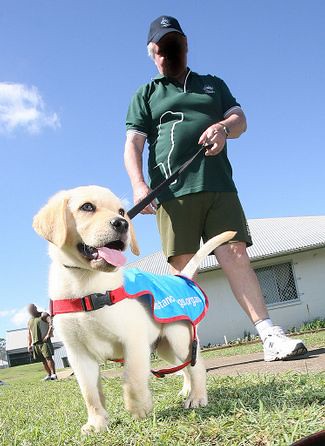
Man in a cap with yellow lab guide puppy Logan in working vest in a prison yardThe Ipswich Advertiser: Prison pups deliver new purpose

WHEN Kris was sentenced to life in prison, he didn’t expect to spend the long nights cuddled up to a 10-week-old labrador pup named Oxley. Oxley joined three other pups to enter Ipswich’s Borallon Correctional Centre last week, where eight maximum security prisoners will be responsible for full-time care of the assistance dogs-in-training.

This is the first time the program will run in an Australian maximum security prison. The offenders will teach them basic obedience commands to prepare them for helping people with a disability. These tasks include opening doors, fetching phones and mail, picking up dropped items and paying cashiers at shops.

The Age: Code opens doors to disabled

The Rudd government will today announce minimum access requirements for public buildings built or renovated from May 1 next year.

For the first time, uniform building rules will be mandated across Australia to end the isolation felt by as many as 4 million people who cannot use many public facilities. These go beyond buildings – to swimming pools and cinemas.

CBS: “Fight Club” for Mentally Disabled Brings Conviction; Guadalupe Delarosa Caught on Tape, Prison Next [WARNING]

An employee of a Texas home for the disabled who staged fights between the residents for “entertainment” is going to prison.

Coshocton Tribune: Independence important to residents with disabilities

Coshocton residents such as Connors and Wagner, who in the past would have been relegated to care facilities or be cared for by family members, have the option to become independent. Medicare has a waiver program that addresses different levels of care for these clients by providing them with help on meeting independent goals but at the same time offering a support system to provide for individual care.[…]

Living outside intermediate and long-term health care facilities gives developmentally disabled individuals the opportunity to choose what church they’ll attend, where they’ll go to work and who will take care of them if they need assistance.

“It’s exciting being out on my own and I’ve enjoyed the past eight months,” Connors said. “The best part is the privacy.”

Daily Sun: Persons with disability want constitution amended

A group, Joint National Association of Persons With Disabilities (JONAPWD) has called on the two chambers of the National Assembly to amend section 42 of 1999 Constitutions as well as section 57, 52 of Electoral Act of 2006.

National President of the group, Barrister Danlami Bashiru, made this call at a recent event in Lagos to commemorate the 2010 International Women’s Day with the theme; “Equal rights for Disabled Women in this Democratic Dispensation.” […]

Barrister Bashiru noted that women in this group suffers triple jeopardy, first as a woman, secondly as woman with disabilities and thirdly, they suffer discrimination from fellow women in the society.
He, however, revealed that JONAPWD has inaugurated the women’s wing of the body in Lagos for disabled women to have a strong voice, speak for themselves, demand for their rights and to provide lasting solution to challenges they faced.

The Telegraph: Self defence for the elderly – using an NHS walking stick

Kevin Garwood, 61, a triple black belt, has developed special ”cane work” courses for people over 50. The course is based on martial arts from around the world that use the sabre, bayonet and staff, which have been adapted specifically for stick users with limited mobility.

Typical moves include throws, takedowns and ‘neck hooks’ which use the crook of the stick for locks and strangleholds as well as gentle exercises using the 3ft long canes.

Recommended Reading

Warning: Offsite links are not safe spaces. Articles and comments in the links may contain ableist, sexist, and other -ist language and ideas of varying intensity. Opinions expressed in the articles may not reflect the opinions held by the compiler of the post. I attempt to provide extra warnings for material like extreme violence/rape; however, your triggers/issues may vary, so please read with care.

Nisha at bell bajao: Regulation of Disabled Women’s Sexuality

The pressure to ignore the bodily experiences for a collective voice to locate and challenge the barriers “out there” has made disability theorists and activists collude with “the idea that the ‘typical’ disabled person is a young man in a wheelchair who is fit, never ill, and whose only needs concern a physically accessible environment.”[14] This collusion has led to the sidelining of disabled women, non-visible impairments, intellectual impairments, elderly with chronic conditions[15], and disabiliy’s interaction with gender and other social, cultural oppressions[16]. Further, it has ended up contributing to the disappearance of the embodied experiences from most disability literature[17]. […]

The social norm of sexuality which is based on being “able-bodied” and the material situations of disabled women as “asexual objects” creates “rolelessness” – “social invisibility and this cancellation of femininity” prompts some disabled women to claim essential femininity which culture denies them[25]. This may give the impression that most disabled women have freedom from the standards set by the patriarchal male gaze and that they are in a position to develop and lead happy alternative lifestyles. In reality, imagining them as “antithesis of the normative woman”[26] adds to their disadvantage of being women.

Lisa I. Iezzoni and Laurence J. Ronan at the Annals of Internal Medicine: Disability Legacy of the Haitian Earthquake

Even before the earthquake struck, Haiti had few rehabilitation professionals and little capacity to manufacture essential assistive technologies, including prostheses and wheelchairs. While international organizations are assisting to fill these gaps, ultimately rehabilitation programs and assistive technologies will need to fit the specific demands of Haiti’s culture and rugged natural physical environments. As Haiti rebuilds its public and private spaces, ensuring accessibility to persons with disabilities will be critical.

About.com: Wheelchair-Using Child Actor Sought for NBC Pilot

If you’ve been unhappy with a character who uses a wheelchair being played by an actor who doesn’t on Glee, here’s some promising news: An open online casting call has gone out for a child actor who uses a wheelchair to play the son of Paul Reiser (pictured) in a pilot for NBC. The casting call, seeking performers age 10-13, describes the character as “sweet, funny, really smart and upbeat. He loves sports, music, and everyone he meets — especially adults. Inquisitive and with a mind like a steel trap, he remembers everything — which can be good or bad! He can easily get anxious and sometimes gets a bit obsessively focused on things. And oh, he has used a wheelchair since birth.” Not quite sure how you use a wheelchair at birth, but I applaud the intention.

NSW Human Services: Community garden for people with a disability

A community garden at Macleay Valley Community Care Centre is proving its value to people with a disability. Not only does the garden offer a place for them to enjoy or simply relax, it also provides them with fruit and vegetables.[…]

The project involved erecting a fence around the garden, screening under an existing deck, laying concrete paths and removing existing diseased trees. Six planting troughs were concreted into an area that is wheelchair accessible and garden beds are at a suitable height so they can be easily reached by older citizens and people with a disability.

World Health Organisation: Marking International Women’s Day [podcast transcript]

Veronica Riemer: Women are also facing discrimination in their opportunities for education. Bliss Temple from North Carolina in the USA, is a medical student who uses a wheelchair because of her disability. She talks to us about the challenges she has faced in taking forward her studies.

Bliss Temple: When I went to apply to medical school, because of my disability, I knew that it was unchartered territory. So I applied very widely to 28 different schools. About a third of them rejected me out of hand and said “you are too disabled; we won’t even consider your application”. It ended up that I did get accepted in several places and at the school that I chose, Duke University, I was the first person who was a wheelchair user. I think the first with what many people would classically think of as a disability; although there have been people with mental health problems.

Veronica Riemer: Bliss tells us why it is important for persons with disabilities to be accepted for medical training.

Bliss Temple: The world of medicine can really use people with disabilities. We are health care consumers of course and it is really important that we have more providers that understand the experience of having a disability.

The Wichita Eagle: Disability advocates ask court to halt cuts

A petition filed Friday by InterHab, an association for developmental disability service providers, seeks a temporary restraining order and asks that $10 million cut by the [Kansas] governor and Legislature be returned.

The cuts mean services for Topeka advocate Nancy Spano’s daughter Heather have been greatly scaled back. Heather is 24, but health problems and severe developmental disabilities mean she functions more like a 5- or 8-year-old child. Spano said her daughter needs round-the-clock care and help with basic hygiene. After the cuts, Heather was left alone at night and had no staff for help on the weekends. She frequently called her parents at all hours of the night, frightened.

Recommended Reading

Warning: Offsite links are not safe spaces. Articles and comments in the links may contain ableist, sexist, and other -ist language and ideas of varying intensity. Opinions expressed in the articles may not reflect the opinions held by the compiler of the post. I attempt to provide extra warnings for material like extreme violence/rape; however, your triggers/issues may vary, so please read with care.

Ally at Every Crooked Step Forward: Well, there goes that plan.

We, as members of the disabled community, do not need you to represent us, artistically or otherwise. We need to be given the opportunity to represent ourselves. We do not exist to provide you something interesting to look at, dissect, discuss, or parody. We do not exist to provide you with thinking points or talking points. We are not a theme. We are not the gun on the wall. We are not here to make a point to you about the preciousness of life, the resiliency of the human spirit, or even how fucking weird the world can be. Our lives are not made meaningful by enriching or educating you. We do not need you to make our lives meaningful.

newsflash in accessibility_fail: Mt. Holyoke College fails [more in comments at link, and at Dog in the Dorm]

To make a long, painful story very short, she’s had a shocking, nightmarish experience at Mount Holyoke, which you would expect to be a liberal, supportive environment since it’s a women’s college. She was led to believe everything would be in place for her arrival and that disability services there were top notch. However, it’s been a nightmare. She was unable to eat in the cafeteria the first two months of school because the student workers told her she couldn’t bring a dog in. Disability services told her they weren’t sure what they could do, because not all student workers might understand an email saying they couldn’t refuse her service. She was given a room on a third floor that her scooter wouldn’t fit in, and when she complained she was told to leave her expensive piece of medical equipment in the lobby. When they finally moved her to a new dorm room, she had to go across campus to shower in her old dorm because they didn’t install grab bars in her shower.

Stephen Kuusisto at Planet of the Blind: Disability and Its Discontents

Most of this blog’s readers are familiar with this puzzle, many of them are, like me, living that puzzle. Many of them are alertly, day by day building lives of evident accomplishments with or in spite of disabilities; many are still misunderstood when they’re on street. “How do you know when you dog has made a poopy?” asks a woman. And one wants to say, “Well I have an advanced degree Madame.” Mostly one winces. Moreover, one says something benign: “They teach you about that at the Guide Dog School”.

The Vancouver Sun: No sugar-coating for disability exhibit

For disability rights activist Catherine Frazee, the personal overlaps with the political even when she doesn’t intend it. That happened with Frazee’s recent journey to Vancouver from Toronto for Out From Under, a unique exhibition on the social history of disability in Canada.[…]

The only option for her was to take the train. Frazee was willing to make sacrifices to travel out west, such as sleeping in her electric wheelchair. She can’t be separated from her wheelchair, which is uniquely customized to her body’s needs. At times, for example, she has to tilt it slightly back to help with her breathing. When she contacted Via Rail, she was told that she and her wheelchair had to travel separately. […]

From Toronto, Frazee and Seeley drove south to Chicago where they got on a train that had a railcar with an accessible room. They travelled across the U.S. to Seattle, where they rented a van with a ramp and drove north to Vancouver. The irony of not being able to cross the country for a disability exhibition during the Winter Paralympic Games wasn’t lost on Frazee, one of the country’s most articulate advocates for the rights of the disabled.

tonic: Nonprofit Sends Heavy-Duty Wheelchairs to Haiti

Whirlwind Wheelchair International is sending 350 specially designed extra-durable wheelchairs to Haiti to help those who need them most.

Have you seen the movie Murderball? The Internet Movie Database calls it, “a film about paraplegics who play full-contact rugby in Mad Max-style wheelchairs.” While rugby and extreme sports have little to do with Haiti at the moment, wheelchairs sure do, especially “Mad Max-style” ones. In a situation where towns are covered in rubble and many people have severe injuries from the recent earthquakes, there’s a desperate need for low-cost, durable wheelchairs.

Oregon Live: Multiple sclerosis turns the tables on Portland oncologist, as patients become caregivers

Patients, who typically expect doctors to be invincible and need them to be on top of their game, had to know, too. Word spread swiftly.

One patient in the throes of treatment texted Webster, asking how she was. Webster remembers replying: “Don’t worry about me. I’ll be back.” The woman, adamant that sometimes — even in the stoic world of medicine — the tables turn, wrote, “No. We get to worry about you, too.” […]

She lived in a three-story townhouse, and just managing the stairs would be a hefty challenge. She’d need rides to doctor and therapy appointments, not to mention assistance with routine household tasks, especially during the hours when her partner, another busy physician, wasn’t around to help.

As patients offered to assist, Webster wrestled with the question: Was it OK to let them?

Recommended Reading

Since I couldn’t do a Rec Reading yesterday – my spoons were needed elsewhere – here’s a bumper edition for today.

Warning: Offsite links are not safe spaces. Articles and comments in the links may contain ableist, sexist, and other -ist language and ideas of varying intensity. Opinions expressed in the articles may not reflect the opinions held by the compiler of the post. I attempt to provide extra warnings for material like extreme violence/rape; however, your triggers/issues may vary, so please read with care.

Thedeviante at The Deviated Norm: Today In: Things Any Disability Rights Activist Could Tell You

So, people are nosy assholes. Well, let me amend that. Many people think that your body (or your loved one’s body) is totally their business, the second that you (or your loved one) have something that sets you apart from “normal.”

Things that set you apart from “normal” include: being pregnant, having a visible disability, having an invisible disability (and telling people about it), being mentally ill (and telling people about it), being fat, oh, and getting one of the “big” sicks (including our good friend cancer).

Let me tell you a little story.

Nicholas Patrick in The Age: Australias disability laws need critical review

For some four million Australians and their families, a threadbare patchwork of state and federal laws, often ignored international conventions and, an all round lack of understanding make life more challenging than it already is. What’s needed is a complete review of the existing legal framework to ensure that people with disability live lives of dignity and can realise their potential to fully participate in Australian society.

Much newsprint and digital space has been devoted to such issues as wheelchair access on domestic and international flights, mental health in the Northern Territory, and, on Four Corners recently, the dire state of government support for parents of children with disabilities. Other cases, gaining less media attention, such as access to education and electoral rights for voters, are progressing through the courts.

Yet, for all the very real pain and injustice these stories draw on, they are only mountain peaks of public awareness. The state of legal rights for people with disability are, in fact, far worse than even these very serious cases might suggest.

Sarah Burnside at Challenging The Market: Sarah Burnside on market logic and welfare reform

Opposition Leader Tony Abbott drew media attention recently for proposing a “welfare crackdown”, to include compulsory work-for-the-dole schemes and higher threshold for eligibility for disability pensions. With respect to the latter, Abbott proposed a review by the National Audit Office to determine more stringent eligibility rules for the disability pension and suggested that recipients with “less serious medical conditions” be required to undergo annual medical reassessments and sit two interviews each year to “encourage them into employment”. Currently, 700,000 Australians receive the disability pension. Abbott estimates that around one-third of these people have conditions he would class as “less serious”. […]

Second, Abbott’s classification of muscular-skeletal and psychological/psychiatric disabilities as the categories within which “less serious” conditions might be found seems opportunistic. Muscular-skeletal conditions may involve chronic pain which is inherently difficult for external parties to perceive. Similarly, psychological or psychiatric illness is not readily identifiable by bureaucrats seeking to limit entitlements to government benefits.

The nomination of these categories suggests a certain lack of sophistication – if someone’s not in a wheelchair or holding a cane, they must be capable of work.

CBC News: Canada ratifies UN treaty for disabled rights

Canada has ratified the UN Convention on the Rights of Persons with Disabilities on the eve of the Paralympic Games in Vancouver.[…]

However, the convention is about much more than adding wheelchair ramps. It shifts the focus from institutionalizing those with disabilities to housing them in the community and allowing disabled people to challenge in Canadian courts, laws or policies that contravene the international law.

However, the signing did not go ahead without a glitch. The location of the news conference had to be hastily changed when organizers realized the original room was not wheelchair accessible.

NPR: Google Launches Closed Captioning For YouTube [Transcript included]

Google this week introduced closed captioning for the deaf on its YouTube video site. Ken Harrenstien, the lead engineer behind Google’s automatic captioning technology, says that as a deaf person he lobbied his bosses for years to introduce the technology.

WorldNewsVine: Disabled Nigerians Demand Their Rights to Vote

People with disabilities are proposing the creation of the National Commission for Persons with Disabilities Bill in the National Assembly of Nigeria. The proposal has been submitted and under consideration with the Federal Government of Nigeria for almost 4 years, yet nothing has been done by the lawmakers so far.

Speaking on stigma and discrimination against women with disabilities, the National Financial Secretary of Persons with Disability, Miss Bilkisu Ado Zango said that as long as the males in Nigeria are concerned “disabled women are corpses and the living have nothing do with the dead”.

“Women with disabilities face tipple the challenges men with the same conditions experience in Nigeria with regard to education and employment. The society in Northern Nigeria believes that women in general do not need to be educated. Disabled women seeking recognition; therefore might seem an impossible task; however, we believe that we will be able to break through.”

Wired: DARPA Pushes for Fail-Proof Prosthetics

DARPA, the military’s risk-taking research agency, is launching the next phase of its Revolutionizing Prosthetics program, which was started in 2000 with the goal of creating a fully-functioning, neurally-controlled human limb within five years.

BBC: DVD offers crime prevention advice for deaf people

The DVD was devised by Kevin Childs from Gwent Police, who had spent time working with deaf people in the area. He teamed up with the British Deaf Association and made the film featuring two deaf lead characters in various crime prevention scenarios. The film will now be distributed to forces throughout the UK.

Insp Childs said after working with local community groups he had concluded the main challenges were a lack of suitably accessible crime prevention literature and lack of engagement with, and access to, police officers. The DVD offers a variety of visual aid options for users which can be switched on and off as needed, including signing, subtitles in a variety of languages and a facility for lip reading.

ruthtamari at Life Changes: Personal Leadership & Being the Difference

My dream and vision for Toronto, Canada is that the city will be accessible by anyone who uses a wheelchair, scooter, walker, crutches, cane or assistive device. Every curb, entrance, washroom, subway, bus, theatre, restaurant and building would be accessible by everyone. Wouldn’t that be an amazing city to live in? One thing that is sure to promote healthy living, healthy aging, healthy communities and inclusion is having access to whatever you want to do and wherever you choose to go.

SF State University News: Anita Silvers honored for lifetime achievement

Anita Silvers, professor and chair of the Philosophy Department and a nationally recognized advocate for disability rights, was awarded the 2010 Quinn Prize from the American Philosophical Association (APA). […] Disabled by polio as a child, Silvers is a leading advocate for equality for persons with disabilities. Her papers and books have contributed to the legal interpretation of the Americans with Disabilities Act, enacted in 1990. Her groundbreaking and acclaimed monograph, “Disability. Difference. Discrimination: Formal Justice” (1998) is widely cited in legal affairs. “Americans with Disabilities” (2000), which she co-edited with Leslie Pickering Francis, anthologizes essays by other leading philosophers, as well as legal theorists, bioethicists and policymakers on the moral foundations of disability law and policy.
Recommended Reading for Décadi, 20 Ventôse CCXVIII

Warning: Offsite links are not safe spaces. Articles and comments in the links may contain ableist, sexist, and other -ist language and ideas of varying intensity. Opinions expressed in the articles may not reflect the opinions held by the compiler of the post. I attempt to provide extra warnings for material like extreme violence/rape; however, your triggers/issues may vary, so please read with care.

melinda at I Don’t Believe in Ellen Greene’s God: Only non-defective aliens, please

The re-entry permit for residents to re-enter the United States explains that it does not guarantee re-entry. It outlines possible reasons for a resident to be denied re-entry. […] And if you’re not “criminal,” “immoral,” or “insane,” you still may be “mentally or physically defective” in the eyes of the US government, which evidently views people akin to products you can send back to the factory when they don’t work right.

Southern Courier: Historic day for blind voters

Australians take pride in being the first country in the world to introduce the secret ballot. Unfortunately, this democratic right has not been secret for all. Today’s announcement made by the Federal Government is an initial step towards ensuring that people who are blind or have low vision will eventually have the opportunity to exercise their constitutional right to vote privately. […]

“This is a historic day for members of the blindness community like me who have been campaigning for a method of voting that is both accessible and private for many years,” said Vision Australia’s Maryanne Diamond, current President of the World Blind Union. “Since 1902, Australians who are blind have had to rely on friends, family or even strangers to exercise this basic democratic right.”

express buzz: ‘Disabled women face double discrimination’

The marchers pointed out that the rights of disabled women had received special mention in the United Nations Convention on the Rights of Persons of Disability, which India had ratified on October 1, 2007, said Meenakshi, a member of Vidya Sagar. But, India had failed to implement the provisions of the charter, she added.

“There is barely any attention being paid to the rights of disabled women”, she argued. “Disabled women are subjected to double discrimination, both on the grounds that they are women and that they are disabled,” she added.

Disability Scoop: Education Department To Step Up Enforcement Of Disability Rights

The federal government is redoubling its efforts to crack down on civil rights violations against students with disabilities and other minority groups, Secretary of Education Arne Duncan said Monday. The Department of Education’s Office of Civil Rights will be issuing a series of letters offering guidance to school districts across the country and ramping up efforts to reach out to parents and advocacy groups, Duncan said in a speech in Selma, Ala.

Tara Parker-Pope at NY Times: The Voices of Fibromyalgia

People who suffer from fibromyalgia experience problems beyond the pain caused by their illness. Their condition is little understood and hard to explain, and often they are disbelieved by doctors. […] For a glimpse into the frustrating world of fibromalgia sufferers, listen to the latest installment in the Patient Voices series by producer Karen Barrow in which six men and women speak about living with the condition.

WA Today: Disabled girl can be sterilised: court

Disability groups are split over a Family Court decision to approve the sterilisation of an 11-year-old girl.

Family Court judge Paul Cronin found that the performance of a hysterectomy on the child, identified only as Angela, was “in the child’s best interests”.