All posts by lauredhel

About lauredhel

Lauredhel is an Australian woman with a disability.

Admit Two: Australian Companion Card scheme up and running

picture of Australian companion card sample, next to an ADMIT TWO ticketThe Australian Government officially launched the national Companion Card scheme around six weeks ago.
The Companion Card enables some people with disabilities to participate at venues and activities without incurring the cost of a second ticket for a carer. If a PWD requires an attendant in order to participate in the event or access the location, the ticket for their companion is free. Before the scheme came into being, people who had service animals could legally take them anywhere without extra payment, but people who had human carers had to pay extra. How did that make sense?

Who can qualify for a Companion Card? In my state (definitions are very similar state to state), the care-needs eligibility definition is:

Attendant care support includes significant assistance with mobility, communication, self-care, or learning, planning and thinking, where the use of aids, equipment or alternative strategies do not enable the person to carry out these tasks. It does not include providing only reassurance, social company or encouragement.

The definition also requires that the need for support be considered life-long, though the rationale behind this is not explained. There is no income test.

There is an additional note to participating businesses warning them not to use this as an excuse for poor accessibility:

The Companion Card was not developed to overcome or compensate for any particular venue’s lack of accessibility; including the absence of ramps, lifts, accessible toilets, appropriate signage or captioning, etc. Responsibility for these access issues remains with venue and activity operators.

There are currently 2700 affiliate organisations participating in the National Companion Card. So far the participants include the Melbourne public transport system, major sporting leagues and venues, various cinemas, Circus OZ, Fitness First Australia, Circus Royale, The Australian Ballet, Musica Viva, The Australian Rugby Union, and many smaller sporting and cultural venues and organisations.

This is a terrific idea, and one that needs to be adopted in more countries. It would also be good if Australian extends the scheme to temporary passes for tourists in the future; right now, you need to be a resident.

What’s the situation where you are? If you need human assistance in order to participate in the life of your community, do you need to fork out cash for an extra ticket?

Recommended Reading for January 15th

Warning: Offsite links are not safe spaces. Articles and comments in the links may contain ableist, sexist, and other -ist language of varying intensity. Opinions expressed in the articles may not reflect the opinions held by the compiler of the post. I attempt to provide extra warnings for certain material present in articles, but your triggers/issues may vary.

Outside the Dawn is Breaking: Her Uterus Is Really Not Your Business

For every caring, empathetic healthcare worker that praises her courage, she receives thoughtless treatment from others that make assumptions about the child’s quality of life and about the alleged “irresponsibility” of parents who choose to have disabled children.

Why should all feminists care about this?

Pulmonary Hypertension Association UK: Up To £1000 Return…….Just To Breathe!

PHA-UK research conducted by the charity’s members with 71 airlines who operate from and to the UK [found]:

* Less than a quarter of airlines surveyed supply free supplementary oxygen.
* A quarter of airlines approached do not supply supplementary oxygen at all.
* Two thirds of airlines in the study would not allow disabled air travellers with lung conditions to bring their own oxygen for use in- flight.
* Of the airlines that provide supplemental oxygen to otherwise ‘fit to fly’ passengers and charge for it, each levies a different fee which can range from £50 to £500 per trip, just to breathe!

Women With Disabilities Australia (WWDA): Submission to the Queensland Review of Maternity Services

The study found that:

* 36% of the disabled women received negative reactions to their pregnancy from others, compared to 9% of the non-disabled women;
* 12% of the disabled women rated their doctors care during the pregnancy as ‘poor’, compared to 2% of the non-disabled women;
* 20% of the disabled women were advised by their doctor to have an abortion, compared to 0% of the non-disabled women;
* 23% of the disabled women found prenatal classes ‘unhelpful’ compared to 3% of the non-disabled women (reasons given by the disabled women as to why the classes were unhelpful included: lack of information; no consideration given to the needs of the women with disabilities; feeling excluded in the classes);
* 24% of the disabled women found the maternity hospital staff ‘unhelpful’ compared to 7% of the non-disabled women ( reasons given by the disabled women included: special needs of women with disabilities were ignored; patronising and bullying behaviour; rude and uncaring attitudes).

Cape Cod Times/AP: Study: Youth now have more mental health issues

A new study has found that five times as many high school and college students are dealing with anxiety and other mental health issues as youth of the same age who were studied in the Great Depression era.[…]

The study is not without its skeptics, among them Richard Shadick, a psychologist who directs the counseling center at Pace University in New York. He says, for instance, that the sample data weren’t necessarily representative of all college students. (Many who answered the MMPI questionnaire were students in introductory psychology courses at four-year institutions.)

Shadick says his own experience leaves little doubt more students are seeking mental health services. But he and others think that may be due in part to heightened awareness of such services.

Canadian Press/Google: Disabled worshippers struggle to find place at pews as accessibility eludes

The disabled faithful say such experiences remain common in houses of worship, stoked by ignorance of their needs and doctrines that paint disability as proof of sin.

Years after U.S. federal law required accommodations for the disabled, separation of church and state means houses of worship remain largely beyond the law’s reach. State laws and denominational measures meant to take up the slack are tricky to enforce and face resistance from churches who call them both costly and impractical.[…]

Even after decades of blindness, Augusta churchgoer Willie Lee Jones said he still fields comments suggesting his sight could come back if he believed harder.

“People of faith will come to me and say, ‘God wants to heal you,”‘ said Jones, who replies that he’s complete even without his sight.

Recommended Reading for January 14th

Warning: Offsite links are not safe spaces. Articles and comments in the links may contain ableist, sexist, and other -ist language of varying intensity. Opinions expressed in the articles may not reflect the opinions held by the compiler of the post. I attempt to provide extra warnings for certain material present in articles, but your triggers/issues may vary.

ME [myalgic encephalomyelitis] Agenda: Concerns about Daily Mail “Is ME genuine illness” poll

We are told that the Daily Mail is running a poll [now removed]:

“Do you think ME is a genuine illness?”

in connection with its article: British experts say ME virus is a myth[…]

Readers of Co-Cure may recall the outrage at a similar poll on the BMJ’s site on medics’ perceptions of what they considered to be “real” and “non real” illnesses.

I know that I am not alone in my concerns that the Mail should think it appropriate to run such a poll.

L.A.Times: Blind architects have a real feel for the site lines

But the two men hadn’t traveled to Midtown Manhattan to look at the structure’s famous features.

Instead, they slid their curious fingers along the pocked surface of the alloyed bronze facade. Inside, their hands explored a smooth, round railing of warm cherry wood, a counterpoint to the chilly glass panels of the main staircase. Their canes clicked along the intricate floor, sensing the shift from swaths of concrete to planks of Ruby Lake fir.

“We were exploring how we could sense it with a cane, sense it with our fingers, sense it with our feet,” said Northern California architect Christopher Downey. “There is this great palette of textures. . . . All of a sudden, it starts to engage your brain in a different way.”

New York Times: Mental Health: Deficiencies in Treatment of Depression

Only 1 in 5 [Americans with clinical depression] are getting care — talk therapy, medication or both — that conforms to American Psychiatric Association guidelines, according to the study, which appears in the January issue of Archives of General Psychiatry. The findings were based on nationally representative surveys of 15,762 adults from February 2001 to November 2003. Over all, more patients used talk therapy (44 percent) than drug therapy (33 percent). Mexican-Americans and African-Americans were less likely than other groups to receive treatment of any kind.

SOS Children’s Villages: Breaking down the stigma: SOS Malawi’s work for the rights of disabled children

[Jeremy Sandbrook, National Director of SOS Children’s Villages Malawi from 2004 to 2009]: That being said, our biggest challenge was to overcome internal prejudices that we as fellow human beings tend to have towards those with disabilities. In this context, the issue was to get staff to feel comfortable with being around and working with children with disabilities. It’s a mindset change. Often people automatically think that people with physical disabilities must also have a mental disability. This is not helped by the numerous barriers that people with disabilities have to overcome in everyday society, with some of these being grounded in traditional beliefs such as witchcraft. It is stigmas such as these that we have tried to break down, not only within our own national association, but more importantly within the broader community in which these children live. In support of this, we made strong efforts in mainstreaming disabled children into our SOS Hermann Gmeiner Schools. Whilst the most obvious first step was to ensure that the psychical infrastructure was wheelchair and disability friendly, a more challenging issue was the wider environment: In many cases, the disabled children simply could not even make it to the school gates, and were therefore excluded from access to an education.

TampaBay.com: Jump from Sunshine Skyway opened door to a second chance [WARNING: detailed suicide talk]

When Hanns Jones jumped from the Sunshine Skyway in 2001, he survived with some broken bones and internal injuries. Now he’s pushing his invention: the Electro Safety Rail.

Joseph Shapiro at NPR: WWII Pacifists Exposed Mental Ward Horrors [WARNING: descriptions of abuse in psychatric hospital]

“Byberry’s the last stop on the bus here in Philadelphia,” Sawyer recalls. “Any young man on the bus, other people knew that we were COs [conscientious objectors] working at the hospital. And they’d make different kinds of remarks, supposedly talking to each other, but hoping that we hear. And you know: ‘Yellowbellies, slackers.’ ”

Those slurs were harsh. But not nearly as harsh as what awaited the young men inside the gates of the chaotic and overcrowded hospital for people with mental illness and intellectual disabilities.

Recommended Reading for January 13th

Warning: Offsite links are not safe spaces. Articles and comments in the links may contain ableist, sexist, and other -ist language of varying intensity. Opinions expressed in the articles may not reflect the opinions held by the compiler of the post.

little light at Questioning Transphobia: is a dream a lie if it don’t come true / or is it something worse [WARNING. Story of comprehensive denial of a woman’s gender identity and forced de-transitioning after she became disabled.]

Wheelchair Dancer: Audition for Glee

[…] [the Guardian on Andy Serkis playing Ian Dury:] “He’s been left with back pain, and a “massive weird muscle” has developed in his groin. “I’m still recovering from it all.”

And then, there’s the rumours about Hugh Laurie’s hip (link is to Google search on the topic).

It’s hard work playing a disabled person. Let someone more qualified to do it, do it.

Jillian Weise at the NYT: Going Cyborg

“Your brain is confused,” she said. As if this were comforting. “You’re used to legs that require you to lock into a position. Get it?”

I did not get it. For five years I had walked on my old hinged leg. I had been in my longest relationship with that leg and lived in three different states. I don’t want to wax sentimental here and say it felt like dying, but it kind of did feel like dying. Goodbye hinge, goodbye foot. You’re done. You’re through.

Lisa Belkin at Motherlode (New York Times): Is Refusing Bed Rest a Crime?

Arguments are under way today in the First District Court of Appeals in Tallahassee, Fla., in the case of Samantha Burton, who was confined to her bed by a judge earlier this year because she was at risk for a miscarriage.

Burton was in her 25th week of pregnancy in March 2009 when she started showing signs of miscarrying. Her doctor advised her to go on bed rest, possibly for as long as 15 weeks, but she told him that she had two toddlers to care for and a job to keep. She planned on getting a second opinion, but the doctor alerted the state, which then asked the Circuit Court of Leon County to step in.

She was ordered to stay in bed at Tallahassee Memorial Hospital and to undergo “any and all medical treatments” her doctor, acting in the interests of the fetus, decided were necessary. Burton asked to switch hospitals and the request was denied by the court, which said “such a change is not in the child’s best interest at this time.”

Freep.com: Flint woman gets prison term in disabled girl’s death

A 41-year-old Flint woman was sentenced to 10-15 years in prison today in connection with her no-contest plea to charges of starving her 9-year-old quadriplegic niece to death, then hiding the girl’s body in a rented storage unit for weeks. […> Officials said Thomas starved Shylae, then hid her body so she could continue collecting more than $3,000 a month in welfare money that she received to care for the girl, who was physically and mentally challenged and unable to feed herself.

CBC.ca: Alberta’s services not accessible, argue disability advocates

Calgary resident Choi Ho, whose 13-year-old son has autism, says it took a long time to get the help her son needs, like physiotherapy, because she didn’t know English well enough to discover what was available.

Recommended Reading for January 12th

Warning: Offsite links are not safe spaces. Articles and comments in the links may contain ableist, sexist, and other -ist language of varying intensity. Opinions expressed in the articles may not reflect the opinions held by the compiler of the post.

WHEELIE cATHOLIC: Planes, trains and automobiles: shoveling out

In the UK, grit levels are “critically low as more snow heads in”. This is causing particular havoc for people with mobility problems due to physical disability, who are stuck in their homes. They’ve even started a hash tag on twitter called #disabilitysnow .

The interesting part about the Internet and the disability community is how it provides a way for people who live alone to reach out to each other when things like this happen. What may be an inconvenience for some non-disabled people, quickly turns into a situation where a disabled person becomes immobile.

ABC News: ‘Wellness’ Provision in Health Care Bill Meets Protest

Dozens of health, justice, and disability organizations have signed a letter urging senators to remove a provision in the health care reform bill that would allow insurers to provide reimbursements or incentives to workers who meet certain fitness goals laid out in workplace wellness programs.

In rewarding healthy people for making good choices, those who don’t meet fitness goals would be unfairly penalized, the groups said.

“It’s indistinguishable from medical underwriting,” Sue Nelson, vice president for federal advocacy of the American Heart Association (AHA).

HoustonPress: Houston’s Craziest [comment from meloukhia: “HOLY FRAKKIN’ FRIKKITY FRAK FRAK FRAK! HOW IS THIS LEGAL”]

Bailey is also one of Houston’s 30 craziest people.

That’s according to the Houston Police Department, because in February of this year, the department’s mental health unit put together a list of mentally ill people, the “chronic consumers,” based on how many times the cops have responded to a call concerning a person — regardless if an arrest was made — and how many times a person has been hospitalized under emergency detention orders from police.

New South Wales Health Care Complaints Commission: Yuk-Fun Christina Port – deregistered for three years by the NSW Medical Tribunal [Full particulars at the Board site – PDF]

The Health Care Complaints Commission recently prosecuted a complaint against Ms Yuk-Fun Christina Port, an experienced general practitioner, before the NSW Medical Tribunal. The complaint concerned Ms Port inappropriately prescribing medication to a patient without the patient’s knowledge.

Over a four year period, Ms Port prescribed medication for the treatment of depression at the request of the patient’s wife. The wife then administered the medication to the patient in his coffee. Ms Port had not consulted with the patient, nor did she arrange for any monitoring of his condition or possible side effects. When she became aware that the wife had not informed the patient that the medication was prescribed for him, she did not take any steps to ensure that patient was aware that he was being given medication and consented to his treatment.

The Guardian: Care homes forcing elderly to have feeding tubes fitted

The report found that many care homes across the country are making it a condition of residence that people, often in the advanced stages of dementia, have a tube fitted into their abdomen.[…]

All trusts and care homes should ensure there are enough staff to help those with difficulties take longer to eat, especially at meal times. “People in the later stages of dementia have complex end-of-life needs and it is vital that the use of artificial nutrition or hydration not be used in place of good quality care tailored to their specific needs,” said Neil Hunt, chief executive of the Alzheimer’s Society […]

Washington Country News: Dog helps stabilize autistic boy’s life, but Hillsboro school says not in the classroom

Eric and Wendy Givens know Madison, a trained autism service dog, can calm their son; they’ve seen the German shepherd do so at malls, in parking lots, at restaurants. But the Hillsboro School District won’t allow the dog in school, saying Scooter is doing well without the shepherd. […]

Disability Rights Oregon attorney Joel Greenberg equated the situation to a person who is blind being told he does fine with a cane even though a trained guide dog is more effective. “Essentially, the school district is saying, ‘we get to pick the tool,'” he said.

Recommended Reading for January 10th

Warning: Offsite links are not safe spaces. Articles and comments in the links may contain ableist, sexist, and other -ist language of varying intensity. Opinions expressed in the articles may not reflect the opinions held by the compiler of the post.

AbleGamers: 2009 Accessible Game of Year – Dragon Age: Origins

Dragon Age: Origins offers some of the most astounding accessibility options seen in any game this year. With only one accessibility complaint, Bioware far exceeded expectations for an accessible title. However, the relatively small font size was immediately addressed by Bioware, bringing the number of accessibility problems to zero.

Alex at Border House: Interview with Mark Barlet of AbleGamers.com

What are some important things to look for when determining the accessibility of a game?

It is very hard to say “THIS” is what we are looking for. Depending on your disability game accessibility can mean anything. So what we look for are options. I am not deaf and do not need subtitles when I play, but is there an option for subtitles? Steve [Spohn, Associate Editor of AbleGamers] does 99% of his interaction with his PC by use of the mouse, so a game must be playable using just a mouse. That said, others can not use a mouse at all, so we look to see if a game can be played by using the keyboard.

Tiffany at Disaboom: BBC to debut groundbreaking wheelchair dancing reality show

The celebs will be paired up with wheelchair dancers, and most of the wheelchair-users will be new to dancing too. After training, they’ll compete a variety of classic ballroom dances, from the Paso Doble to the Cha-Cha-Cha, all performed within the parameters of Wheelchair Dance Sport, a official sport requiring at least one dancer to use a wheelchair. The winning couple will go on to represent the UK at the Wheelchair Dance Sport European Championships in Israel this Fall.

Wow. This actually sounds official. Like it’s a real competition or something, not some pity-party looking for a sympathy vote. LOVE it.

Meris Stansbury at eSchoolNews: Five key trends in assistive technology

“NCTI hears this plea from … parents and caregivers as well. Too often, the sophistication of the features or interface of new devices precludes easy use by direct consumers or their parents, teachers, and friends. With more students being served in general-education classrooms of up to 30 students, devices need to offer as little complexity and facilitate as much independence for the user as possible,” the brief says.

“It’s not just about adding new features to the stuff we already have,” explained Tracy Gray, director of NCTI. “We must ask the question: What do we need to solve, and how can we do that?”

Fox News: Mind-Reading Systems Could Change Air Security

The WeCU system would use humans to do some of the observing but would rely mostly on hidden cameras or sensors that can detect a slight rise in body temperature and heart rate. Far more sensitive devices under development that can take such measurements from a distance would be incorporated later. […]

One system being studied by Homeland Security is called the Future Attribute Screening Technology, or FAST, and works like a souped-up polygraph.

It would subject people pulled aside for additional screening to a battery of tests, including scans of facial movements and pupil dilation, for signs of deception. Small platforms similar to the balancing boards used in the Nintendo Wii would help detect fidgeting.

New York Times: The Americanization of Mental Illness

Modern-day mental-health practitioners often look back at previous generations of psychiatrists and psychologists with a thinly veiled pity, wondering how they could have been so swept away by the cultural currents of their time. The confident pronouncements of Victorian-era doctors regarding the epidemic of hysterical women are now dismissed as cultural artifacts. Similarly, illnesses found only in other cultures are often treated like carnival sideshows. Koro, amok and the like can be found far back in the American diagnostic manual (DSM-IV, Pages 845-849) under the heading “culture-bound syndromes.” Given the attention they get, they might as well be labeled “Psychiatric Exotica: Two Bits a Gander.”

Recommended Reading for January 9th

Warning: Offsite links are not safe spaces. Articles and comments in the links may contain ableist, sexist, and other -ist language of varying intensity. Opinions expressed in the articles may not reflect the opinions held by the compiler of the post.

Media Access Australia: Human Rights Commission requests further information from cinemas

The Australian Human Rights Commission is currently assessing an application from Hoyts, Greater Union, Village and Reading cinemas for a temporary exemption from the Disability Discrimination Act in relation to captioning and audio description while they expand the current accessible circuit from 12 to 35 cinemas. […] In summary, the request asks for responses to the following issues: […]

2. Objections to the fact that individuals would lose their rights to lodge complaints under the DDA.[…]

4. The financial justification by the cinemas of why it is not possible to move towards 100% compliance when millions of dollars are being spent on 3D cinema.

Portland Press Herald: Three men with cerebral palsy suing Maine

Three men with cerebral palsy are suing the state, alleging that its policies have forced them to remain confined in nursing homes.[…]

“I do not want to spend the rest of my life here,” Van Meter wrote on his Web site.

“We live in a society that places great emphasis on independence, personal rights, and ensuring that each living creature is living in an environment suited to them. We protect wetlands so that frogs, insects and the like can live in an appropriate environment. We protect the natural habitats of polar bears, eagles and lady slippers yet we allow young individuals in need of physical assistance to be placed in nursing homes,” Van Meter wrote. “We have no age appropriate settings aimed at fostering a normal social lifestyle. It does not seem right or fair.”

Susan Niebur at Toddler Planet: In the name of awareness

But eventually, life moves on, and the wounds scab over, and the scars begin to form.

Until one day, one day, when a harmless meme rips them off, and you realize once again that you will never be the same.

Wharfedale and Airedale Observer: Pedestrians treated as second class citizens, says disability campaigner

The leader of a disability group is demanding action to allow people to use Wharfedale’s pavements safely during icy weather. Town councillor Neville Birch, who is registered blind and chairs Otley Disability Advisory Group (ODAG), says he has been virtually housebound because he has not wanted to risk walking on unsafe paths during the recent cold snap. […]

“We seem quick enough to grit the roads to make sure the motorists can get on with things and get where they need to, but what about pedestrians?” […]

A council spokesman said: […] Our advice would be to always wear sensible, sturdy shoes and to take care on pavements as they may be untreated and slippery, and only venture out when really necessary.”

Times of India: Jagannath temple to allow people in wheelchairs

The Jagannath temple in Puri, one of the most revered Hindu shrines, has decided to open its doors to wheelchair-bound devotees, an official said. But the temple authorities have taken no decision on building ramps for the wheelchairs. […] A disabled person cannot go into the temple with a wheelchair. But the temple authorities do allow entry to disabled, old and paralysed people with the help of family members and temple servitors.

“Every human being passes through phases in his life where he or she is dependent on someone else. The Lord (Jagannath) himself is limbless. But the anomaly is that wheelchair-bound limbless devotees can’t have access to the Lord,” said Ravi Tripathy, a handicapped and disabled rights activist.

The Age: London’s pop poet

At the age of seven Dury was struck down with polio. It almost killed him, leaving him withered on his left side and obliged to wear a calliper. His disability was to shape his life; it led to him being bullied as a child, it was the root of his anger and of his determination.

Dury took a confrontational attitude to his condition. He would often describe himself as a ”raspberry” – getting his retaliation in first (”raspberry ripple” is rhyming slang for cripple) – and he actually considered calling his first solo album The Mad Spastic.

Chatterday! Open Thread.

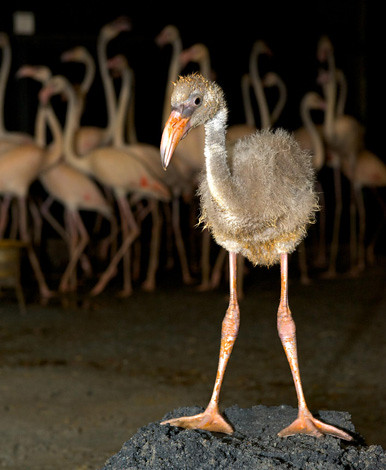
an awkward, spiky grey baby flamingo stands in the foreground, adults in the backgroundThis is our weekly Chatterday! open thread. Use this open thread to talk amongst yourselves: feel free to share a link, have a vent, or spread some joy.

What have you been reading or watching lately (remembering spoiler warnings)? What are you proud of this week? What’s made your teeth itch? What’s going on in your part of the world? Feel free to add your own images. (Anna insists that these should only be of ponies, but I insist that very small primates, camelids, critters from the weasel family, smooching giraffes, and cupcakes are also acceptable.) Just whack in a bare link to a webpage, please – admin needs to deal with the HTML code side of things.

Today’s chatterday backcloth comes via Zooborns.

Recommended Reading for January 8th

Warning: Offsite links are not safe spaces. Articles and comments in the links may contain ableist, sexist, and other -ist language of varying intensity. Opinions expressed in the articles may not reflect the opinions held by the compiler of the post.

Diary of a Goldfish: It’s my pavement and I’ll cry if I want to

It may be that there are incompetent scooter-users driving into market stalls and store aisles. Or it could be that having no consideration for people with mobility-impairments, market traders and store workers have piled displays and produce up in walkways, leaving only narrow gaps for people to walk through and insufficient room for a wheelchair, scooter, anyone with crutches or an otherwise wide gait. My wheelchair is not nearly so bulky as a scooter, but even in a supermarket I bump into things because there isn’t enough room.

I rarely bump into people, but it is hard work not to. Some pedestrians can be extremely absent-minded, expecting to be able to move about at terrific speeds and suddenly stop or change direction without collision. Quite apart from the fact that such people put themselves at risk, they are a genuine menace to those ambulant disabled people who walk slowly and are vulnerable to being knocked down.[…]

However, articles like these (compared to the same story in the Telegraph, which isn’t perfect but a great improvement) are a bit of a filler about nothing that give people with non-disabled privilege a license to moan about disabled people taking up space. They read that grannies are running amok with mobility scooters – even though there’s no evidence of a widespread problem – and this is highly satisfying. So they’ll be allowed to tut at and patronise scooter-users, blaming them for any accidents and bothering a little less about accessibility because half these people shouldn’t be allowed out.

BBC Ouch! Disability Bitch hates pedestrians

Scooter users get a bad press. Yes, there are some rubbish drivers and yes, they should be reprimanded; I’ve had a couple of near misses with reckless scooterers myself and they weren’t fun. But the thing is, as a wobbly walking stick user, I have near misses almost every time I step out into a public space. I’m here to tell you that these are very rarely due to the carelessness of other mobility aid users.

Mostly, readers, the cause of my bumps and bruises are fully able bipedal pedestrians. You know, the ones who hurry past you and jab you in the ribs with their elbows, who skittle by on escalators and stairs knocking you asunder, the ones who poke you in the face with their umbrellas, who jabber into their mobile phones and don’t keep a watch out for any less stable bystanders.

princess at where they go hardcore… : So how does an awesome girl like me come to have an Eating Disorder? [has trigger warning][via geekfeminism]

If you’ve ever wondered how a girl like me gets an eating disorder, I think it may be time for us to sit down and talk. Because I think there are some misapprehensions out there, and it’s really time I get them cleared up.

Ben Mattlin at NPR: To One Of The Lucky Ones, The New Year Means More

So, why do so many people feel sorry for me?

They don’t know me, of course. They don’t know that I grew up in a great family, graduated from Harvard, get my writing published, got married and fathered two terrific little girls. There are a lot of reasons why I consider myself lucky.

Still, people have said to me, “If I were like you, I’d kill myself.”

This is supposed to be a compliment, I think. They mean to commend my perseverance. So how come I want to say back, “If I were like you, I’d want to kill myself, too!”

Cowra Guardian: Disability advocate and Olympian set for ambassadorial duties

Athlete Gabrielle Clark is Cowra’s Australia Day ambassador.[…]

Clark has achieved a great deal as an athlete and a person with a disability. A self-advocate for people with Down Syndrome, she has represented Australia and the state of New South Wales at both international and national forums and sporting events for a period of twenty years. […] Gabrielle’s goal in life is to improve the social image of people with an intellectual disability.

ABS-CBN News: Cebu Pacific hit for refusing ‘special child’ passenger

Budget airline Cebu Pacific may face civil and criminal cases after reportedly refusing the entry on board of a special child. According to Marites Alcantara, the Gokongwei-led carrier’s purser and cabin crew pressured her and her son, John Arvin, to get off the plane bound for Manila from Hong Kong. Alcantara said the crew members flatly told her that John Arvin is a special child and is banned from boarding Cebu Pacific planes, citing company rules.

“They have a manual daw. Bawal daw sumakay ang mga mentally ill…pilit nila kaming pinapababa na para kaming kriminal na kulang na lang ay hatakin palabas ng eroplano ‘yong anak ko,” she told ABS-CBN News.

(“They said they have a company manual, which states that mentally ill people are not allowed inside the plane…they pressured us to get out of the plane as if we were criminals.”)

Followups: Rights body urges carriers to review policies
Cebu Pacific: We don’t discriminate against special children
Couple to file suit vs airline despite apology

Recommended Reading for January 7th

Warning: Offsite links are not safe spaces. Articles and comments in the links may contain ableist, sexist, and other -ist language of varying intensity. Opinions expressed in the articles may not reflect the opinions held by the compiler of the post.

ACTION ALERT for USAns: Fight Inappropriate Restraint – Free Zakh Price! [h/t Sarah from Cat in a Dog’s World]

Now we’d like to ask you to help us take action to help protect an 11-year old Autistic boy in Arkansas named Zakhqurey Price, currently being charged with felony assault after fighting back when two staff members restrained him in response to behavioral challenges. The school has ignored repeated efforts from Zakh’s grandmother over the course of the last five months to obtain needed IEP supports to improve his educational options and manage his behavioral difficulties.

According to the suspension notice, the restraint was in response to Zakh destroying school property – something beyond the scope of what would be allowed under recently introduced federal civil rights legislation around restraint and seclusion in schools.

More information:

KPS4Parents: 5th Grader with Autism Charged with Felony Assault

Cat in a Dog’s World

Pink News: Gay son prevented from donating blood to dying mother

Friends and family members were asked to give blood to see if they were a match for her. Although Bentley did not know whether he was a match, he was prevented from donating under rules which bar men who have had with another man from giving blood.

She died ten days after developing an infection in her brain on August 14th.

NTs Are Weird: Are Some Service Animals More Equal?

Too many service animal activists have focused on physical and sensory disabilities, intentionally distancing themselves from animals that provide help to people with less evident disabilities, particularly those disabilities that are “in your head”. Out of this movement, there have come a variety of technical definitions for animals, like “therapy animal”, “service animal”, “emotional support animal”, “psychological support animal”, etc. Now you won’t find consistent definitions for all of these categories, but “service animal” is the top dog in this list. It’s the only category that allows the animal nearly unrestricted access. The others are, at some level, considered “pets”, at least to some people.

William Peace at Bad Cripple: O’ Canada: Citizenship and Disability:

This time a French family who were encouraged to move to Montreal by an embassy official in Paris hasve been told they cannot remain in Canada. The reason given is the same one the Chapman’s heard: their daughter, who has cerebral palsy, would place an “excessive burden on social services”.

The Independent: Disabled workers ‘worst hit by cuts in recession’: Charity accuses employers of targeting disabled for redundancy

Discrimination against disabled people is increasing in the workplace as employers target them for redundancy and unfairly turn them down for new jobs, according to a report by Leonard Cheshire Disability. The report, Disability and the Downturn, warns that the employment gap between disabled and able-bodied employees is growing as more people compete for fewer jobs during the recession.

More than half of respondents (52 per cent) had experienced discrimination in the workplace in the past year, an increase of 11 per cent since 2007. More than four in ten (43 per cent) believed that they had been turned down for a job because of their impairment, seven percentage points up on 2008.

The charity described the trend as “worrying” and warned that current regulations for tackling disability discrimination were proving inadequate.

New Jersey News: he doesn’t mince words, and some don’t like it

Today, after a swift and sometimes bumpy ascent in the realm of national autism politics, he [Ne’eman] is the first person with autism to be nominated for a seat on the National Council on Disability. […]

Some find fault with Ne’eman because, in their view, he’s not quite autistic enough. Ne’eman has Asperger’s syndrome, a relatively mild form of autism. Those with Asperger’s typically have difficulty with social interaction, a hallmark of autism. They’re often physically clumsy and intensely focused on a few subjects, almost to the point of obsession.

But they’re also typically of average or above-average intelligence, with good communication skills. Many people with more profound autism can’t speak at all, leading families to suggest Ne’eman isn’t the most appropriate advocate.[…]

“We should be spending at least as much money on improving our quality of life instead of trying to get rid of us,” he said.

NorthJersey.com: Room for special kids

All the glassware in the Alpine Suite at the Clinton Inn Hotel in Tenafly is unbreakable — the wine glasses, the water tumblers, even the glass in the cabinet doors. The furniture has rounded corners with soft bumpers. A round table has replaced a square one. Flower vases and other décor have been glued down. The iron is stored behind a safety lock, and the windows are locked. The television is fixed securely to the wall, instead of sitting on a credenza, as in other guest rooms.

Everything in the suite has been designed to give peace of mind to guests who have children with autism.

Even the inside lock on the door of the suite is mounted high, out of reach of small grasping hands. Most important of all, the door has an alarm that sounds — beep, beep, beep — if a child attempts a hasty exit.

There are lots of blogarounds and drop it like it’s hots and self promotion threads about the femiblogosphere. Up till now, we haven’t had a “drop your link here” thread. I’m going to experiment with making this a space for linkdropping. So, for the rec reading, for now, here’s the rule on using the comments to drop links:

There must be substantive disability rights content, with a feminist lens; AND: the only links that can be dropped are those written by writers who self-identify as PWD and who aren’t cis men.

As always, you’re also more than welcome to talk about the topics raised in the post, instead of (or as well as) dropping links.