Category Archives: recommended reading

Recommended Reading for December 23

Warning: Offsite links are not safe spaces. Articles and comments in the links may contain ableist, sexist, and other -ist language of varying intensity.

* Janine at StroppyBlog: Legal Step Forward on Disability Rights

The delicious irony in this particular case, the employer concerned was a firm of solicitors, who appeared to think they should not be excessively punished for mistreating an employee with a disabled kid.

Mrs Coleman, a legal secretary, gave birth in 2002 to a disabled son who required specialist care. She claimed that her employer refused to allow her to return to her previous job when she came back from maternity leave; refused to allow her to work flexibly; and subjected her to abusive and insulting comments about her child.

* amandaw at Three Rivers Blog: I have one question for you.

Where have you been for all the women stuck in nursing homes and institutions and all the women who are managing to live independently who will have their services taken back from them and be forced to move into nursing homes and modern institutions?

Because this is just as urgent an issue. And just as timely: it is being considered in the current health-care reform package. This one. This same one with Stupak (or analog). This same one you are fighting to improve for the sake of women.

Where have you been for years on the Community Choice Act?

* Rebecca at The GFCF Cookbook: Every celiac’s nightmare

News spread quickly: there was a gluten-free bread vendor, Great Specialty Products, with a table at the fair. His name was Paul Seelig, and he baked his loaves one small batch at a time in his Amish kitchen with all fresh ingredients delivered from his family farm in Ohio. His table was full of samples that were met with rave reviews by celiacs and non-celiacs alike. The bread was so good. It tasted just like real bread. It was crusty and soft and chewy, just like a good loaf of bread should be. […]

We jokingly began to call Paul “The Bread Alchemist.” We ordered two more times within a two week period, eager to try everything he sold.

And when Malachy, our little celiac, broke out in a strange rash two days after our first order, we didn’t make the connection. We thought he had chickenpox. We continued to buy and eat the bread, and the rash spread all over his body. Our pediatrician was mystified. Bug bites? A viral rash? Nothing made sense.

We weren’t the only ones in the community getting sick. […]

Paul was re-packaging Tribeca Oven’s bread and selling it as gluten-free Great Specialty Products bread.

IN THE NEWS: Special Travel Edition!

* The Consumerist: Man In Wheelchair Unimpressed With Greyhound

Along with being ignored and forgotten on the buses during many rest stops, I experienced wheelchair lifts which were barely operational that briefly trapped my chair, doors that would not close unless the driver banged on part of the frame with a hammer, and finally, a wheelchair lift door which would not open, which trapped me on the bus for over 12 hours. That required a mechanic and support personnel to fix at a station. Oh yes, and one driver who strapped down my chair when I boarded, who refused to release my chair at rest stops, since I “should have had an attendant” and “it wasn’t his job”. From my position, I wasn’t able to reach the release buttons, and was stuck.

* Sydney Morning Herald: Airline ‘erred’ on aid dog

Tiger Airways has admitted it blundered, again, after it told a disabled woman she couldn’t fly on the airline because it does not carry medical-alert dogs.

The disabled woman complained to the Human Rights Commission after she was told the only assistance dogs the airline allowed were seeing-eye dogs – a stance that is at odds with the airline’s own policy published on its website.

Disability Discrimination Commissioner Graeme Innes warned that airlines faced government regulation if they did not establish plans covering disabled travellers’ needs.

* wcbstv: Disabled Man’s Ordeal Leads To Bus Matron’s Arrest

Rivera didn’t arrive home Wednesday night. His special needs bus, ironically named Outstanding Transport, should have dropped him in East Harlem, but investigators found him almost a day later — miles away in a Brooklyn bus yard. Sources tell CBS 2 HD Rivera was strapped in his seat directly behind the driver’s seat. […] The source said Hockaday admitted to knowing that Rivera was still on the bus when it was locked up on one of the coldest nights of the year. Her rationale for leaving? She apparently didn’t want to be late for church.


* The Star: Company helps blind travellers

For me, an experienced traveller who is blind, this was my 26th country, my first time on South America, and I was excited about the places I was about to visit. […]

Liz Frankland, one of my fellow participants observed: “There are plenty of sighted people who find it strange that a blind person would want to travel anywhere, but they seem to overlook the pleasure and excitement of being indifferent places thanks to the atmosphere.

“It can be quite exhilarating being in a busy city like Lima, just to be there. Looking around and drinking in the noise and scents of a market, particularly in somewhere so different as Peru, is really interesting, especially when there is food we never see at home.”
Recommended Reading for December 22

Warning: Offsite links are not safe spaces. Articles and comments in the links may contain ableist language of varying intensity.

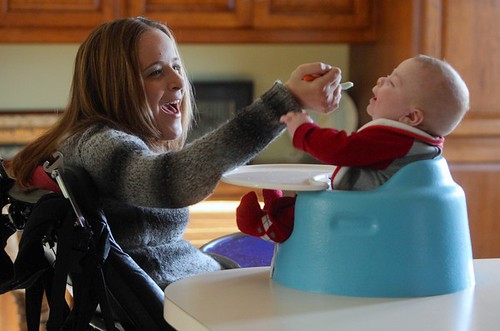
A smiling Kaney O'Neill, sitting in a wheelchair, spoon feeds her baby who is sitting in a Bumbo type seat. *Chicago Tribune: Disabled mom fighting to keep her son

Can a quadriplegic woman be a good parent? Her ex-boyfriend filed a custody suit that says no. […]

In September, Trais sued O’Neill for full custody, charging that his former girlfriend is “not a fit and proper person” to care for their son, Aidan James O’Neill. In court documents, Trais said O’Neill’s disability “greatly limits her ability to care for the minor, or even wake up if the minor is distressed.”

O’Neill counters that she always has another able-bodied adult on hand for Aidan — be it her full-time caretaker, live-in brother or her mother. Even before she gave birth to Aidan, O’Neill said, she never went more than a few hours by herself. […]

Howard LeVine, a Tinley Park attorney not affiliated with the case, said Trais’ concerns are legitimate and may hold legal weight. “Certainly, I sympathize with the mom, but assuming both parties are equal (in other respects), isn’t the child obviously better off with the father?” LeVine, who has specialized in divorce and custody cases for the last 40 years, pointed out that O’Neill would likely not be able to teach her son to write, paint or play ball. “What’s the effect on the child — feeling sorry for the mother and becoming the parent?”

* neeners815 at Her Voice: Pain

But we leave for vacation in three days and I’d really like to not leave in pain. Who am I kidding? If I have to be in pain, I’d rather it be somewhere nice and warm with the sound of waves and the beautiful blue ocean.

* katta: Some clues on how not to write deaf characters

The disability fanfic site has uploaded a bunch of stuff, so I’ve been reading quite a lot, and there are a couple of things that bother me.

Well, okay, a lot of things bothered me, but I do deliberately seek out these fics, so I’ve mostly learned to go LALALA at the badness, especially the very common badness like magical recoveries or undue sappiness.

But in this rant, I thought I’d limit myself to a couple of annoying trends in stories about deaf people.

* Amanda Forest Vivian at I’m Somewhere Else: ASD Savants/Disability Redemption transcript

I do think the idea of redemption is also around in the conversation about Asperger’s an high-functioning autism. And what I mean by redemption is the idea that if someone has a disability, if they’re good at something else, it’s okay that they have a disability.

* Cricbuzz: Kashmir’s disabled cricketer dreams of India match

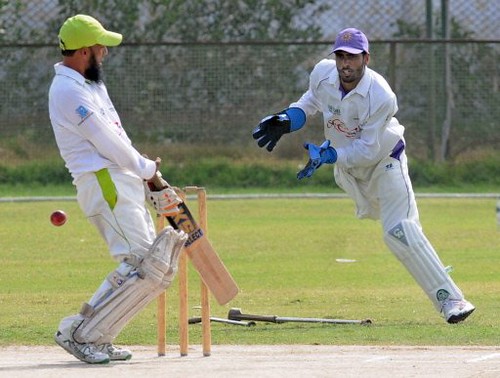
Akseer Abbasi thought his childhood dream of playing cricket for Pakistan was obliterated when his cousin accidentally shot him in the knee and he lost his right leg 15 years ago.

Life took another turn for the worse when a devastating earthquake razed his family home in 2005, but the emergence of a disabled cricket league in Pakistan has revived his hopes of playing for his country. […]

For years Pakistan’s disabled cricketers were shunned, given little or no outlet for their sport. “Whenever I tried to play cricket, my street fellows discouraged me,” said Farhan Saeed, who is missing a left leg and bowls by running, taking a jump and landing on a crutch.

“Then I heard there would be trials to select a disabled team for Karachi and I got selected, and since then I haven’t looked back.”

cricketers

Recommended Reading for December 21

Stuart Penn sculpture* NRC Handelsblad: Disabled poster boy banned from rail stations

Not Normal, an art-exhibition focussed on the position of disabled people in society, which opened in Amsterdam on Wednesday has immediately sparked controversy. The exhibition features pieces by 80 visual artists, whose work all evokes the same question: what constitutes normality? And who decides what is normal and what is not?

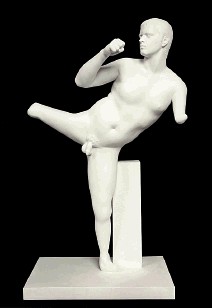
An answer to the latter question came more quickly than expected. The Dutch national railway company NS refuses to display posters advertising the event at its train stations. The poster in question features a nude sculpture British artist Marc Quinn made of Stuart Penn, a British stuntman and amputee.

The NS defended its decision citing fear of customer complaints. According to a spokesperson, the NS’ stations should be “a pleasant place” for passengers. “We feel this poster is too confrontational and unfit for the public at large,” the spokesperson said.

description: A white sculpture reminiscent of the Ancient Greek tradition, on a plain black background. The sculpture is of a young man, naked, standing on his left leg. His right leg, with what appears to be an above-knee amputation, is raised in the style of doing a karate kick. His right arm is raised, bent and clenched in a fist; his left, with an above-elbow amputation, is by his side.

* synecdochic: six things make a post

[on replacing ableist terms at Wikipedia; synecdochic’s working on “Wheelchair bound”] I’ve gotten up to item 180 260 out of 822 on search results (which don’t seem to be updating), if anyone else wants to pitch in. “Confined to a wheelchair” is another good target, with 349 results as of now.

* eruthros: Casual Ableism

2. “She just won’t go to sleep at her bedtime.”
“Kids today!”
“Well, she’s on some medication that makes her agitated.”
“I don’t care how strong the medication is, you have to make it clear that there are LINES that she can’t cross. Bedtime is bedtime.”

Yes, guys, side effects can be reduced if authority figures make rules! Also, rules and lines are the same for everyone, regardless of circumstances!

* Angry Black Bitch: From the soap box on the topic of autism…

Autism is not a childhood disorder.

Autistic kids do not grow out of it. I don’t give a shit about celebrities who claim otherwise or books that speculate about blah, blah and another blah.

The current reality is that autistic kids will become autistic adults.

The Jamaica Gleaner: Taxing even the blind – Disabled community outraged and saddened

Members OF the disabled community are both outraged and saddened by the recent decision by the Government to impose general consumption tax (GCT) on essential items used by persons with disabilities. […]

[Virginia Woods, executive director of the Jamaica Society for the Blind] said this could mean that the organisation might have to start charging a small fee for canes, which it does not want to do because many blind people are struggling to make ends meet.

* China View: China relaxes driving restrictions for disabled people

China’s Ministry of Public Security on Thursday issued an amendment to driving license rules, giving more disabled people the rights to sit behind the wheel.

Those with disabled right leg or both legs but able to sit up independently are allowed to drive small-sized automatic transmission cars which are specially designed for them, according to the new rules which will take effect on April 1.

The present regulation only allows those with disabled left legs to drive.

Recommended Reading for December 18

* Boston.com’s The Big Picture, 2009 in Photos:

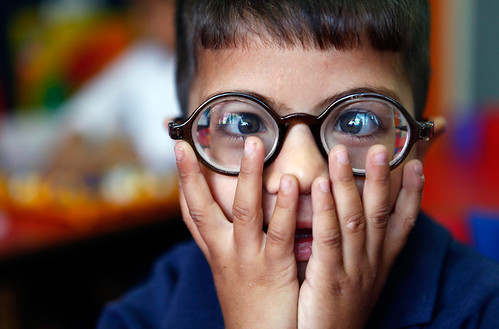
Daoud, a five-year-old visually impaired Palestinian boy, reacts to light after a teacher opened the window

Photo shows Wadee Daoud, a five-year-old Palestinian boy with a visual impairment, at the Helen Keller Center for blind and visually impaired children in the East Jerusalem neighborhood of Beit Hanina, September 10, 2009. Wadee is reacting to light after a teacher opened window blinds. He is wearing glasses with thick lenses and perfectly round frames. His eyes are very wide, echoing the circle of the frame. His hands are pressed to his face in seeming delight.

* Raising My Boychick: “A study in endurance and ableism”

I am in a Pathology lecture at massage school, listening to my life described with words like “unbearable” and “debilitating”. Tonight the class is supposedly studying “Mental/Emotional Conditions”; I am studying endurance and ableism, the grain of the table, the depth of my cheek before I chew through to a vascular layer and taste the copper tang of blood.

The juxtaposition of an article whose subtitle calls depression “This Debilitating Condition” and whose first paragraph says “the stigma that this disorder once carried no longer stings” is almost unbearable.

* Winnipeg Free Press: Groups say Alberta government cutting programs for the disabled to save money

Alberta’s plan to cut about $12 million from its People with Developmental Disabilities program is scaring disabled people and their families. […]

Groups affected include People with Developmental Disabilities, Calgary Society for People with Disabilities, Springboard Centre for Adults with Disabilities and the Alberta Association for Community Living.

Wendy McDonald, president of the association, said Premier Ed Stelmach’s government is going after the most vulnerable people in Alberta and their families. McDonald noted that just last month Stelmach promised to look after such groups. She called on the government to reconsider.

Recommended Reading for December 17

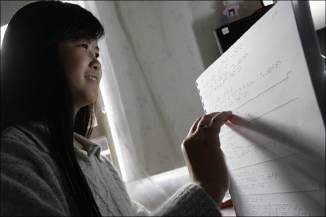
Ria Andriani reads from a Braille board

* Sydney Morning Herald: Blind student tops HSC subject

Ria, a blind student who topped NSW in Indonesian Background Speakers, only migrated to Australia from its northern neighbour in 2007.

Unable to see since she was five, the student from Sydney’s Open High School has been proficient in Indonesian braille for many years.

But after moving to Australia, the inspirational teenager not only had to learn English but English braille.

[image source]

* Wired: Obama Sides With Blind in Copyright-Treaty Debate

The Obama administration announced Tuesday it supports loosening international copyright protections to enable cross-border distribution of special-format reading materials for the blind, a move that puts it at odds with nearly all of U.S. industry.

The government announced its support for the underlying principle of the WIPO Treaty for Sharing Accessible Formats of Copyrighted Works for Persons Who are Blind or Have other Reading Disabilities.

* Knowledge Ecology International: “Who on earth would oppose a treaty to facilitate access to information and knowledge to people with reading disabilities?”

This article outlines and excerpts a series of responses to the proposed copyright treaty, including the posturing by the MPAA [Motion Picture Association of America] and RIAA [Recording Industry Association of America], as well as more sensible responses from the Electronic Frontier Foundation (EFF) and other groups.

* King5.com: Outrage over handicapped parking signage

[posted purely so you can play Accessible-Parking Ableism Bingo! with the comments. How high can you score?]

Recommended Reading for December 16

* Boston.com The Big Picture’s 2009 in Photos [click through for much larger image]:

wheelchair on the beach

caption: An empty wheelchair belonging to quadriplegic Patrick Ivison, 15, sits idle on the beach while Ivison, his mother, and friends prepare for another surf ride at the Cardiff State Beach in San Diego, California on October 6th, 2009. The photo has the focus on the empty chair at the edge of the beach, with people in the waves, some standing, one on a board. The people are out of focus so you can’t see anyone distinctly. There is scattered seaweed in the wet sand.

* very filled with dreams: “yeah so this got too long for a quote post

[…] i guess i am saying that there’s a limit to how actually subversive a blonde skinny white pop star can be. that isn’t a reflection on gaga (or any other blonde skinny white pop star) herself at all – it’s a reflection on a culture that marks some bodies as acceptable and some bodies as inescapably transgressive. for gaga, the grotesque is a costume, an act.

* ABC News: Minister grilled over disability accommodation

ACT Disability Minister Joy Burch has been grilled over the treatment of disabled people who are stuck in hospital while the department tries to provide supported accommodation.

The ACT Liberals have used an Assembly committee hearing to highlight the case of one woman who has been in a Canberra Hospital bed for nearly three years.

* Ireland On-Line: Cowen rejects call for reversal of budget cuts on carers

The Taoiseach Brian Cowen has rejected opposition calls for the budget cuts on the blind, the disabled and carers to be reversed.

Mr Cowen said the Government has to create a sustainable social welfare system next year.

Recommended Reading for December 15

Happy Bodies: Dementors [note: some of the videos at link are not transcribed]

Can we please stop talking about non-neuro-typical people as though there is something wrong with them? They may be different, but they are not deficient and attitudes like those expressed in the Autism Speaks video just serve to promote the idea that people with ASD are somehow lesser than neuro-typical people.

Inky Ed: what happened?

He couldn’t have been more than three years old. I watched him as he discreetly looked out of the corner of his eye, checking, peeking, stealing another glance.

He sidled up to Mac, this time for a closer look, him standing, Mac sitting – they were almost nose to nose. A perplexed look formed on his face, something was clearly amiss, he needed to know…

“What happened?” he asked me with wide eyes and hands upturned.

Feminists with Female Sexual Dysfunction: The ugly things people say about FSD

Sometimes there will be something of value to take away from the comments section, especially if an article is intended to be supportive. Someone with personal experience in the matter at hand may point out flaws in an author’s language, or offer resources to more information on the topic at hand. Other times, comments are less than helpful. The comments that stand out the most though, are often the worst, most hurful ones. They are the unavoidable, spotted-too-late Ice Bergs (“Right ahead!”) floating among a sea of free speech.

Gregor Wolbring in M/C Journal: A Culture of Neglect: Climate Discourse and Disabled People

Although climate change will disproportionately impact disabled people, despite the less than stellar record of disaster adaptation and mitigation efforts towards disabled people, and despite the fact that other social groups (such as women, children, ‘the poor’, indigenous people, farmers and displaced people) are mentioned in climate-related reports such as the IPCC reports and the Human Development Report 2007/2008, the same reports do not mention disabled people. Even worse, the majority of the material generated by, and physically set up for, discourses on climate, is inaccessible for many disabled people (Australian Human Rights Commission). […]

Ableism and disablism notions experienced by disabled people can now be extended to include those challenges expected to arise from the need to adapt to climate change. It is reasonable to expect that ableism will prevail, expecting people to cope with certain forms of climate change, and that disablism will be extended, with the ones less affected being unwilling to accommodate the ones more affected beyond a certain point. This ableism/disablism will not only play itself out between high and low income countries, as Desmond Tutu described, but also within high income countries, as not every need will be accommodated.

CNET: Web accessibility no longer an afterthought

Web accessibility has come a long way in the decade since many of these proposals were first floated. It’s still a challenge, however, for the Web community to remember that as it pushes forward with exciting new technologies like HTML5 that could reinvent the Internet experience, it must keep in mind the needs of those who can’t type 60 words per minute, operate a mouse like a scalpel, or see the unobtrusive pop-up windows that point to the next destination on the page.

“As the Web gets more and more dynamic, the accessibility requirements get more and more interesting, and sometimes challenging, to implement,” Brewer said.

ABC: Taxis refusing to pick up disabled people

Disability advocate Lynn Strathie says at a recent forum in Darwin the main complaint was about transport services. She says taxis in Darwin are unreliable, inconsistent and have refused to serve the blind and others with an impairment.

“At that forum we had a person who is totally blind and has an aid dog who continually was refused taxis,” she said.

The executive officer of the Territory’s Taxi Council, Colin Newman, says it is true that some drivers have refused to serve the disabled. “The service is getting better but it is not perfect,” he said.

Recommended Reading for December 14

Wheelie Catholic: Imagine no one has to imagine

One of the other questions I’ve been asked is “What’s it like to be a quadriplegic?” usually followed by “I can’t imagine!”

My answer to that is no, you probably can’t imagine, although you may try , with the misguided help of maudlin movies about disability, on the one hand, or inspirational tales of people climbing mountains, on the other. You’ll read stories about quads who want to die and stories about quads who help others find better ways to live. You may tap into societal myths and assumptions about disability, through no fault of your own because we are surrounded by them. You may base your ideas on the few disabled people you’ve met and generalize from there how it is to live with a disability. And, sadly, you may avoid being around disabled people because you are so worried that you’ll say or do the wrong thing as you try to imagine what it’s like for them.

To all that I say – please, don’t imagine what it’s like.

LaToya Peterson at Racialicious: Why is it so important to have productive conversations on race?

Conversations about race are not amusing at all when the people who you are discussing the issue with make it clear that (1) they have not thought about the issue much, (2) they don’t care to think about the issue much, but (3) they are determined to talk about the issue anyway. And, as some of you may know, I was recently confronted with this situation over at Jezebel. […]

Writing about race in mainstream spaces can often be frustrating and it can often be rewarding, just as many of you know from doing the same thing in your daily personal interactions. And while we are all encouraged when we have a breakthrough by talking to others and expanding upon or ideas, it is also important to remember that this must be done in a sustainable way. I have seen too many people with amazing ideas and wonderful perspectives become burnt out and disengaged because they felt they could reach everyone, every time, at every occasion. But as these structures were not built in a day, and not upheld by one person, the process to dismantling them will also be a long, hard road.

A Femanist View: Heads-up for Feb.

On the Paul O’Grady show today, professional dancer Brian Fortuna from the BBC’s Strictly Come Dancing (the US version is called Dancing with the Stars) announced a new show called Dancing on Wheels.

Knowledge Ecology International : Writers Open Letter in Support of WIPO treaty for People who are Blind or have other Disabilities [via BoingBoing]

The undersigned, writers and journalists, are writing to ask you to support the World Blind Union proposal and initiate discussions at the World Intellectual Property Organization on a treaty to improve access to works, articles, blog posts, subtitled films, etc in formats accessible to people who are blind, visually impaired or have other disabilities that impair access.

New York Times: Poor Children Likelier to Get Antipsychotics

Some experts say they are stunned by the disparity in prescribing patterns. But others say it reinforces previous indications, and their own experience, that children with diagnoses of mental or emotional problems in low-income families are more likely to be given drugs than receive family counseling or psychotherapy.

Part of the reason is insurance reimbursements, as Medicaid often pays much less for counseling and therapy than private insurers do.

Nashville Scene: Even after a sex-abuse scandal, NHC Bristol nursing home employees still don’t know how to handle abuse allegations

Last August, after a staffer was charged with molesting elderly patients—some of whom were too ill or frail to plead for help—at a Bristol, Va., nursing home run by Murfreesboro-based National Healthcare Corp., whistleblowers hoped that the ensuing attention would create an inhospitable climate for serial predators.

Instead, an October survey of the nursing home’s staff obtained by the Scene—prompted in part by a sexual-abuse complaint lodged in September—found that most of its employees don’t even know they are required by law to report abuse allegations to the state. […]

NHC Bristol may serve as an extreme example of just how bad a nursing home can be. The allegation of sexual abuse wasn’t the only complaint that prompted the survey in October. According to Brenda Bagley, supervisor of the complaint unit for the Office of Licensure and Certification at the Virginia Department of Health, the nursing home had been reported for a “general lack of care.”

Recommended Reading for December 11

Note that a number of blog links, media reports, and the comments therein may contain questionable language and/or clear descriptions of abuse.

A comment on Meloukhia’s post on Glee’s “Hairography” episode:

Coming from a hard-of-hearing family, I was excited to see the deaf choir perform! I thought about going to find my little sister, who is profoundly deaf. As it is, I didn’t have to bother getting up. Why? Because the episode wasn’t closed captioned.

I’ll let that sink in. Their oh-so-inclusive episode about some Very Special Disabilities…was unwatchable for people with the exact disability being discussed.

Some of you may be wondering when we’re going to write about Glee, since the midseason finale just aired. Rest assured that Anna and meloukhia are currently working on a monster post (in several parts!) which will hopefully go up in a few days.

Fat Nutritionist: Stairway to Health, or, Let’s Judge People for Not Taking the Stairs.

The life in downtown Toronto is just plain hard on me, and clearly, the stairs are not helping my heart. So I try to make it at least a little easier on myself by taking an elevator or escalator when convenient. I like to think of this as having compassion for my limitations, though I admit, I am often embarrassed to be standing by the elevator — even though I am registered as disabled at my school, and have to wear special orthotics in my shoes and blah blah blah. I am still embarrassed because I know what people must be thinking of me — the fat lady taking the elevator instead of the stairs.

Lennard Davis in the Huffington Post: “Let Actors with Disabilities Play Characters with Disabilities” via Media dis&dat:

There is a very high frequency of Oscar winning films that depict disability, but very few of those clutching the golden statues are people with disabilities.

There is a standard response on the part of Hollywood and Broadway when this issue is raised. The producers will say that they “tried” (if they tried at all) to use disabled performers but that they couldn’t find anyone good enough to play the part.

BBC: Bollywood shines spotlight on health disorders

Amol Gupte, writer of Taare Zameen Par, said he made the film primarily “to take a re-look at parenting”. […]

Mr Gupte, who says he makes films for “social change and sensitisation”, maintains dyslexia is not a disability but a neurological difference. “It is called the gift of dyslexia. Problems are not in children. Problems are in the system.

Leader Messenger: Residents block disabled care home

A group of Hope Valley residents is fighting a plan to convert the old Tolley winery into a home for people with severe physical disabilities.

In submissions to Gully Council, residents say SA Care’s bid to house six disabled people at the John Ramsay Cct property would attract criminals seeking drugs, increase traffic, noise and parking problems, and bring down their property values.[…]

In their submission to the council, Mr and Mrs Evans wrote: “The Pedare Estate is a quiet residential estate and let’s not upset (its) character and tranquility. The estate has one entrance/exit and is not designed for a commercial venture.”

They also said the clients of a home for the disabled would likely require medication, which could attract criminals to the area seeking drugs.

Sydney Morning Herald: Qantas refused guide dog and stranded blind woman

Qantas left a blind woman distressed and stranded interstate at night because the airline would not allow her guide dog on a flight.

Qantas is not alone. Tiger Airways two days earlier baulked at letting the same woman fly with her guide dog.

CBS Chicago: Family Sues Over Alleged Police Beating Of Teen

A Chicago family wants justice.

They claim a Chicago police officer burst into their family-owned restaurant and beat their son bloody, despite being told that the teen has autism and special needs.

Recommended Reading for December 10

Note that a number of blog links, media reports, and the comments therein may contain questionable language and/or clear description of abuse.

Upstart Magazine: Social media – a barrier or tool for inclusion?

Alex Varley, CEO of Media Access Australia, a not-for-profit devoted to promoting access to media for people with disabilities, says: ‘Social media are the cornerstones of modern communication and it is essential that people with disabilities, who can become socially isolated, are able to use these tools and stay connected with the world.’

Before the arrival of social media technology, Glenda Watson Hyatt, who lives with severe cerebral palsy, was unable to converse with most people, unless, as she says, they could understand ‘Glenda-ish’. Glenda now runs an eloquent blog, allowing her voice to be heard clearly and highlighting the difference between the way people with disabilities are perceived in the real world and through social media.

Glenda Watson Hyatt: 8 Simple Ways to Better Serve Customers with Disabilities During the Holiday Shopping Rush

3. Minimize extra products and displays in aisles. Cluttered aisles make navigating difficult for customers using wheelchairs, walkers and service dogs.[…]

[scooter-riding editor’s note: Quoted For Truth!]

BBC UK: ‘Fiasco’ of student loan failures

[…] a report into university loan delays in England found “conspicuous failures”. There have been widespread complaints about the Student Loans Company – with the problems still unresolved as the end of the university term approaches. […]

“The government were told about the problems with the system more than a year ago but they failed to act as it fell apart. Meanwhile, tens of thousands of students – and particularly those that are disabled – are facing hardship or having to drop out of university because they cannot afford to keep themselves,” said Shadow Universities and Skills Secretary, David Willetts.

Shots (NPR’s Health Blog): Lawmakers Seek Halt To Abuses Of Disabled Kids In School

Two investigatory reports earlier this year told disturbing stories of the harsh, and on occasion fatal, methods sometimes used to discipline disabled children in school. Now members of Congress are trying to stop the practice of relying on what’s known as restraint and seclusion.

Sydney Morning Herald: In education, one size does not always fit all

Federal Educationn Minister Julia Gillard announced in April that the Education Department would be delivering grants totalling $277.5 million to be spent on “maintenance and minor building works” in NSW. The list includes a host of NSW’s elite schools receiving money for car parks, music rooms and so on. A spokeswoman for Gillard said “in the education revolution, we are not discriminating against school sectors. Our aim is to ensure that every school is a great school”. Meanwhile, Kingsdene Special School is closing due to lack of funds.

Repeated pleas to the Federal Government for financial assistance are met with the stubborn reply that “Kingsdene is receiving the maximum funding according to the formula”. […] We don’t dispute that Kingsdene is receiving the maximum funding according to existing formulas. What we do dispute is the validity of existing funding formulas. In March 2009, a survey of public school principals across NSW, in mainstream and special schools, reported 100 per cent agreement that special education was underfunded and should be linked to students’ level of function, not the irrelevant, antiquated funding formulas currently used. We need new, innovative solutions that address reality.

Herald Sun: School bully makes Tyler Fishlock’s life hell

“I can’t dodge it. I can’t see him coming and I think ‘Oh God, here comes the monster again’,” said Tyler, 7. “I am terrified of him.”

[College director Patrick Waring said] “These are six-year-olds who are having a bit of trouble getting on with each other. We are not talking about high-end bullying, it is just spasmodic bad behaviour.”