All posts by lauredhel

About lauredhel

Lauredhel is an Australian woman with a disability.

Recommended Reading for February 2nd

Warning: Offsite links are not safe spaces. Articles and comments in the links may contain ableist, sexist, and other -ist language of varying intensity. Opinions expressed in the articles may not reflect the opinions held by the compiler of the post. I attempt to provide extra warnings for material like extreme violence/rape; however, your triggers/issues may vary, so please read with care.

Assiya at For A Fairer Today: little-big disabling things

It’s funny how all these little things, that so many people never think about, can be so important. Can basically trap me in my room–and even hurt me in my room. Sometimes I flip off the florescent lights-curse them out with my hands and voice.

Marta Russell at SOA Watch: The Social Movement Left Out [via Niall’s new blog, Not Gagged]

Baynton shows that the suffragists arguments to refute such associations took three forms: women were not disabled therefore deserved the vote; women were being erroneously and slanderously classed with disabled people, with those who were legitimately denied suffrage; and women were not naturally or inherently disabled but were made disabled by inequality. “… suffrage would ameliorate or cure these disabilities.” […]

What this history tells us is that these groups (or at least advocates for these groups) believed that being labeled with a disability was the worst fate imaginable. No one wanted to be associated with “disabled.”

Historically, labor associations similarly found it shameful to be injured or impaired and “equated manhood with independence (bodily and financial).”

Tom Shakespeare at BBC’s Ouch!: Haiti, disabled people and disasters

Disabled people are among the most vulnerable when disaster strikes. They may be left behind in the evacuation of buildings. Environmental barriers – such as destroyed roads and pavements – are a greater obstacle to those with mobility issues. People who require regular medication or treatment are likely to lose out. For those disabled people living in emergency shelters, latrine arrangements may be inaccessible. And where food aid is distributed in refugee camps, disabled people are often at the back of the queue and so may go hungry.

Reuters: Researchers see pattern in PTSD brain activity

Using a brain imaging device called magnetoencephalography, which measures how the brain processes information, a team at the University of Minnesota and the Minneapolis VA Medical Center found differences in brain activity between people with PTSD and healthy people.

Having a test for PTSD could speed treatment and simplify insurance coverage, said Dr. Apostolos Georgopoulos of the University of Minnesota, whose study appears in the Journal of Neural Engineering.

SMH: Disabled woman may settle with Jetstar

Sheila King booked her flight over the internet in August 2008 but was contacted the next day and told she would not be able to fly on that day because there were already two passengers requiring wheelchair assistance booked on the flight. She was told Jetstar had a policy of only allowing a maximum of two wheelchair-reliant passengers on any flight. […]

Ms King claims that in denying her the right to fly, Jetstar breached the Disability Discrimination Act.

Ms King has had post-polio syndrome since childhood and has been in a wheelchair since 2008 after a car accident that resulted in three crushed vertebrae and three broken ribs, a statement released by her lawyers and the NSW Disability Discrimination Legal Centre says. But she is more than capable of looking after herself when she travels, she says.

New York Times: Using Humor in a Campaign Supporting Disabled People

To that end, the campaign takes a light-hearted tack rather than a sober or earnest tone. The ads try to challenge conventional wisdom about workers with disabilities by offering humorous examples of people with “differences” already employed.

For instance, in a television commercial, a worker in a wheelchair points out her colleagues who “you could label as ‘different.’ ” Among them are a woman dressed in a nightmare wardrobe of clashing patterns, who is “fashion deficient”; a klutzy young man at the copier, who is “copy incapable”; and a shouting man who suffers from “volume control syndrome.”

The punch line of the commercial is that the worker in the wheelchair is different, too: Her skills at a basic office function are so bad that she is labeled “coffee-making impaired.”
Recommended Reading for February 1st

Warning: Offsite links are not safe spaces. Articles and comments in the links may contain ableist, sexist, and other -ist language of varying intensity. Opinions expressed in the articles may not reflect the opinions held by the compiler of the post. I attempt to provide extra warnings for material like extreme violence/rape; however, your triggers/issues may vary, so please read with care.

Modus Dopens: De-centering non-disability: part 2

So for a long time I didn’t express anger. I didn’t feel like I was allowed to even be angry. I apologised incessantly to people. I wrote about that here. Short version: it was detrimental to me.

When a CNDP objects to my anger, they are failing to see all the structural stuff that affects me every day. They are also failing to see that it’s not something I can ignore or tune out, because I can’t ignore needing to pee, or needing to get to class.

NTs are Weird : New Diagnostic Criteria

Apparently, to be “fully” autistic, one must meet the new diagnostic criteria – one must be unsuccessful and unhappy.

Gianna Lauren: Halifax Media Co-op: Audio Vision: Campus and community stations transform to accommodate people with disabilities

Staff support was crucial in enabling Noble to establish CHSR as a functional space for the Blind. “When I started at CHSR the staff and volunteers were very excited to work on making the station accessible,” he says. “The first job was to put Braille labels on all of the equipment in the master control room as well as the production studio.”

Making a space accessible for disabled persons also involves educating the able-bodied people who share the space. For instance, there are programmers who peel away at the Braille labels – an anxious habit while hosting on air – and eventually remove the labels unknowingly.

Michael Uniacke at The Age: Memo cinema chains: the deaf enjoy movies too

In the 17 years since the enactment of the Disability Discrimination Act, the grand result of 50 complaints and fruitless negotiations with cinema chains is that 12 cinemas in the entire country show three screenings a week of captioned films. The cinemas decide what films will be captioned, and show them all at off-peak times. For example, who goes to the movies on Wednesday mornings?

Four of the cinema chains – Hoyts, Village Roadshow, Greater Union and Readings – have now applied to the Australian Human Rights Commission (AHRC) for an exemption from complaints made under the Act for a period of two-and-a-half years, after originally asking for five years.

Melbourne Leader: HAVE YOUR SAY: Disabled pleas ignored in Swanston St revamp plan

Melbourne Council has ignored pleas to allow wheelchair accessible taxis into Swanston St after a $25.6 million strip revamp.

NJToday.net: Theater Continues Sensory Friendly Films® Program

In order to provide a more accepting and comfortable setting for children with autism or other special needs, AMC movie auditoriums will have their lights brought up and the sound turned down. Families will be able to bring in their own gluten-free, casein-free snacks, and no previews or advertisements will be shown before the movie.

Additionally, audience members are welcome to get up and dance, walk, shout or sing […]

The Times of India: Surging crowds prove to be a handicap for disabled runners

This quartet had come to Kasturchand Park to show the world that their disabilities were no match for their hardy spirit. Unfortunately, the otherwise encouraging crowd proved to be uncharacteristically unsympathetic towards them. As a result, the four wheelchair-bound men – Sumit Kumbhare, Mohammed Afzal, Mohammed Shahid and Gyasuddin Ansari – were blocked off by this literally unmoving crowd, and they failed to register their participation in the Nagpur Marathon on Sunday morning.

Recommended Reading for January 31st

Warning: Offsite links are not safe spaces. Articles and comments in the links may contain ableist, sexist, and other -ist language of varying intensity. Opinions expressed in the articles may not reflect the opinions held by the compiler of the post. I attempt to provide extra warnings for material like extreme violence/rape; however, your triggers/issues may vary, so please read with care.

Las Vegas Sun: Deaf students learn about a college option just for them

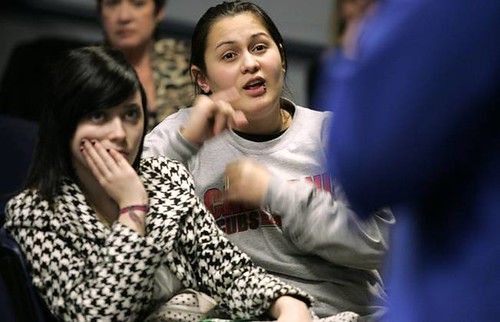
Janeth Gastelum, a student, signs a question to representative from Gallaudet University

Image caption: Janeth Gastelum, a Liberty senior, asks a question Thursday during a presentation by a representative from Gallaudet University, an undergraduate liberal arts university in Washington, D.C., for deaf and hard of hearing students.

At Liberty High School this week, the queries came in rapid succession for Nick Gould, a recent graduate of Gallaudet University, the world’s first higher education institution for the deaf: How big is the college? How many dorms? Are there varsity sports? What about scholarships?

Gould, who travels the country on behalf of his Washington, D.C., alma mater, answered in sign language. […]

Gould said Gallaudet “is a place where we can thrive with our deafness, instead of running around it. I don’t think any other university in the world offers that.”

Asperger Square 8: Curing Autism

What I am wanting to say here is twofold. Sometimes the cure is worse than what one is seeking to alleviate. Alcohol allowed more words to flow, but the words were not good ones. They no more represented my true self than my silence had.

jonquil at Rosemary for Remembrance: Nothing was learned [post includes warning: ” triggery for cancer survivors I MEAN IT “]

This is the classic teaching case for engineering risk. Anybody associated with medical devices ought to have heard about it. The lessons learned were clear-cut, one of the most significant being that any such device ought to have a mechanical, non-software-controlled, interlock to prevent its operation with no shields in place.

hkfreeman at The Living Artist: Quick Rant

Stop telling me to go see Avatar in IMAX/3D. […] Think about that next time you ooh and ahh over some new technology. Is it new technology for everyone? Or just those privileged with a culturally approved set of sensory organs?

KTVU.com: Judge Rules Disabled Can Use Devices During Bar Exam

A federal judge in San Francisco ordered a national bar exam organization Friday to provide technological aids requested by a blind law school graduate who plans to take the test next month.[…]

[Stephanie Enyart] said that in order to read material on a computer effectively, she needs a combination of magnified text and a software program that reads portions of the text aloud.

The California State Bar agreed to allow her to use the technology combination for a portion of the exam, but the National Conference of Bar Examiners refused to allow her to use it for two other sections controlled by the national group. The group contended that Enyart’s plan would endanger security of the material and that other accommodations it offered would meet the requirements of the U.S. Americans with Disabilities Act.

The adaptations offered by the conference included a human reader, a scribe to write down her answers and/or magnified text.[…]

Outside of court, Enyart said, “I’m glad I now have the luxury of just worrying about the bar exam itself”.

Miami Herald: Disabled teen’s dad wins fight over diaper costs

This week, a federal judge ruled that, for Florida children like Sharett [age 17], diapers are a medical necessity — not a “convenience” — and ordered the state Agency for Health Care Administration to pay for them. The ruling could affect thousands of sick or disabled children throughout the state. […]

Smith, of Miami, is raising Sharett and two other young children on about $1,000 a month in Social Security disability and survivor’s benefits. His wife of 26 years died of a brain tumor. The $200 to $300 he spent each month for diapers for Sharett represented 20 percent or more of his budget.

Recommended Reading for January 30th

Warning: Offsite links are not safe spaces. Articles and comments in the links may contain ableist, sexist, and other -ist language of varying intensity. Opinions expressed in the articles may not reflect the opinions held by the compiler of the post. I attempt to provide extra warnings for certain material present in articles, but your triggers/issues may vary.

blind man at work in call centreThe Big Picture: At Work, Part II, Photo 24

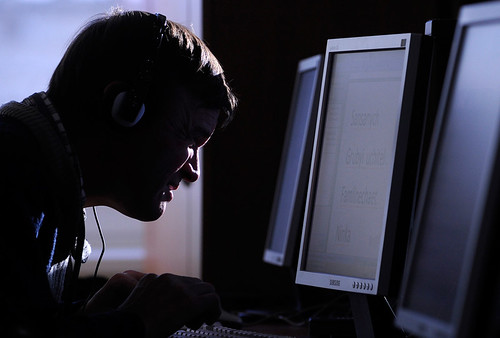
Photo caption: A visually impaired man works at a hi-tech call center in Moscow, Russia on December 18, 2009. Once encouraged to take dreary factory-line jobs making electric plugs and curlers, blind people in Moscow now have a new option: working at a hi-tech call center. The center in northern Moscow employs almost 1,000 blind and visually impaired people, a bold experiment in a nation where people with disabilities can struggle to find interesting jobs – or indeed any job at all.

Photo description: The photo shows a man in profile, wearing large headphones, leaning close to three or four flat screen monitors. He seems to be typing. The monitor displays four words in very large font. The room is dim, so the man is seen in silhouette.

IP at Modus dopens: De-centering non-disability

At my university, certain kinds of reasonable adjustments are considered reasonably “standard” for disabled students. These are things like getting extra time on exams, or having your classes specially timetabled in accessible buildings.

Wait a minute, did I just say “extra time”? “Specially”? Compared to what?

Ricky Buchanan at ATMac: Accessibility and the iPad: First Impressions

So what’s new with the iPad which is relevant to assistive technology and use by people with disabilities?

Size!

The iPad is bigger. I know this is obvious, but the implications are that people motor control problems such as cerebral palsy may be able to use this device more easily than the smaller ones, as less very fine motor control is needed for many tasks.

[Also covered: External keyboard, Speakers, Simple interface, and the existing iPhone accessibility features.]

PortlyDyke at Shakesville: Watch Your Mouth – Part 3: Use Your Big-Kid Thesaurus

[…] — but there is one thing I deeply dislike — [Rachel Maddow’s] continuing use of the words “lame” and “lame-itude” as an idiom for “bad”. I even wrote to her about it (gently, civilly).

At first, I thought my reaction to her use of this term was me “just” being offended by the ablism demonstrated (which would have been enough) — but I realized later that another thing that grated on me was that she seemed to me to be using this ablist term in order to sound cool. There is just something about the emphasis she uses when she says it that rings to me of the 11th-grader who’s trying to get in with the popular kids. It seems out of place in the midst of her usual Rhodes-Scholar presentation, and it jars the hell out of me every single time. I want to say to her: “Rachel, you’re the first out news-lesbian headlining her own show on a major network. You’re cool enough already.”

Access for All: Nothing about us without us: the European parliament drives forward disability rights

On 27 January 2009, the renewed Disability Intergroup of the European Parliament and the European Disability Forum toasted the New Year in Brussels at a very well-attended event. The new President of the Intergroup – for the first time a person with a disability himself, – and the disability movement presented the Disability Pact to a hundred of activists and 20 MEPs from various political groups and nationalities.

stevefromsacto at calitics: How Low We Have Sunk

A homecare provider from San Diego told legislators yesterday how she and her client–a quadriplegic Vietnam veteran–were threatened and harrassed by a fraud investigator from the state.

The Consumerist: Continental Gate Agent Tells Passenger She Thinks Her Mental Illness Is Fake [includes description of anxiety attack]

She gets on the phone with reservations and looks at my papers – and then has the audacity to say that my doctor’s note looks like a fake and, since it was dated in December, it must be an old note and, therefore, not applicable anymore. She asks me what my disability is, since it’s not apparent to her, which, according to the ADA (Americans with Disabilities Act), she can not technically ask. She mentions to the reservations desk, in a low voice that I was not suppose to hear, that she doubts my disability.

Chatterday! Open Thread.

two baby platypiThis is our weekly Chatterday! open thread. Use this open thread to talk amongst yourselves: feel free to share a link, have a vent, or spread some joy.

What have you been reading or watching lately (remembering spoiler warnings)? What are you proud of this week? What’s made your teeth itch? What’s going on in your part of the world? Feel free to add your own images. (Anna insists that these should only be of ponies, but I insist that very small primates, camelids, critters from the weasel family, smooching giraffes, and cupcakes are also acceptable.) Just whack in a bare link to a webpage, please – admin needs to deal with the HTML code side of things.

Today’s chatterday backcloth comes via The Daily Squee.

Recommended Reading for January 29th

Warning: Offsite links are not safe spaces. Articles and comments in the links may contain ableist, sexist, and other -ist language of varying intensity. Opinions expressed in the articles may not reflect the opinions held by the compiler of the post. I attempt to provide extra warnings for certain material present in articles, but your triggers/issues may vary.

Elizabeth Switaj at Gender Across Borders: What does a (disabled) feminist [poet] look like?

For mainstream feminists who are looking to get a piece of the pie rather than to change it into something more nutritious, disability is the last thing they want to be associated with. To put it more generously, women often feel that in order to be treated as fully human let alone to succeed professionally they need to prove that they are more skilled and more generally able than men.

Our Bodies, Ourselves: Want to Participate in Updating “Our Bodies, Ourselves”?

Our Bodies Ourselves is seeking up to two dozen women to participate in an online discussion on sexual relationships.

tigtog at Hoyden About Town: And still they defend him

Much of the language that anti-vax advocates use about their children with autism is also breathtakingly negative. They are describing their own children, in public and often with the child right there beside them, as “soulless” and emotionally/physically destructive creatures who have ruined their dreams of a normal family life, as children who have had their “real self” kidnapped by autism.

Patrick Alan Coleman at Blogtown (The Portland Mercury): Breaking: Does Whole Foods’ New “No Fatties” Employee Incentive Program

We’ve received a call back from Amy Klare of BOLI who is still concerned, despite Whole Foods promise to look at disabled employees’ participation in the program, suggesting Whole Foods may still open themselves up to liability from the Americans with Disabilities Act (ADA).

“How are they going to evaluate how a person has a disability?” she asked. “How are they going to do determine that?”

She was also concerned that many of the health indicators, or bio-metrics as Whole Foods calls them, may not be as neutral as they seem to be. “This could also have a disproportionate affect on African Americans or other racial minorities,” she said, noting the prevalence of high blood pressure in African American communities.

Cold Snapdragon: What Disability Teaches

There are other things [disability] taught you as well. In relation to yourself. In relation to your family, your friends, and all those other acquaintances who populate your life.

The Border Watch: Community service recognised [editorial note: Heavily othering language. And how nice to know that PWD don’t have the “worries” of inaccessibility, discrimination, hate, poverty, abuse, rape and murder. Can I live in this world? ~L ]

But on Australia Day, Graham [Bignell] finally gave in and accepted the Australia Day Citizen of the Year Award? […]

Graham, who is also a carer for two people with disabilities, said he would continue to work with people with disabilities.

“It is the friendship. Life is great for them and they don’t have all the worries of life. It rubs off on you and you just feel so good in their company,” he said.

MK News: Oxygen in aeroplanes should be free as air

John Mugford, 58, from Emerson Valley, has enlisted the help of local MP Dr Phyllis Starkey to petition airline companies to stop preventing passengers from bringing their own oxygen cylinders on to planes and charging hundreds of pounds extra for them to use the oxygen that the airline provides. […]

He has added his voice to The British Lung Foundation’s ‘Oxygen on Planes’ campaign, which is encouraging other airlines to follow the example now being set by Thomson, British Airways and Virgin Atlantic in ensuring that people with a lung condition do not have to pay extra. […] “To refuse patients the right to carry medical equipment that has been certified as safe, and then to charge large sums for alternative provision, is outrageous.”

Recommended Reading for January 28th

Warning: Offsite links are not safe spaces. Articles and comments in the links may contain ableist, sexist, and other -ist language of varying intensity. Opinions expressed in the articles may not reflect the opinions held by the compiler of the post. I attempt to provide extra warnings for certain material present in articles, but your triggers/issues may vary.

two sled hockey playersThe Big Picture: Fire and Ice

Image caption: “Sled hockey player Nikko Landeros, of Berthoud, Colorado (right), takes part in a scrimmage with Tyler Carron in the Boulder Valley YMCA in Lafayette Colorado on January 2nd, 2010. Three years ago, high school wrestlers Landeros and Carron lost their legs when they were hit by a car while changing a flat tire. It didn’t take long for Landeros to pick up sled hockey, and he’ll be competing in Vancouver in the Paralympics. Carron is on the junior national team.”

Image description: “Two sled hockey players on the ice on low, metal, skateboard-sized sleds. Their gloved hands hold metal poles used to steer and to strike the puck. Both wear helmets. Landeros wears a Colorado Avalanche jersey and Carron a white USA jersey. Both men intently look at and seem to move toward the puck in the ice between them.”

Cat in a Dog’s World: Book Review Series: The Ethics of Autism

But I have to say that I find these kinds of questions incredibly irritating and dehumanizing. Autistic people do not need non-autistic people (using simplistic schematics of autism devised by other non-autistic people) to theorize in order to recognize our humanity or membership to “the moral community” […] Why is our personhood and right to autonomy up for debate?

Even if Barnbaum does have some (peculiar) kind of pro-neurodiversity sentiment, her project seems to be entirely misconceived. She starts with presumptions which treat autistic people and non-autistic people as beings from separate planets, are overly simplistic, and are silencing of autistic voices.

Prof Susurro: Want Ad For Feminist Revolution Pt. I

During that meeting, she disclosed that, like me, she has a hidden disability that in no way impacts her ability to do the job for which she was hired. […]

By the time she reached home, her offer of hire had been rescinded on the basis that she might “put youth in danger” and “serious concerns about her ability to come to work on time.” My friend was dumb-founded and has been silently weighing her options all the while feeling completely dehumanized by an all white, all female, “feminist”, “social justice”, agency who didn’t skip a beat in hiring a white able-bodied female to replace her.

LWN.net: LCA: HackAbility

Bright purple hair seems certain to make Liz Henry distinct from the crowd, but it’s another attribute that she came to linux.conf.au 2010 to talk about: her wheelchair. […]

Disability-friendly software, too, is not an easy hack; accessibility tends to be treated as a last-minute add-on. Web site accessibility, too, is often an afterthought, and tends to be user-focused. This approach tends to lead to sub-standard solutions, but it also fails to lead to a free, do-it-yourself culture. We need good accessibility for developers too. […]

As an example of good and bad ways of doing things, Liz contrasted the Free Wheelchair Mission and Whirlwind Wheelchair International. The former makes dirt-cheap wheelchairs out of lawn chairs and bicycle wheels, then ships them by the container load to poor countries. It seems like a good idea, but dumping all those cheap chairs devastates any local market that may have developed. When the chairs break (which tends to happen soon), there’s nobody left to help keep them going. Whirlwind, instead, is focused on partnering with local industry and sharing information, creating a more hackable solution with more people to hack on it.

Patricia E Bauer: Shriver to Emanuel: Let’s work together to end ‘R-word’

In the wake of a news report that the White House chief of staff used the words “f–g retarded” in a strategy session, Special Olympics chairman Timothy Shriver called on Rahm Emanuel to join his campaign to stamp out the “R-word.”

Shriver’s letter to Emanuel [PDF], released today, said the terms “retard” and “retarded” perpetuate stereotypes and stigma against people with intellectual disabilities, and are “just as painful as any number of racial or ethnic slurs, jokes or taunts that society has committed to eradicating from our lexicon.”

The Irish Times: Half of all adults with a disability have trouble coping with daily tasks – study

More than half of all adults living with a disability say they have experienced difficulties going shopping, getting away for a holiday, taking part in community life and socialising in public venues, according to a new study. […]

While some adults with a disability said they had made improvements to their home to help assist them carry out tasks on their own, 52 per cent of adults in private households said a lack of money meant they were unable to adapt their homes.

Recommended Reading for January 27th

Warning: Offsite links are not safe spaces. Articles and comments in the links may contain ableist, sexist, and other -ist language of varying intensity. Opinions expressed in the articles may not reflect the opinions held by the compiler of the post. I attempt to provide extra warnings for certain material present in articles, but your triggers/issues may vary.

Laura Hershey: Women and Disability and Poetry (Not Necessarily in That Order)

For decades, the disability community has squabbled over the extent to which disabilities are experienced as inherent problematic biological conditions, or strictly as a social minority status. We’ve also debated whether to distinguish sharply between disease and disability, resisting their conflation as a symptom of medical colonization of our lives; or to embrace chronic and acute illness as another dimension of the disability experience. […]

For me, this is why we need poetry. Ultimately, dichotomies can’t be resolved by turning up the volume, drowning out disagreements and inconsistencies. To get anywhere near a truthful representation of our lives, we need nuance, texture, color, smell. We need open-ended questions, unexpected answers, unlikely combinations. We need prickly, messy, mundane details, rendered in words as fresh as rainfall. We need the wheeling narrative, the dust-flecked sunlit lyric.

StarNews Online: Social media opens social world to elderly, disabled

Social media is developing into more than a pastime for the elderly and disabled. If implemented properly, it could become their social lifeline. For some residents at Davis Health Care Center and Champions Assisted Living in Porters Neck, this is already the case. […]

Sixty-nine-year-old Edsel Odom suffered two simultaneous strokes on May 2, 2003. He now uses a wheelchair and clicks a mouse with his single functioning thumb. To type, he uses an infrared device mounted on a baseball cap.

Sydney Morning Herald: Haiti hospital faces psychiatric surge

The Haitian government’s Mars and Kline Psychiatric Centre was founded in 1958, which might just be when its wards received their last coat of paint, and was in a desperate situation even before the January 12 catastrophe.[…]

“This is a completely exceptional situation,” said Jean-Wihelde, “but our problems began long before the earthquake. “The house was designed for 36 boys and 11 women, but people kept coming, and we had 150 people,” he explained, adding that at any one time 500 outpatients would also visit for consultations and medication.

“Behavioural difficulties, hallucinations, cocaine addiction, people with psychological disorders, things like that,” he said. “They were terrified in the quake. They are mentally unwell, and this made it worse.”

RocNow: Gov. Paterson meets with upstate news organizations

Paterson was greeted by about 75 disability rights protesters chanting, “Don’t cut our freedom,” this afternoon when he arrived at the WXXI studios.

The protesters want the governor to drop a proposed cap on care for a person with disabilities. There currently is no limit on how much time someone can be cared for by a personal care aide, but Paterson wants to limit that to 12 hours a day.

The protesters say that the proposed cap would force more people into costly nursing home care.

Inside Bay Area: CityWise: Oakland settles lawsuit with disability rights group

City officials reached a settlement this week with the Berkeley-based Disability Rights Advocates over a 2007 lawsuit that said the city was ill-prepared to help disabled people in the event of a disaster such as an earthquake or firestorm.

The agreement requires Oakland to implement programs to specifically address the needs of the city’s disabled residents in its emergency preparedness plans. […] Oakland took stock of what shelter space it had available for those with disabilities after the lawsuit was filed. The city also hired a consultant to evaluate Oakland’s capacity to help disabled residents and to make recommendations on how to improve.

Karla Gilbride, an attorney for Disability Rights Advocates, said that when the lawsuit was filed, Oakland had an array of deficiencies in its emergency plans.

Bad Cripple: Ashley Treatment and the Parental Update

What the parents have done is make some inroads among four men–Allen, Diekema, Fost and Kappy. All their references in medical journals refer to these men alone. No mention is made of a single critic. Hundreds of “supportive” and private emails are referred to on their blog yet not a single critic is identified or worthy of passing reference. One possible explanation for this is the fact the parents accept without question a medical model of disability.

More on the “Ashley Treatment”:

Recommended Reading for January 26th

Warning: Offsite links are not safe spaces. Articles and comments in the links may contain ableist, sexist, and other -ist language of varying intensity. Opinions expressed in the articles may not reflect the opinions held by the compiler of the post. I attempt to provide extra warnings for certain material present in articles, but your triggers/issues may vary.

Failblog: Drop Off Spot Fail

View from the top of a short path leading to precipitous downward steps. A sign at the top of the steps reads Handicap Drop Off. Captioned FAIL.

jesse_the_k in access_fandom: Making Space for Wheelchairs and Scooters

These guidelines come out of my experience working on WisCon, a 1000-person annual convention in a recently remodeled hotel.

There are many elements to making your event wheelchair-accessible. While U.S. law requires minimal wheelchair access, never rely on a venue’s general assertion of “oh yes, we’re accessible.” Those little wheelchair stickers? Anyone can buy them and post them at will, even at the bottom of a flight of steps.

Anthony A. Jack at Social Science Lite: The Insolence of Understanding: Part II

I ask again, what exactly is being said when we use other people’s situation as teaching moments for privileged individuals. The directors had Artie seem enthusiastic about the fact that his friends will be joining him in being wheelchair bound. I am not sure exactly what his response is supposed to mean. As I argued in part I, “we must realize that we do not become who we pretend to be but also that who we pretend to be are real. It is the mismatch between the show of solidarity and the reality of the life of those individuals that I find most troubling. The insolence of understanding.”

The Guardian: Mother cleared of bedridden daughter’s attempted murder

A mother who helped her daughter end her own life by handing her morphine and administering other drugs has been cleared of attempted murder.

BBC: New transport law to protect disabled passengers in NI

A new law making it illegal for transport operators to discriminate against disabled customers comes into force in Northern Ireland on Monday.

The “Disability Transport Regulations” cover trains, buses, coaches, taxis, vehicle rental and breakdown services. It is now unlawful to treat a disabled person less favourably than able-bodied customers by offering a lower standard of service, for example.

Seattle News: Take an Ax to It

But the Association of Washington Business is backing a bill, with support from both parties, that would tighten constraints on who qualifies for workers’ comp and give businesses the option to settle out of expensive ongoing claims with lump-sum payments.

Herring-Puz says these bills are “blatant attempts to cut benefits, and that’s all they are.”

The Record.com: Cedar Hill bylaw violates rights of poor and disabled, municipal board says

The bylaw in question banned new social housing and social services and some forms of rental housing from a 10-block area called Cedar Hill, which is adjacent to the downtown.[…] The 2005 [City of Kitchener] bylaw banned lodging houses, social service establishments that provide crisis care or onsite counselling, residential care facilities, small houses, or single detached houses with more than two bedrooms. Owners have to live on the premises of new rental housing. […]

The [Ontario Municipal Board] said the city failed to consider the need to improve accessibility to housing and services for people with disabilities. The city bylaw also failed to take into account the importance of housing for people with low incomes, physical or mental challenges or other health issues.

Recommended Reading for January 25th

Warning: Offsite links are not safe spaces. Articles and comments in the links may contain ableist, sexist, and other -ist language of varying intensity. Opinions expressed in the articles may not reflect the opinions held by the compiler of the post. I attempt to provide extra warnings for certain material present in articles, but your triggers/issues may vary.

Cripchick: wanting to live a disability justice lifestyle

i am thinking constantly about the contradiction and the space between wanting to live a disability justice lifestyle — desperately wanting to dismantle capitalist rules of productivity that leave out many of us and force us to give up our bodies and our labor for nothing that frees our communities— but also finding my life very rooted in a disability rights assimilationist model— i can do anything this other person can do, just need the right accomodations, just need more opportunities/laws/connections, just need to work harder…

WHEELIE cATHOLIC: It has nothing to do with disability

So-called solutions that keep the experience of being disabled segregated and “special” often fail. They don’t take into account that the ultimate solution is for the experience of being disabled to be recognized as a valid and equal state of being with the same rights and privileges as being nondisabled. Moreover, as we are seeing in the current economy, programs that are considered “special” are often the first to be cut in a budget crisis. Solutions that are grounded in charity also fail since relying on the kindness of strangers tends to keep people stuck with unpredictable results for what are very real needs.

Feminists with Female Sexual Dysfunction: Tools of the trade [NSFW warning] – on viewing various things used to relieve sexual dysfunction as assistive devices.

lisa at Sociological Images: Lady Gaga’s Disability Project

So, what do you think? Do you think Gaga is trying to make some kind of statement? Or is she just trying to be edgy and doesn’t really care about the issue? (As seems to be common in fashion.)

Racialicious: Quoted: The RZA on Metaphors for the Black Man in America, and its comment thread. [***WARNING: ableism in post and this pull-quote]

When I first saw Night of the Living Dead, I was scared to death. But when I watched it again at age sixteen (when they were up to Day of the Dead), I’d gotten knowledge of myself, and could relate to what it was saying about America. The dead were alive, but they were blind, deaf, and dumb. So to me, they were symbolic of black men in America.

The dead in those movies are alive – that’s just a description of physical matter, it’s active – but they don’t have life. Life comes when you have knowledge, wisdom, and understanding, when you can see for real, touch and feel for real, know for real. Then you are truly living.

Lois Watson at stuff.co.nz: Disabled TV heroine dies

In 1996 more than 600,000 people tuned in to watch the documentary Shelly has a Baby, which showed how [Michelle] Belesarius, who weighed just 27.5kg, fought against the odds and medical advice to have a healthy baby girl, Michela.

China Daily: Disabled court reeks of unethical laziness

I went to a court hearing last week in Beijing to hear the case of a person with disabilities.

The 32-year-old man with speaking and hearing impairments was from a village in Hebei province. He was accused of stealing two pairs of trousers and some cash from a mall. However, I realized that this case was unbalanced.

First was the unprofessional interpreter.