Monthly Archives: March 2010

No title for this one.

I wanted to draw your attention to this article from the Los Angeles Times, Police fatally shoot unarmed man in Koreatown:

Los Angeles Police officers shot and killed a man in Koreatown early Saturday morning after he reached into his waistband for what officers believed was a weapon, authorities said.

The man was twenty-seven year old Steven Eugene Washington, and he died after a single shot to the head. The officers are Allan Corrales and George Diego; both fired and it’s not known as yet whose bullet hit Mr Washington. Both officers have been reassigned until the investigation is over.

The article goes on to say that ‘Washington’s relatives criticized police and said the dead man had suffered from a learning disability and was generally afraid of strangers. They insisted that he was not violent and that he probably was walking home after visiting a friend.’

One has to wonder how, in such a situation as officers deemed it necessary to shoot, the bullet hit such a vulnerable mark as a head, given that police are trained to not shoot fatally where possible. (Edit: It seems that this is not so universal as I’d thought; Lauredhel’s understanding is that police are trained to not shoot unless they have to shoot someone at once, in which case the only reliable way is a kill shot.) One has to wonder about how and why police shootings of innocent people are as common as they are. But that’s not what I want to focus on today.

I want to point to how dangerous assumptions about normative behaviour are to PWD. There’s a great deal of potential for acts that are quite in line with harmless behaviour for the way one’s brain works to be read by others as scary, threatening, dangerous. All too often, though, it’s those abled folk who feel threatened who end up doing the harm.

The police officers were expecting one thing, but the reality was quite another. And they were the ones with the power.

And a man has died for it.

Chatterday! Open Thread.

This is our weekly Chatterday! open thread. Use this open thread to talk amongst yourselves: feel free to share a link, have a vent, or spread some joy.

What have you been reading or watching lately (remembering spoiler warnings)? What are you proud of this week? What’s made your teeth itch? What’s going on in your part of the world?

Today’s chatterday backcloth, a mama meerkat snuggling with her babe, comes via Zooborns.

a meerkat mum snuggles her babe to her belly.

Recommended Reading

Hi everyone! This is an extra huge edition of the Rec Reading, because it’s my last one for this particular RR stint. I hope you’ve all found something interesting, enjoyable, or useful out of my roundups over the past couple of months. ~L

Warning: Offsite links are not safe spaces. Articles and comments in the links may contain ableist, sexist, and other -ist language and ideas of varying intensity. Opinions expressed in the articles may not reflect the opinions held by the compiler of the post. I attempt to provide extra warnings for material like extreme violence/rape; however, your triggers/issues may vary, so please read with care.
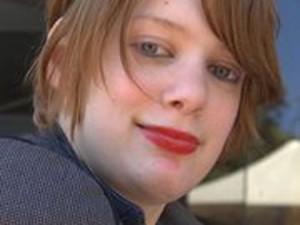
closeup photo of kelly vincent, who has bobbed red hair and bright lipstickSBS World News: Young candidate steps up to challenge [more information on the Dignity for Disability party here]

Young playwright Kelly Vincent has stepped up to be the main candidate for Dignity for Disability in the South Australian state election, after the death of the party’s founder. […]

“To step up to this new position is a great honour to me,” Ms Vincent says. “I’m running to improve the situation [for the] one in five disabled Australians.” Ms Vincent says the situation for disabled people is ‘dire’, and that she’s faced many challenges in her day-to-day life.

“I’m currently sitting in a wheelchair I’ve had for four months, but it took two years to get,” she says. “Prior to that I was using the same wheelchair from the age of ten to 21, so you can imagine the physical pain and discomfort that I was having because of that, and the loss of independence. So I learnt a lot in that experience, in battling for that chair.”

As well as issues with obtaining basic equipment, the candidate says disabled South Australians face issues with finding suitable housing and care, and find it difficult or prohibitively expensive to travel from place to place.

jeneli at almost normal: Yes I am

I’ve been thinking about disability a lot lately. Dancing around the word itself, never quite daring to apply the word to me. Never quite daring to dip more than a toe into the water, so to speak. I’ll use the word indirectly, by tagging a post with ‘hidden disabilities’ or by saying ‘I feel disabled by X, Y and sometimes Z’, but that’s about as far as I’ve gone–and even that fills me with doubt as to whether I have the right to use these terms.

The Vancouver Sun: Women under-represented in Paralympic sports

Nearly five times as many men are competing at the 2010 Games. It’s skewed by sledge hockey, which is a male-only event. But subtract the 118 hockey players from the 506 competitors and women are still outnumbered by more than three to one. […]

Even in Canada, women with disabilities are among the poorest in the country and even without needing customized and specialized equipment, sports are expensive.

But there’s also self-selection. Women generally don’t participate in sports in as large numbers as men. They also are less likely to engage in risky behaviours and, as a result, fewer disabled women acquire their injuries. Qualtrough says most women are either born with disabilities or have had cancers that required amputations. Plus, there’s the whole issue of children and families.

frolicnaked at RH Reality Check: How Endo-Aware Are You?

So yes, it’s still March, which means that it’s still Endometriosis Awareness Month. And talking with some of the members over at Live Journal’s endometriosis community brought to light how much the lack of information and lack of accurate information can make dealing with endo harder for some of us.

These misconceptions are harmful, since they can contribute to stigma associated with chronic pain and make it more difficult for people to seek out and receive proper treatment:

More from frolicnake: WHAT and Pains?

Herald Scotland: Millions in disability benefits go unclaimed by cancer sufferers

Cancer patients nearing the end of their lives are losing out financially with approximately £8 million in disability benefits going unclaimed in Scotland every year.

A report released today by leading charity Macmillan Cancer Support also shows that nearly a third of people diagnosed with terminal cancer are not claiming benefits because the system is confusing.

Top News: ‘We need a national advisor to PM on disability’

In order to ensure the rights of people with disabilities, there is a need for a national advisor on the subject to the prime minister, former chief justice of the Delhi High Court Ajit Prakash Shah said Thursday.

“There is a need for a national advisor on disability to the prime minister, as it will help in bridging the gap between policies and ground realities,” Shah said at the inauguration of a two-day meet on the disability sector in the capital.

Boston Herald: Dead man’s dad takes on wheelchair co. in $10M suit [warning: description of death may be upsetting]

The father of a South End quadriplegic who died in 2007 after his wheelchair malfunctioned during a repair session said yesterday a $10 million lawsuit against the company is about fair treatment for the disabled.

“It’s infuriating,” said Charlie Thompson, whose son Jeffrey, 29, died a day after his wheelchair malfunctioned while two technicians from Franklin, Tenn.-based National Seating & Mobility were doing routine repairs.

Rye & Battle Observer: Disabled boy forced to miss out on school

The parents of a 12-year-old boy with learning disabilities say they have been forced to educate their son at home because the education authority will not pay the £12-a-day taxi fare to get him to school. […] Lee used to get the bus from outside his house to the school gates but when the route was discontinued and replaced by a school loop bus, Lee twice became confused and ended up lost in the town centre.

Lee’s mum, Mrs Godden, said […] “The education department know that my own disability also prevents me from taking Lee to school myself so I am at my wits’ end about what to do.”

The Age: Legally blind social worker denied permanent visa

The Immigration Department has refused to grant a skilled worker’s visa to a highly qualified social worker from India because she is legally blind. Simran Kaur, 29, came to Melbourne in 2007 on a student visa with her husband, Jasmeet Singh. She had obtained a master’s degree in social work in India and completed a diploma in community welfare and development here last year. […]

The [Commonwealth medical] officer said she met the criteria for legal blindness and she would be eligible for the blind or disability pension ”in due course”. ”Such a person with this condition and severity, staying for the proposed duration of stay (permanent), would likely require the … blind or disability pension. This would result in significant cost to the Australian community,” the officer wrote.


Chicago Tribune: Artful disabilities act

“Chicago is so progressive,” says [Carrie] Sandahl, 41, an advocate for disability rights who has become a leading researcher on disability and the arts. She arrived last fall from Florida State University in Tallahassee to head a new program at the University of Illinois at Chicago called the Program on Disability Art, Culture, and Humanities. The curriculum is devoted to research of and the creation of disability art.

For your Tool-kit: Letter to my University Residence Coordinator

I’m on a variety of mailing lists dedicated to people with disabilities across Canada, and students are looking for university information. This can vary from what services are offered through Student Accessibility Services, how accessible a campus is, and what residence options they have available.

I only learned two days ago, by chance, that my university offers on-campus accommodations for (some) students with mobility-related disabilities. This information is not available on their website.

So, I drafted an email about it, and I thought it may be useful for others to adapt to their needs.

Dear [Residence Coordinator]

I was very surprised to hear that there are options for students with physical disabilities to live on campus at [Uni]. It was indicated to me that many of the residences at [Uni] have a room set aside on every floor that is larger than most, to accommodate mobility aids, and a private washroom with grip bars. I was very happy to learn of this, although it is not something I would now be able to take advantage of.

I’m writing because I think that this information, along with other information that would be relevant to students with disabilities coming to [Uni], should be available on the Residence website. A search through the Residence site does not bring up any references to students with disabilities or disability-related accommodations.

As well, [Person I spoke to] was unable to tell me about other accommodations that might be necessary for students with disabilities. For example, what policies are in place for students who work with service animals? Is there a way to adapt “general” rooms so that students who are Deaf can get visual alerts for alarms rather than relying on someone else to fetch them in case of an emergency? I understand from the website that [Uni] can accommodate vegan & vegetarian meal plans. I suspect that [Uni] can also accommodate food allergies or intolerances, but I feel this should be highlighted as part of the meal plan in a similar way to vegan* options.

As a student who is affected by disability, I am required to do a lot of advocating for myself and other people with disabilities. Frankly, one gets tired of having to navigate through levels of website to find out information, and I know I’m not the only student who has chosen to assume that, if information for students with disabilities isn’t available easily, then there probably isn’t any. I think making a section of the Residence website discussing explicitly what residences can accommodate students with disabilities, what is required to take advantage of these residences, what services [Uni] is able to provide to assist students with disabilities who wish to live in Residence, and a specific contact for students with disabilities to discuss any additional accommodations required would be very helpful. As well, contacting the Student Accessibility Services department and having them put a link to this information on their website would make it even easier for students with disabilities to know that [Uni] residence halls are happy to accept them.

Sincerely,

[Me!]

Feel free to use & adapt this letter for your needs.

Recommended Reading

Warning: Offsite links are not safe spaces. Articles and comments in the links may contain ableist, sexist, and other -ist language and ideas of varying intensity. Opinions expressed in the articles may not reflect the opinions held by the compiler of the post. I attempt to provide extra warnings for material like extreme violence/rape; however, your triggers/issues may vary, so please read with care.

Boston.com’s The Big Picture:

Laurie Stephens in Sitting Giant Slalom

Laurie Stephens of USA makes a run in the Women’s Sitting Giant Slalom during Day 5 of the 2010 Winter Paralympics on March 16, 2010.

Sydney Morning Herald: Sydney cabbie collared by disability boss

A Sydney cabbie is in the doghouse after refusing to allow a guide dog and its high-profile owner – Disability Discrimination Commissioner Graeme Innes – into his vehicle. James Young could not have picked a worse person to turn away than Mr Innes, who is a lawyer and human rights advocate.

He promptly reported the cabbie to the Department for Transport, which launched a prosecution. Today, Young was fined $750 and ordered to pay $2500 in costs at a Sydney court.

More at the SMH: Taxi driver fined for refusing to carry guide dog

When asked to provide his cab number, Mr Young gave five digits instead of four, which Mr Innes knew to be a false number, the court heard. Mr Innes then reported the cabbie to the Department of Transport, which launched the prosecution.

Mr Young denied the allegations, telling the court he had no problem with the animal and had been unable to move his cab as it was blocked by other taxis.

”I have got a lot of respect for people,” Mr Young said. ”I love handicapped people.”

Ms Huber found that Mr Young had discriminated against Mr Innes and disagreed with the suggestion made by Mr Young’s counsel, Craig Bolger, that no harm had been caused.

Haddayr’s Physical Disability Bingo:

We hear so many annoying and unpleasant things as physically disabled people. Wouldn’t it be nice if we could leap to our feet (or fall out of our chairs) and yell: ‘BINGO!’ This body of literature is so vast and rich, we decided to divide it into categories for easy reference:

Giovanna Chesler at Re:Cycling: Bravery and Intellect Over Easy: Scrambled

I’ll try not to sound too fan-girlish here as I write about the documentary Scrambled: A Journey through PCOS by Randi Cecchine, but admittedly, it is a difficult task. For in this film, which chronicles Cecchine’s struggle with Polycystic Ovarian Syndrome, we meet a filmmaker brave enough to show us, wart-hairs and all, the challenges inherent in this disease embodied. She does so with humor, with information, and with space for personal reflection.

A.K. Whitney at The Lilith Gaze: RA Diaries: Owww — please don’t touch me!

But it’s not just about pain. There is also stiffness and inflammation, and those aren’t always as manageable with drugs. They’re also a bellwether for possible pain to come.

Because of that, I’ve never been a very touchy-feely kind of person.

Kristen McHenry at The Good Typist: The Ultimate Weight Loss Solution [Poem about the experience of having an eating disorder]

For Cereal, Stars and Stripes? Mocking “Paranoia” is Headline-Worthy?

OK, so I saw this one in my paper edition because I get it the night before (and technically a day late, since I am in the future!), but you can find it online too.

In the 16 March edition of Stars and Stripes writer Jeff Schogol wrote an article containing letters from people who sent letters to the Defense Department website. He calls the letters he said the DoD provided to him “the more bizarre feedback it gets” and notes that “[t]he authors’ names were withheld, but all spelling, grammar and paranoia are authentic“. (emphasis mine)

The article, titled “Airborne bears to catch bin Laden and other letters to the Pentagon” seems little more than a great way to laugh at people for myriad reasons. Let’s poke fun at their lack of intelligence! See how they can’t construct proper sentences? Those silly people without proper educations and who aren’t newspaper columnists or Pentagon officials! Ha ha! That’s so funny!

There were several letters published by Jeff Schogol in his article that I don’t feel comfortable publishing here, because I don’t feel that it is proper to display these letters that were meant to be private correspondence and won’t further his ableism. I don’t want to further hurt a person who might already be pained by finding hir something they never meant to have public spattered all over the internet and a military wide newspaper. They were not meant for this type of dissemination, and I think it was vile of whichever Pentagon employee thought it was appropriate to release them to a newspaper. I also don’t feel that it is in good taste to print a letter in a newspaper with the intention of laughing at the “crazy” person, as it is clear here that is what is meant. We are supposed to have a good chuckle at the supposed ludicrous ideas that are put forth by the letter writers. Schogol obviously feels that it is OK to call people paranoid and make light of mental illness and disability. Har har.

I am going to invite you to write to Jeff Schogol at Stars and Stripes and let him know that you don’t think it was a great idea to run this article, or that it was in good taste to reprint these letters. Or if you feel inspired, maybe you would like to use the same venue as the original letter writers who thought that they were writing private correspondence to the DoD, and let them know just how unprofessional it was to release those emails to a newspaper for a chuckle.

Yeah, what *about* your free speech “rights”?

Here at FWD, it is not unusual for us to get quite a few comments in mod that question, take issue with, or outright berate our fairly rigorous comments policy and iterations thereof in varying degrees. Many of these comments are some variation of “But what about my right to express my opinion?” or “But…free speech!”

Unsurprisingly, many of the comments that try to take us to task for “prohibiting” free speech are from non-regular (and, in some cases, first-time) commenters. I try to give people — on the internet and off — the benefit of the doubt. Perhaps these folks who try to direct the conversation to their supposed right to say whatever they want “because of the First Amendment” are just unaware that many social justice-focused blogs — especially those written by people who are members of various marginalized and/or traditionally underrepresented groups — have commenting policies, usually for very specific reasons. Perhaps they think that the First Amendment entitles them to say whatever they want without also getting called on it. Perhaps they think that bigoted or hateful speech is okay, since it’s “just” on the internet and therefore cannot be taken seriously or do any “real” damage. Perhaps they think that someone needs to pay Devil’s advocate when talking to (or about) disabled feminists and other people who do not represent (or are not represented by) the majority, and they are reasonable/intellectual enough to do the job!

Here’s the thing: This website is not  run by U.S. government or employees of the U.S. government who are representing their place of work. This is a privately-owned website.  Its contributors, commenters and readers are not all from or living in the U.S. The First Amendment applies, by and large, to the United States government’s attempts to contain and/or regulate things that people say or opinions that they want to express in myriad formats. In other words, “freedom of expression” does not automatically mean that you can bust out with some bigoted crap, and then whine or call foul when the blogger or author chooses not to publish or engage with said bigoted crap, or when someone else (perhaps another commenter) calls you on this crap. Free speech is not equivalent to some sort of magical blogular free-for-all. The “free speech!!11” defense (if you want to call it that) also has the unintentional side effect of privileging US-centric notions of being able to say certain things, apparently without consequence — something that some other countries do not appear to take so lightly (see, for example, British libel laws).

From a more anecdata-ish perspective, I have noticed that many of the people, at least on the internet, who cry “free speech!!1” in defense of their supposed right to say “un-PC” things/play Devil’s advocate/et cetera are people with various kinds of privilege (white, heterosexual, abled, cis, class–to name just a few) who simply do not seem to want to give up — or, sadly even so much as critically examine — one or more of the types of unearned privilege that they have. Put simply, they just want to shut people (who oftentimes aren’t just like them for one reason or another) up using the trump card of free speech. It seems to me that the thought process might go a little something like this: Who cares if there’s a person (or people) on the other side of that computer screen? I have the right to steamroll over their lived experiences, or tell them how wrong they are ’cause “normal” people don’t feel this way, or tell them to suck it up/grow a thicker skin, or that they’re just making things up so they can be angry about stuff, or looking for stuff to get mad about, or seeing things that “aren’t there” (because if I can’t see it, it must not be there!) or use any number of derailing tactics that are not pertinent to the actual discussion at hand, or direct the discussion to my experiences and feelings as a privileged/non-marginalized person and thus re-center my own (and the majority’s) importance in a discussion that is not even about me, because it’s within my FREE SPEECH!!1 rights to do all of this and more!

Boy, that must be really fun, getting to justify making things all about you and your “rights” all of the time in spaces that are run by people who are — gasp! — different than you, and who may not have much of a safe ‘net space anyway, since the entire web is full of people who probably share at least some of your oh-so-contrarian outlook on things (not to mention some of your privilege[s]).

The free-speechers also tend to miss one important thing: If they want to spew uninformed, privilege-encrusted opinions using this excuse, and their comment gets published publicly, it is perfectly within reason for bloggers, writers and other commenters to use their free speech “rights” to respond right back.

Recommended Reading

Warning: Offsite links are not safe spaces. Articles and comments in the links may contain ableist, sexist, and other -ist language and ideas of varying intensity. Opinions expressed in the articles may not reflect the opinions held by the compiler of the post. I attempt to provide extra warnings for material like extreme violence/rape; however, your triggers/issues may vary, so please read with care.

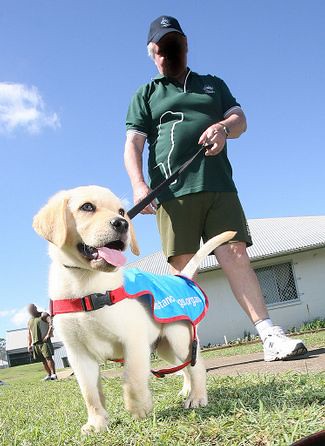
Man in a cap with yellow lab guide puppy Logan in working vest in a prison yardThe Ipswich Advertiser: Prison pups deliver new purpose

WHEN Kris was sentenced to life in prison, he didn’t expect to spend the long nights cuddled up to a 10-week-old labrador pup named Oxley. Oxley joined three other pups to enter Ipswich’s Borallon Correctional Centre last week, where eight maximum security prisoners will be responsible for full-time care of the assistance dogs-in-training.

This is the first time the program will run in an Australian maximum security prison. The offenders will teach them basic obedience commands to prepare them for helping people with a disability. These tasks include opening doors, fetching phones and mail, picking up dropped items and paying cashiers at shops.

The Age: Code opens doors to disabled

The Rudd government will today announce minimum access requirements for public buildings built or renovated from May 1 next year.

For the first time, uniform building rules will be mandated across Australia to end the isolation felt by as many as 4 million people who cannot use many public facilities. These go beyond buildings – to swimming pools and cinemas.

CBS: “Fight Club” for Mentally Disabled Brings Conviction; Guadalupe Delarosa Caught on Tape, Prison Next [WARNING]

An employee of a Texas home for the disabled who staged fights between the residents for “entertainment” is going to prison.

Coshocton Tribune: Independence important to residents with disabilities

Coshocton residents such as Connors and Wagner, who in the past would have been relegated to care facilities or be cared for by family members, have the option to become independent. Medicare has a waiver program that addresses different levels of care for these clients by providing them with help on meeting independent goals but at the same time offering a support system to provide for individual care.[…]

Living outside intermediate and long-term health care facilities gives developmentally disabled individuals the opportunity to choose what church they’ll attend, where they’ll go to work and who will take care of them if they need assistance.

“It’s exciting being out on my own and I’ve enjoyed the past eight months,” Connors said. “The best part is the privacy.”

Daily Sun: Persons with disability want constitution amended

A group, Joint National Association of Persons With Disabilities (JONAPWD) has called on the two chambers of the National Assembly to amend section 42 of 1999 Constitutions as well as section 57, 52 of Electoral Act of 2006.

National President of the group, Barrister Danlami Bashiru, made this call at a recent event in Lagos to commemorate the 2010 International Women’s Day with the theme; “Equal rights for Disabled Women in this Democratic Dispensation.” […]

Barrister Bashiru noted that women in this group suffers triple jeopardy, first as a woman, secondly as woman with disabilities and thirdly, they suffer discrimination from fellow women in the society.
He, however, revealed that JONAPWD has inaugurated the women’s wing of the body in Lagos for disabled women to have a strong voice, speak for themselves, demand for their rights and to provide lasting solution to challenges they faced.

The Telegraph: Self defence for the elderly – using an NHS walking stick

Kevin Garwood, 61, a triple black belt, has developed special ”cane work” courses for people over 50. The course is based on martial arts from around the world that use the sabre, bayonet and staff, which have been adapted specifically for stick users with limited mobility.

Typical moves include throws, takedowns and ‘neck hooks’ which use the crook of the stick for locks and strangleholds as well as gentle exercises using the 3ft long canes.

Creating Accessible Campuses

My Student Union is doing work right now around issues of student residences. This is something that’s very much on my mind right now in light of the recent highlighting of difficulties of having a service animal when living on campus. In reading the Yummy Puppy Adventures – or, more accurately, the Mount Holyoke College Accessibility Fail – I started to really think about what an accessible residence experience would look like for students with disabilities.

So of course I brought it up to one of my student union executives, and instead of, say, asking students with disabilities for feedback on the issue, or contacting student accessibility services, he suggested I send him an email detailing out my concerns.

(In his defense, it is a month until school is over, and he is busy, and he doesn’t even know what to ask. I’m not irritated with him, just with the situation in general.)

So, this is the short list of things that I’ve come up with, but I know from previous discussions with the community that I will miss important things that should be considered.

In no order:

  • Clearly post that service animals are allowed around campus and in campus dorms and facilities.
  • List on both your residence page and your student accessibility services page that there are residences for students with disabilities.
  • Private washrooms with grip bars for toilet & shower/bath.
  • Wider doors & hallways.
  • Barrier free access to all dorm rooms.
  • Residence Orientation that mentions accessibility features to all students, including re-iterating scent free policies and that service animals are allowed on campus.
  • The ability to change any room over to have lights that flash for alerts.
  • A map of campus that indicates all barrier-free access points to all buildings.
  • Highlighting menu plans that accommodate food allergies or intolerances.

I’m certain I’m missing obvious things.

Please, give me your thoughts?