Warning: Offsite links are not safe spaces. Articles and comments in the links may contain ableist, sexist, and other -ist language and ideas of varying intensity. Opinions expressed in the articles may not reflect the opinions held by the compiler of the post. I attempt to provide extra warnings for material like extreme violence/rape; however, your triggers/issues may vary, so please read with care.
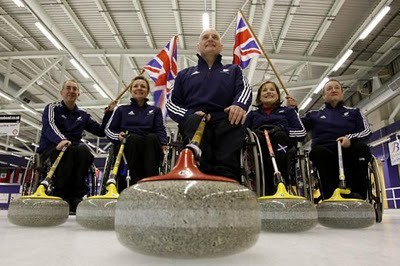
British wheelchair curling team
Wheelchair Curling Blog: GB’s McCreadie “quietly confident of gold”
Bob Cowan reports Michael [McCreadie, British team captain] saying: “If we play at our best we will be a real handful for any country in the world …. The GB Paralympic teams work just as hard all year round and prepare for our winter games just as much as the competitors who are presently out in Vancouver for the Winter Olympics.”
Check out the rest of the Wheelchair Curling Blog, this Youtube video of wheelchair curling, and this Disaboom writeup which explains the game: Wheelchair Curling: Meet Paralympian Patrick McDonald .
kestrell at Reading in the Dark: Does anyone else experience a sense of horrified fascination whenever they read the word “blind” in a book title? [comments are actually recommended on this one]
What stereotypes do my fellow blind readers feel need to be included in the blind bingo card? Definitely the psychic blind person, although if you can make that an African-American blind person you get double points. And the pathetically helpless blind person, double points for combining it with other negative images of ageism. And the emotionally-isolated blind person, or the blind person who has nothing to do all day because s/he can’t reaqd or pursue any intellectual hobbies.
Washington Post: House approves bill to limit physical restraint of students [WARNING]
The House approved a bill Wednesday to limit the physical restraint and seclusion of students in schools, a response to an investigation last year that found numerous reports of students abused or killed through such disciplinary measures.
The bill, approved 262 to 153 with support from Democrats and two dozen Republicans, would establish safety standards in schools and prohibit physical restraint and seclusion of students except to stop imminent danger of injury.
Honolulu Advertiser: Hawaii’s special treatment courts threatened by fiscal crisis
As a result of budget cuts, the 11 treatment courts, including those for adults with mental health issues and families with substance abuse problems, are handling fewer cases, providing less treatment and delaying more services, Judiciary officials say. At least one court is at risk of running out of treatment money by the end of the fiscal year, five have wait lists for accepting new clients, and O’ahu’s Adult Drug Court has reduced its treatment capacity by nearly 20 percent.
BBC: More help for adults with autism
Plans have been published by ministers in England to tackle the “social exclusion” of adults with autism. Campaigners have long accused the state of ignoring adults with the condition – just 15% are in employment and half live at home.
Burnham & Highbridge Weekly News: Burnham teen fights vile online disability abuse
A determined Burnham girl is fighting back against the cyber bullies who posted vile taunts on a web page she created to raise awareness of disabilities.
A Facebook group set up by schoolgirl Lydia Williams, who has a young sister with Down Syndrome, was hijacked by anonymous bloggers who uploaded cruel photos poking fun at disability, and left sick jibes on the comments section.