Monthly Archives: January 2010

Recommended Reading for January 22nd

Warning: Offsite links are not safe spaces. Articles and comments in the links may contain ableist, sexist, and other -ist language of varying intensity. Opinions expressed in the articles may not reflect the opinions held by the compiler of the post. I attempt to provide extra warnings for certain material present in articles, but your triggers/issues may vary.

eruthros: air security and the normal body

This isn’t the first time this has happened; it happens every time there’s a security scare, and suddenly people are being told by airport security that they can’t take their meds on the plane, that they can’t take the things that make flying bearable, that they can’t have a pillow or a blanket.

And it makes me so angry, because it’s completely obvious that there are millions of people who can’t do the things air security tells us to do, and who are willing to tell TSA so at length. But they’re ignored, they’re transformed into suspicious bodies because air security defines “normal” bodies.

Laura Hershey: More about Haiti and Disability…

Americans should continue giving generously, and always respectfully. Let’s not leverage our largess to lecture Haitians on the proper attitude toward disability. Let’s ensure that our aid programs don’t discriminate, or deny access, thus aggravating disabled people’s isolation.

Chronicle Online: LCT cuts strand disabled riders

Carol Dennison and Adrian Linden have been completely dependent on Lorain County Transit to get to work and other places they need to go. Starting this week, the two women, each of whom contends with a disability, have to find alternate means of transportation in the wake of severe cuts in Para-Transit service. […]

For Linden, the news is especially bitter, as she has served as facilitator for a number of Lorain County Multiple Sclerosis Support Groups in Lorain, Amherst, Sheffield and Wellington for the past several years. “I used to get to those meetings on the bus, and now I’m not going to be able to handle them anymore,” she said. “Someone else will have to take over.” […] She was looking forward to starting up an MS support chapter in Elyria “but that’s out now.” […]

Dennison learned Monday her LCT service was ending because her destination — Crestwood Elementary School — was well outside the three-quarter-mile limit. “They must have known about these cuts for a while,” Dennison said. “They didn’t get informed on a holiday with less than 24 hours notice for people who have to get to a job in the morning. I have no idea what I’m going to do tomorrow,” Dennison said Monday. […] “The bus is my only means to get to work,” she said.

Bloomberg.com: Haiti’s ’Shunned’ Disabled Kids Cope With Loss of Their School [about how the only school for children with disabilities in Haiti has been destroyed]

Church officials are trying to move the pupils to Montrois, a city north of Port-au-Prince, to house them temporarily in a former Episcopal seminary, Sadoni said. The Rev. Lauren Stanley, Episcopal missionary to Haiti, said by telephone today that Duracin confirmed the information provided by Sadoni. “The urgent now is to feed them,” Sadoni wrote. “And we don’t have any materials (cloths, toothbrushes and toothpaste, soap).”

Even then, the struggle is far from over, Nelson said. “Most of the kids there are in wheelchairs, blind or deaf, and much of the staff is handicapped, too,” she said in a telephone interview last week. “But it’s not just the physical problems. Handicapped children are also shunned by society there. It is really very scary.”

Washington Post: Up to 10 percent of Iraqis disabled by war, sanctions

Iraq’s health ministry said it has no specific figures but it estimates the number of physically and mentally disabled people at between 2 million and 3 million.

U.S.-based Mercy Corps considers 2 million conservative. It said a 1977 census put the disabled population at that time at 9 percent of Iraq’s 12 million people, or about 1 million. The government now estimates the population at 30 million. […]

Only a quarter of amputees who need artificial limbs get them because the raw materials are not available, it said.

Media dis & dat: Report on Latinos with disabilities now available for free download

Three years ago, Proyecto Visión released a report that examined the low employment status of disabled Latinos and recommended ways to improve their job and other opportunities. Latinos with Disabilities in the United States: Understanding & Addressing Barriers to Employment presents a snapshot of this growing population, outlining factors affecting the extent of participation, and degree of success, of disabled Latinos in the service delivery system; highlighting innovative research and employment projects that are working to reduce barriers; and presenting profiles of individuals and families who have attained success and others who have fallen between the cracks.
Question Time: Three Words

Question Time is a series in which we open up the floor to you, commenters. We invite you to share as you feel comfortable.

What are three words (or phrases) you would use to describe your experience of disability? It can be with regard to what goes on inside you, or responding to other people’s reactions, or whatever you like. (You can explain what each of the three things refers to if you want!)

Disability in Rwanda

Nobody knows how many people with disabilities there are in the world. In doing some basic research, I saw estimates ranging from 300 to 600 million. This is partly a definitional issue – it’s hard to get people to agree what “disabled” means – but mostly is because nobody has ever tried to figure it out. What is clear is that most people with disabilities live in poverty. According to the UN, two-thirds of people with moderate to severe disabilities live below the poverty line. Only two percent of people with disabilities in developing countries have access to basic services.

Take, for example, Rwanda, where poverty is both a cause and an effect of disability. It’s a gorgeous country and home to the rare mountain gorillas. It also had a massive genocide in 1994 during which an estimated 800,000 people were killed – an eighth of the population. Currently, organizations estimate that about 300,000 of the 10 million residents have disabilities. Nearly ten percent of the disabled population has had one or more limbs removed – either hacked off by machete or destroyed by mines, bombs, and bullets during the genocide. The genocide also caused resources like food to be diverted and scarce, resulting in malnutrition, which in turn has caused disability. Despite all that, the genocide is not the major cause of disability in the country – poverty, disease, accidents, lack of medical care and congenital causes are more common.

It’s also one of the poorest countries in Africa. “In 2006, 56.9% of the total population were living below the poverty line and 37.9% were extremely poor. In rural areas about 64.7% of the population were living in poverty… 28% of the rural population was food-insecure and 24% was highly vulnerable to food insecurity.” Poverty is more likely in households headed by females (which are more common after many men were killed during the genocide) and especially in households headed by individuals with HIV/AIDS.

Unfortunately, attitudes towards people with disabilities in Rwanda are not positive. From a report on disability policy in Rwanda:

‘Social exclusion’ is not a concept that is widely used in Rwanda, but disabled people are both actively and passively excluded in Rwandan society. Rwandans do not value disabled people. Disabled people are seen as objects of charity. They are underestimated and overprotected, and their potential and abilities are not recognised. Disabled children are seen as a source of shame and often hidden away. Name-calling is common. Disabled women find it difficult to get married. Disabled people suffer discrimination in employment.
Disabled family members are sometimes passed over in matters of inheritance. Land and assets are given to others who are deemed to be able to make better use of them, thus leaving the disabled person dependant on family to support them and removing the opportunity for them to lead independent lives. Negative attitudes are particularly strong towards those with severe disabilities, people with intellectual and learning disabilities, blind and deaf people.

Another organization reports that “disabled people are commonly addressed by their disability rather than their real name.”

Rwanda is making significant economic progress since the genocide, with yearly economic growth twice as high as what’s usually expected for a developing nation. It is described by Fortune Magazine as “a business-friendly nation that wants to become a model of private sector development in Africa.” The United Nations awarded Kigali, the capitol city, “the Habitat Scroll of Honour Award for many innovations in building a model, modern city symbolized by zero tolerance for plastics, improved garbage collection and a substantial reduction in crime.”

But it’s unlikely that this economic development will benefit Rwandans with disabilities. The country’s first Economic Development and Poverty Reduction Strategy Plan “had no specific reference to disability or how to include people with disabilities in the process.” While there has been significant foreign investment in the country, that impacts only the urban corporate portion of Rwanda. When nine of every ten adults are subsistence farmers in rural areas, those incoming dollars are extremely unlikely to reach the hands of most of the country’s inhabitants. The countryside isn’t appealing to private investment, especially when there’s no health stability. Any job development programs in rural areas are run by NGOs operating on donations and the products they create ($85 silk-mohair knitted scarves for Whitney Port from MTV!) are marketed based on pity for Rwandans. Those are not sustainable jobs or industries and will not create long term employment for those in rural areas. The most viable avenue for rural economic development has been through microloans through organizations such as Kiva.

Even these limited opportunities for work are unlikely to be available to people with disabilities. PWDs are unlikely to be awarded microloans to run their own businesses and are rarely employed by the NGO projects. As one research report observed:

Disabled people are generally excluded from development activities. They are often extremely poor and are continually in ‘survival mode’, so they literally cannot contribute to development activities, either materially or in terms of their time. They are largely excluded from micro-credit programmes because they lack assets as collateral and are seen as a bad risk. Disabled informants for this study said that they were often not told about development activities in their communities in the first place and when they tried to get involved, they were deliberately excluded.

It’s clear that colonization and ongoing meddling from the Western world has done nothing but contribute to and exacerbate problems like the genocide, so the solution isn’t to charge in there and tell Rwanda what policies it should have and how to run things. They were colonized by Belgium until 1960, for goodness sake. So I can’t say I know what the solution is, and the only advocacy action I can think to take is to encourage/pressure NGOs to be inclusive of PWDs when designing and implementing development projects. There’s a number of disability organizations in Rwanda and I think we’ll have to rely on them to do this work. Some lists of the organizations can be found in this report and in a project report from Handicap International.

Recommended Reading for January 21st

Warning: Offsite links are not safe spaces. Articles and comments in the links may contain ableist, sexist, and other -ist language of varying intensity. Opinions expressed in the articles may not reflect the opinions held by the compiler of the post. I attempt to provide extra warnings for certain material present in articles, but your triggers/issues may vary.

The Baltimore Sun: Young, gifted and disabled
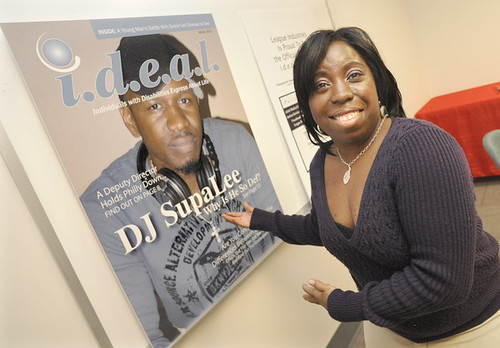
Zarifa Roberson in front of a poster-size front cover of i.d.e.a.l. magazine. DJ SupaLee is on the cover.

This was the summer of 2003, and she had recently graduated from college, was studying for the LSAT and browsing the store’s magazine selections. There were magazines for bikers and hikers, runners, travelers, eaters, golfers — just about every category of person one could think of, except disabled people, a group to which Roberson has belonged since she was born with a rare condition that contracts joints throughout the body, dislocates hips, locks the jaw. […]

She took it on. She saw the need for a magazine and decided she’d produce one. She called it “i.d.e.a.l.,” an acronym for “Individuals with Disabilities Express About Life,” and put the emphasis on young disabled people.[…]

Along with reported stories, Roberson contributed a first-person piece about how her disability and her bisexuality complicate her personal life. It’s the sort of frank treatment of the lives of disabled people that she feels has been missing from available publications, and was missing even from the first two issues of “i.d.e.a.l.”

“I’m my own worst critic,” she said. “I don’t think it was as relatable to me” in her life as a disabled person. Her hope is that disabled people reading the new magazine will find their lives reflected in it, “so people will disabilities can say ‘Oh my God, I’m not the only one going through this.’ “

Su Sayer at The Guardian: Politicians must recognise that people with learning disabilities have a right to vote too

Yet when it comes to democratic rights, the overwhelming majority of adults with learning disabilities still find themselves largely excluded by the complexity of the system and low awareness of their right to vote. Our research found that while 80% of people supported by United Response in England were registered to vote in the 2005 election, only 16% used their vote. This compares with a turnout of 61% in the general population.

As regular users of social services, public transport, health services and much more, people with learning disabilities are affected by political decisions in the same way as everyone else. The majority of adults with learning disabilities do have the capacity, as well as the legal right, to vote, and would like to do so if given the opportunity.

Ethan Ellis at NJ Voices Public Blog: Disability: the hidden horror of Haiti

Those of us with disabilities who know the island also know that after the last body is buried, the last hospital is rebuilt and the country begins to come alive again as its rescuers move on to the next disaster and the eyes of the watching world move with them, that people like us, now multiplied by the earthquake’s crush will be buried under the crushing weight of the country’s other unmet priories.

CNW Group: Women with heart disease are more likely to be poor than men

“Cardiovascular disease is the major cause of death and a leading cause of disability among Canadian women,” said Dr. Arlene Bierman, a physician at St. Michael’s Hospital and principal investigator of the study. “In fact, eight times as many Canadian women die from heart disease and stroke every year as from breast cancer. If we’re going to change this we need prevention programs that reach out to low income women and that focus on the effects of poverty and the factors that lead to poverty among women.”

The Telegraph (UK): Hi-tech prosthetics are getting our injured back on their feet

Historically, war has provided a great spur to technological development in prosthetics. Before the First World War, amputations were comparatively rare in Britain and most artificial limbs were primitive objects made by saddlers. […] The sudden influx of 41,300 young military amputees, many hoping to return to some sort of employment after the war, generated a new prosthetics industry and encouraged co-operation between limb-fitters and surgeons for the first time.

[Jerome Church said]: “But the warfare of the past eight years in Iraq and Afghanistan has produced a paradigm shift in the way we consider prosthetic possibilities.”

[Ian Jones, prosthetics manager said] “With a BK [below knee] injury there is no reason why a soldier should not return to front-line infantry. Some will be as fit as anyone else.

The Michigan Daily: Silently Disabled: The everyday struggles of those with invisible disabilities

It wasn’t until a week before the end of the academic year that [Leslie Rott] was diagnosed with rheumatoid arthritis and lupus — a chronic inflammatory disease that attacks the body’s tissues and organs. Rott said she was unsure of what accommodations she would be entitled to going into her second year. Unlike those who have lived most of their lives with disabilities, she had no previous experience as a disabled individual and didn’t even know how to go about asking for accommodations. […]

Felder, who is fairly upfront about her Crohn’s disease, says that despite her attempts to inform her classmates about her disability, she has received less-then-ideal reactions as sometimes, students “literally scoot their chairs away” when she talks about the disease in class.

There is also, at times, the issue of other students thinking accommodations means disabled students are getting “special treatment.” For example, LSA sophomore Sarah Rabinowe, who was diagnosed with two learning disabilities in the beginning of elementary school, said her classmates often judge her for getting accommodations because they don’t understand how difficult it is to live with her disability.

“I’ve had a little bit here of ‘she gets special treatment, she gets this,’ the sort of jealousy, almost, because they don’t understand how hard it is to live with this,” Rabinowe said.[…]

Though some members of the disabled community would like the University to take a larger role in advocating for and raising awareness of disabilities on campus, SSWD “acts under a philosophy of self-advocacy,” Segal said. “In other words, part of what we’re trying to do is turn people into young, responsible, independent adults, and part of the way of doing that is making people advocate for themselves,” Segal said.

Part of this notion of self-advocacy includes changing the campus’s perception of the disabled community without the University’s help. For example, if individuals want peer mentors or support groups, it’s their responsibility to make that happen. Likewise, if individuals sense a stigma associated with disabilities on campus, the disabled community must find a voice within itself to raise awareness of disability issues rather than rely on the University to make this change for them.

Call for Submissions is out for Disability Blog Carnival #63: Relationships

The call for submissions is out for the 63rd disability blog carnival, which will be held at the Dreamwidth disability community. PWD and allies are welcome to submit.

The theme is “relationships”. Avendya explains:

This does not necessarily mean romantic relationships – how has your disability affected your relationship with your family? How do you manage balancing friendships with a limited number of spoons? How well do your coworkers deal with your disability? Basically, how does your disability impact (or not impact) your relationships with the people around you?

Submissions are due by February 20th – just leave a comment in this post to submit your article. Older essays are welcomed so long as they haven’t previous been in a Disability Blog Carnival.

Spread the word!

Seven reactions to reviews of Rachel Axler’s “Smudge”

On-stage scene from the play. A man and woman stand looking into a pram, the woman with a many-limbed plush toy. The pram has a wild series of tubes and wires snaking out of it.

I’ve been shaking my head over the press for Rachel Axler’s new hipster-ableist play, Smudge. Here’s a lightning tour, with my response

s at the end. Emphases are mine.

In ‘Smudge,’ Baby’s disabled, and mom’s not much better, from Newsday:

Most couples look at the sonogram of their impending baby to see whether it’s a boy or a girl. But when Colby and her husband, Nick, scrutinize the picture of the life in her womb for an answer to the “what is it?” question, they are appalled to realize that they mean it. Literally.

Rachel Axler’s “Smudge,” the very dark 90-minute comedy at the Women’s Project, aims to be part horror movie, part domestic relationship drama. Their baby, a girl, arrives unbearably deformed, with no limbs and one big eye. Nick (Greg Keller) bonds with the unseen character in the pram encircled with tubes, and names her Cassandra. Colby (Cassie Beck, in another of her achingly honest performances) attempts to protect herself from the agony through brutal humor, maniacally snipping the arms off baby clothes and taunting the “smudge” until “it” miraculously responds. Or does it? […]

BOTTOM LINE The unthinkable, faced with wit but not enough depth

More, from Variety:

Title comes from the first word that comes to mind when Colby (Cassie Beck) gets a glimpse of her infant daughter, grotesquely described as having no arms or legs, an undeveloped skeletal structure and only one (beautiful, luminous blue-green) eye in her misshapen head.

More, from Time Out New York:

She is nearly indescribably deformed: a purple-grey mass of flesh and hair, with a single, disconcertingly beautiful Caribbean Sea–colored eye. Her horrified mother, Colby (Beck), describes the child as looking “Sort of like a jellyfish. Sort of like something that’s been erased.”

More, from SF Examiner:

Continue reading Seven reactions to reviews of Rachel Axler’s “Smudge”

Recommended Reading for January 20th

Warning: Offsite links are not safe spaces. Articles and comments in the links may contain ableist, sexist, and other -ist language of varying intensity. Opinions expressed in the articles may not reflect the opinions held by the compiler of the post. I attempt to provide extra warnings for certain material present in articles, but your triggers/issues may vary.

A brief obituary at Life as a Hospice Patient, the blog of Judi Chamberlin, psychiatric survivor and rights activist. The comments include tributes from friends, readers, and fellow activists. [via Disability Studies, Temple U]

With deep sadness we want to let you know that Judi died late last night [Saturday]. […]

If you want to mark Judi’s memory in some tangible way, it was her wish that contributions be made to either:

* The National Coalition of Mental Health Consumer/Survivor Organizations
Checks can be made out to: NEC [National Empowerment Center]. Note on the check that it is “for NCMHCSO in honor of Judi Chamberlin. Checks can be mailed to: National Empowerment Center, 599 Canal Street, Lawrence, MA 01840
or
* Visiting Nurse and Community Health
[Checks can be made out to VNCH. Note on the check that it is for “Hospice in honor of Judi Chamberlin”] and can be mailed to:
Visiting Nurse and Community Health, Donations, 37 Broadway, 2nd Floor, Arlington, MA 02474
Or on line.

More about Judi Chamberlin at NPR: Advocate For People With Mental Illnesses Dies

Judi Chamberlin, who died this weekend at age 65, was a civil rights hero from a civil rights movement you may have never heard of. […] Chamberlin’s book [On Our Own] became a manifesto for other patients. But it influenced lots of people in the mental health establishment, too. Today, notes Oaks, it’s common for people with mental illness to have a say. “Most U.S. states now have an office of mental health consumer affairs or something to hear the voice of mental health clients,” says Oaks. “And it certainly is people like Judi that did that.”

Smart Bitches Trashy Books: GS vs. STA: Handicapped Heroines

Good Shit vs. Shit to Avoid is a recommendation thread devoted to books in a specific genre that feature a type of heroine, hero, plot, or locale that is often difficult to find, particularly when that feature is done right. Today, Heather, the awesome, from The Galaxy Express, is looking for handicapped heroines:

“When you have a chance, I’m hoping you can assist me with information about a particular type of romance heroine. I’m thinking my question might be eligible for your HaBO feature. A friend of mine and I were discussing how we’d like to read romances involving a handicapped heroine—one where the heroine gets the hero without any serious cop-outs.”

Delirious Hem: A Preview: This is What a Feminist [Poet] Looks Like Forum #2: This is not my beautiful house; this is not my beautiful wife. by Jennifer Bartlett

Sometimes, I feel like the community has forgotten us! Despite wonderful strides toward inclusion in many areas of feminism, disability is often the overlooked element. The issues of women with disabilities are among the most extreme cases of female abuse in the United States. So, it is shocking to that the pages of MS. Magazine are not full of issues such as forced sterilization or the fact that some women with disabilities have their children forcefully taken away at birth. Many people do still do not know about abusive institutions, such as Willowbrook, which were the norm as late as the 1980’s. The unemployment rate for women with disabilities remains at a steady 70% or more. […]

On a more mundane note, women with disabilities are consistently absent from women-only poetry conferences, journals, and anthologies that champion diversity. When popular feminist journals do write about people with disabilities, they often use outdated, offensive language; confined to a wheelchair, wheelchair bound, and, my personal favorite, ‘the disabled.’

BarbManning.net: Nevermind Healthcare – Should Visitability be a Federal Law?

What is Visitability?

“It defies logic to build new homes that block people out when it’s so easy and cheap to build new homes that let people in.” — Rep. Jan Schakowsky (D. -IL)

The Americans with Disabilities Act requires access for people with disabilities for all new multi-family dwellings and a small percentage (5%) of single-family homes constructed using public funds. This law obviously does not address the vast majority of single-family housing in the United States. Visitability seeks to make new housing accessible by having it meet three basic conditions: one zero-step entrance with a wheelchair approachable route, hallways and doorways wide enough for safe navigation by wheelchairs, and one wheelchair-accessible bathroom on the main floor. […]

In March 2009, Representative Jan Schakowsky re-introduced the Inclusive Home Design Act (HR 1408) to Congress. For new homes built with federal assistance, this bill supplements the existing 5% requirement of fully accessible units by mandating visitability in all of the other units. If this bill becomes law, it will make subtle, but substantial changes in how America constructs new homes.

L.A. Times: Families of autistic kids sue over therapy’s elimination

Families of autistic children in eastern Los Angeles County filed a class-action lawsuit today against the nonprofit agency that provides them with state-funded services, alleging that it had illegally discontinued their therapy for the disorder.

The agency, the Eastern Los Angeles County Regional Center, informed more than 100 families late last summer that the therapy — known as the DIR model, or “developmental, individual difference, relationship-based” — was being eliminated for their children because of state budget cuts.

Signal Boost: Leonard Cheshire Disability

Leonard Cheshire Disability : Campaigns Newsletter : Calling allbudding artists, designers and photographers

Calling all budding artists, designers and photographers

Dear Campaigners,

To help launch our Action for Access campaign we are calling on all budding artists, designers and photographers! We want to find new images to help us illustrate the access issues facing disabled people.

The winning entry will win £50 of Amazon vouchers and the design will feature on the Action for Access campaign toolkits. Click here to find out how to enter.

We know from speaking to you that access is an issue that affects everyone. Each day disabled people face barriers to doing everyday activities, like getting to work, shopping, meeting up with friends and family, going out to the cinema or the pub. Action for Access will help to change this through your actions. For more information on how to get involved and start filling out surveys visit [this website].

We would also like to say a massive thank you for all your support in 2009. Your responses to our New Year, New Campaigns survey were essential in ensuring that we are campaigning on the issues that matter to you. Look out for further news on how we will be incorporating your ideas into our future campaigns.

Best wishes, Amy

Campaigns Supporter Engagement Officer

p.s. The Action for Access website will be developing over the next few months so please let us know how you find the site and if there is any other information you would like to see added.

Contact the Policy & Campaigns Team on 020 3242 0373 or email campaigning@LCDisability.org <mailto:campaigning@LCDisability.org>

Signal Boost: Feminism and Mental Health (Call for Submissions)

Feminism and Mental Health (Call for Submissions)

Call for Submissions:

The lived experience(s) of mental health in feminist communities

Call for submissions from people of any gender who identify with feminism and have lived experiences of a psychiatric diagnosis.

Our upcoming anthology, Feminist’s Navigate Mental Health (working title), will explore the complexities of navigating mental health and how a feminist identity may (or may not) shape those experiences, thoughts and feelings. Submissions are welcomed in the form of personal short stories.

The submissions received will shape the outcome of the book. The final manuscript will be submitted to relevant independent publishers.

Possible themes may include (but are not limited to):
o Coping – what works and what doesn’t
o Any positive aspects of your mental health that are commonly considered deficits
o Treatment preferences and past experiences
o Medication
o Personal/lived understandings of your diagnosis (acceptance or rejection)
o Stigma/tension around mental health issues in the feminist community
o Feminism and well-being/strength/empowerment
o Feminism and distress

Guidelines:
o Remember to take care of yourself while writing about topics that may be distressing;
o Good writing skills are great, but not mandatory! We will work with you to edit your piece;
o Submissions should be saved in .doc or .rtf, size 12 font, Arial or Times New Roman, and double spaced;
o 500 to 4000 words
o Include contact information and a brief biography;
o Only email submissions will be accepted;
o Submission deadline is June 1st, 2010.

Who we are
The women behind this project are Jenna MacKay and Alicia Merchant. Jenna is a psychiatric survivor and community activist who is particularly interested in violence and mental health. Alicia is a freelance writer and contributing editor for various magazines and has been published in CR Magazine, thirdspace and the Globe & Mail. Both self-identify as feminist, are interested in critical perspectives of health and live in Toronto. This project is not
affiliated with any institution or organization.

Comments, concerns, questions and submissions should be directed to:

fnmhsubmissions@gmail.com

Recommended Reading for January 18th

Warning: Offsite links are not safe spaces. Articles and comments in the links may contain ableist, sexist, and other -ist language of varying intensity. Opinions expressed in the articles may not reflect the opinions held by the compiler of the post. I attempt to provide extra warnings for certain material present in articles, but your triggers/issues may vary.

sqbr at poking at thorns (with gloves on): The Na’vi attitude to disability in Avatar

But watching the movie I started wondering about whether or not the Na’vi were actually any better about disability than the military. Sure, Jake is treated a lot better by them, but his avatar is able-bodied. How would they have treated him if he was paraplegic in his Na’vi form too?

Washington Post: Justice suit accuses Johnson & Johnson of paying kickbacks

Medical giant Johnson & Johnson paid tens of millions of dollars in kickbacks to boost sales of its drugs in nursing homes, including an antipsychotic that can be used as a chemical restraint, the Justice Department alleged in a lawsuit Friday.

The payments, sometimes disguised as grants or educational funding, were funneled to Omnicare, a pharmacy company that dispenses drugs in nursing homes and used its influence with doctors to get prescriptions switched, the government said. Johnson & Johnson came to regard Omnicare pharmacists as an extension of its sales force, the government said, citing a company document.

ABC News (USA): Health Overhaul Leaves Gap for Disabled Workers

Disabled by chronic back pain and unable to afford medical insurance, Lea Walker hoped President Barack Obama’s health care overhaul would close a coverage gap that has trapped her and millions of other workers.

It won’t. […]

At any given time, an estimated 1.8 million disabled workers languish in the Medicare coverage gap, a cost saver instituted nearly 40 years ago. Many, like Walker, are uninsured. Lawmakers had hoped to eliminate the gap as part of health care overhaul, but concluded it would be too expensive.

Nilesh Singit at Disability News Worldwide: My ‘Raid de Himalaya’ experience: Deepa Malik

This inspired me, and I set out on a mission called ‘ability beyond disability’ in my own little way. I had no clue what I had to do. But I felt that I had to contribute in some way or the other. Promoting outdoor sports I felt was the best possible way. And then to my horror, I found out, that I was the first paraplegic woman to join the world of sports in the Indian scenario! […]

More than the trophy, what made me happy was the declaration by H.M.A. official, Manjeev Bhalla that henceforth disabled persons will also be eligible to compete in the rally. I was thrilled that my efforts opened doors for people with disabilities to the world of motor sports.

Los Angeles Times: New suicide at California mental hospital is eighth since federal investigation began

A 50-year-old patient at the state mental hospital in San Bernardino has died after hanging himself in his bedroom, officials say, bringing the number of suicides at Patton State Hospital to eight since the U.S. Department of Justice began investigating violations of patients’ civil rights at California’s mental hospitals in 2002.

New York Times: A Woman’s Desire to Work Is Thwarted by a Body That Strains to Keep Up

Ms. Gbalajobi’s predicament highlights the obstacles permanent residents face when seeking social services, obstacles that American citizens do not. Medicaid restricts her to a limited number of doctors’ visits. She does not qualify for residence in any shelter other than Catholic Charities Brooklyn and Queens, one of the seven beneficiary agencies of The New York Times Neediest Cases Fund, and the wait for a place there is eight years.

Like many needy American citizens, she goes to the hospital when she is sick instead of seeing a primary care doctor. And she has been run ragged by the social services merry-go-round: Her public assistance is often cut off without warning or explanation, requiring a trip to Downtown Brooklyn weighed down with paperwork attesting to her residency status and lack of income.