Daily Archives: 9 November, 2009

Recommended Reading for November 9

Spoon Theory and Me (It’s all about me)

I’ve been reading about the Spoon Theory and kinda going, yeah, that doesn’t apply to me. (Basically, we all have a number of spoons that represent what we can do that day. Healthy, temporarily able bodied people (age will get us all!! Run!!) have an unlimited amount. Those not so able-bodied do not.)

Thinking about the Spoon Theory and applying it to my life is scary because dammit, if I write down that it hurts, then it really happened and it just won’t go away. If I don’t classify it, it’s not there. Denial is awesome unless WILL YOU STOP STABBING ME. See?

But I do use it, I realized today.

Identity Matters

It brings up some interesting thoughts for me about “what actually is disability?” That’s medical vs social model stuff, but its not just that. Its about the labels we as people with impairments use to define and describe ourselves. What boxes we put ourselves in and how easily or not we communicate with those in the other boxes of disability.

What it is to be a monster

You know you a monster when almost all the depictions of your condition in the media show you as either a joke or a jerkass. It gets to you. You begin to wonder if those you call your friends see you the same way. Are they keeping you around for the crazy antics? Do they like the real you, who ever that may be?

Positive Experiences with Disability Activism

I had some really positive experiences today with some disability activism that I would really like to share. The first two were at work and the third at an after-work conference for language development in the Middle Swan area.

In the news:

Student files suit against U. [Princeton]

Metcalf-Leggette’s complaint asserted that she has four learning disabilities, which were diagnosed in 2003: attention deficit hyperactivity disorder (ADHD), mixed-receptive-expressive language disorder, disorder of written expression and developmental coordination disorder. The conditions, according to the complaint, hinder her ability to focus, process information and communicate in writing.

The suit comes after a series of meetings with school officials during which Metcalf-Leggette sought accommodation for her disabilities. The University currently accommodates Metcalf-Leggette’s disabilities by offering her a “reduced distraction testing environment,” a limit of one exam per day and a 10-minute break each hour, the law journal reported.
Guest Ableist Word Profile: Crutch

Welcome to Ableist Word Profile, a (probably intermittent) series in which staffers will profile various ableist words, talk about how they are used, and talk about how to stop using them. Ableism is not feminism, so it’s important to talk about how to eradicate ableist language from our vocabularies. This post is marked 101, which means that the comments section is open to 101 questions and discussion. Please note that this post contains ableist language used for the purpose of discussion and criticism; you can get an idea from the title of the kind of ableist language which is going to be included in the discussion, and if that type of language is upsetting or triggering for you, you may want to skip this post.

Sasha_feather is a science fiction/fantasy fan and anti-oppression activist. She is a contributor to Access Fandom

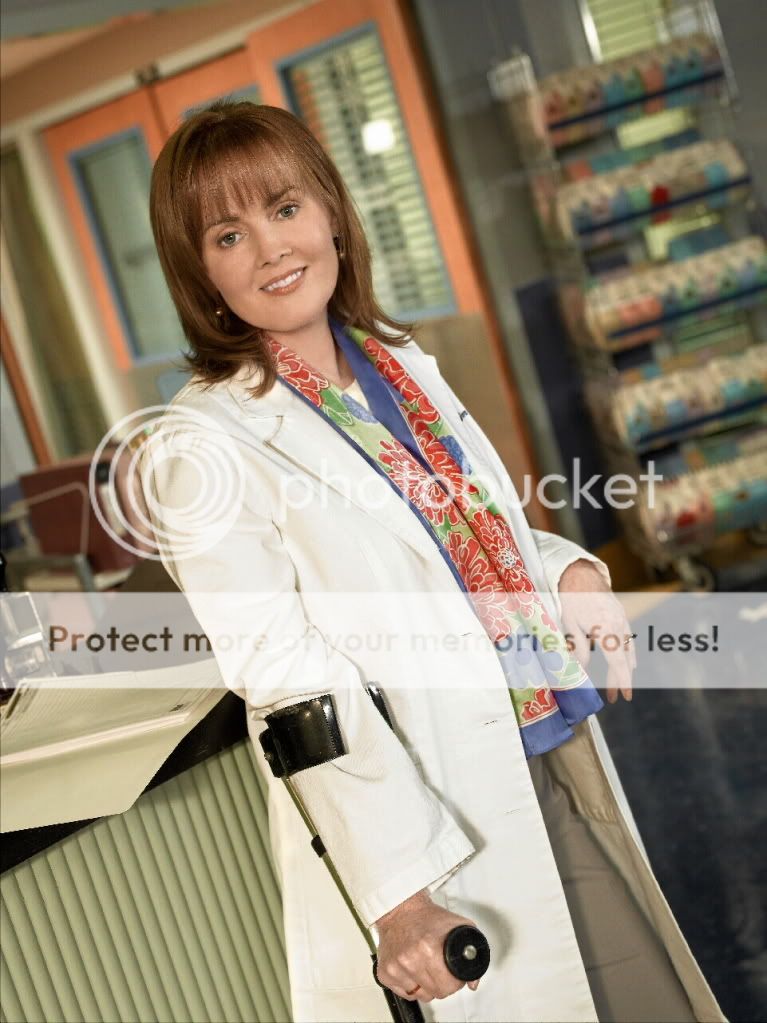
Dr. Kerry Weaver from the US television show 'ER', a white woman using a forearm crutch, text provided by Sasha Feather
Image: Dr. Kerry Weaver from the US television show ‘ER’, a white woman using a forearm crutch

Has anyone ever told you that you are using something as a crutch? Have you ever used this metaphor yourself as a pejorative?

What do people mean when they use this metaphor?

The metaphor implies that crutches are universally bad and that they prevent the user from moving onto the next stage of development.

There are underlying messages within this attitude that one should rely upon the self and not be using outside help or tools to deal with problems. All of this is ableist, and falls in line with similar prejudices against medications. If you cannot support yourself, well then, there must be something morally wrong with you: this is the message of our ableist society.

Crutches are assistive technology; they are tools. While it is true that tools can sometimes cause harm, tools are not essentially bad. I think most people would agree that tools are good things. Often tools such as crutches are the products of many years of innovation, design, engineering, and human ingenuity. People with disabilities often rely on tools more than fully able-bodied people do to help us navigate and live in the world. Crutches and canes are mainly useful for helping people to walk. They have other uses too. If you watch the US television show “House”, you might observe Dr. House using his cane for a variety of other creative purposes, such as a reaching device.

The metaphor of “crutch” can be reclaimed by using it as a positive metaphor. Some examples of this:

“I appreciated having creative projects to do as a crutch to help me through the grieving process.”

“I handed out fliers at a recent event. They were a good crutch for helping me go up and talk to people I don’t know.”

If you are looking for another metaphor to use for a tool that a person uses for a short time before moving onto the next stage of development, I suggest using “training wheels”.